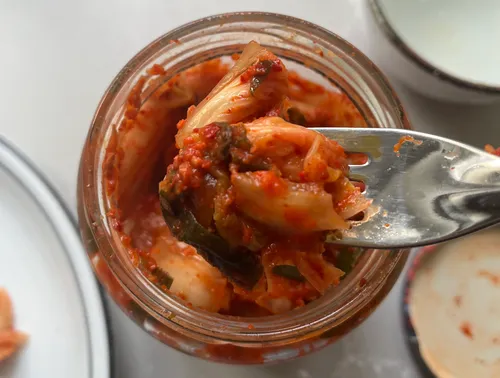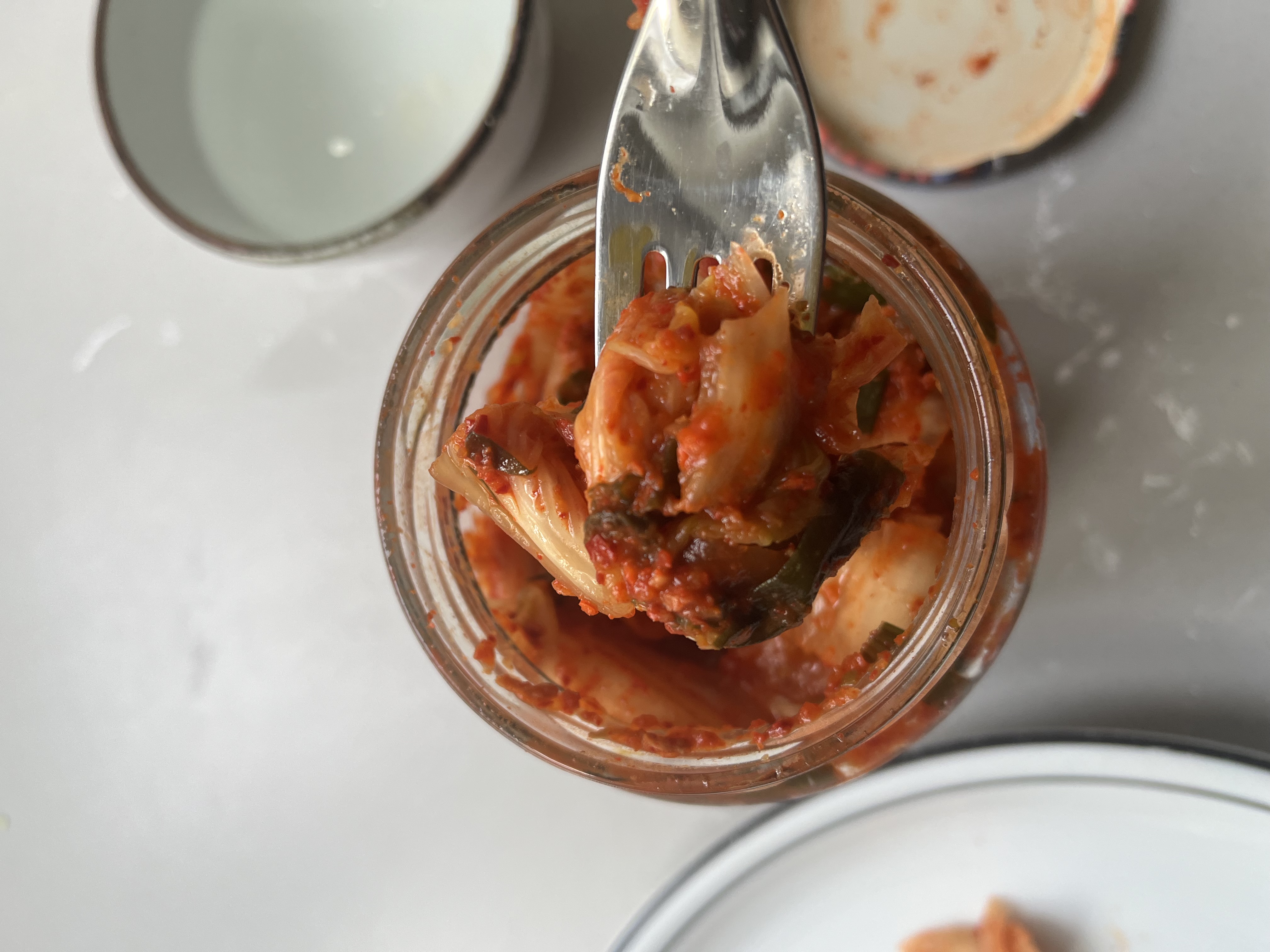
- What kimchi is: kimchi is a traditional Korean cabbage dish that's fermented.
- Kimchi too spicy: balance it out with sweetness, vegetables, or rice and noodles as a side.
- Make your own kimchi: visit Fischtal Foodlab and make your own kimchi in Berlin.
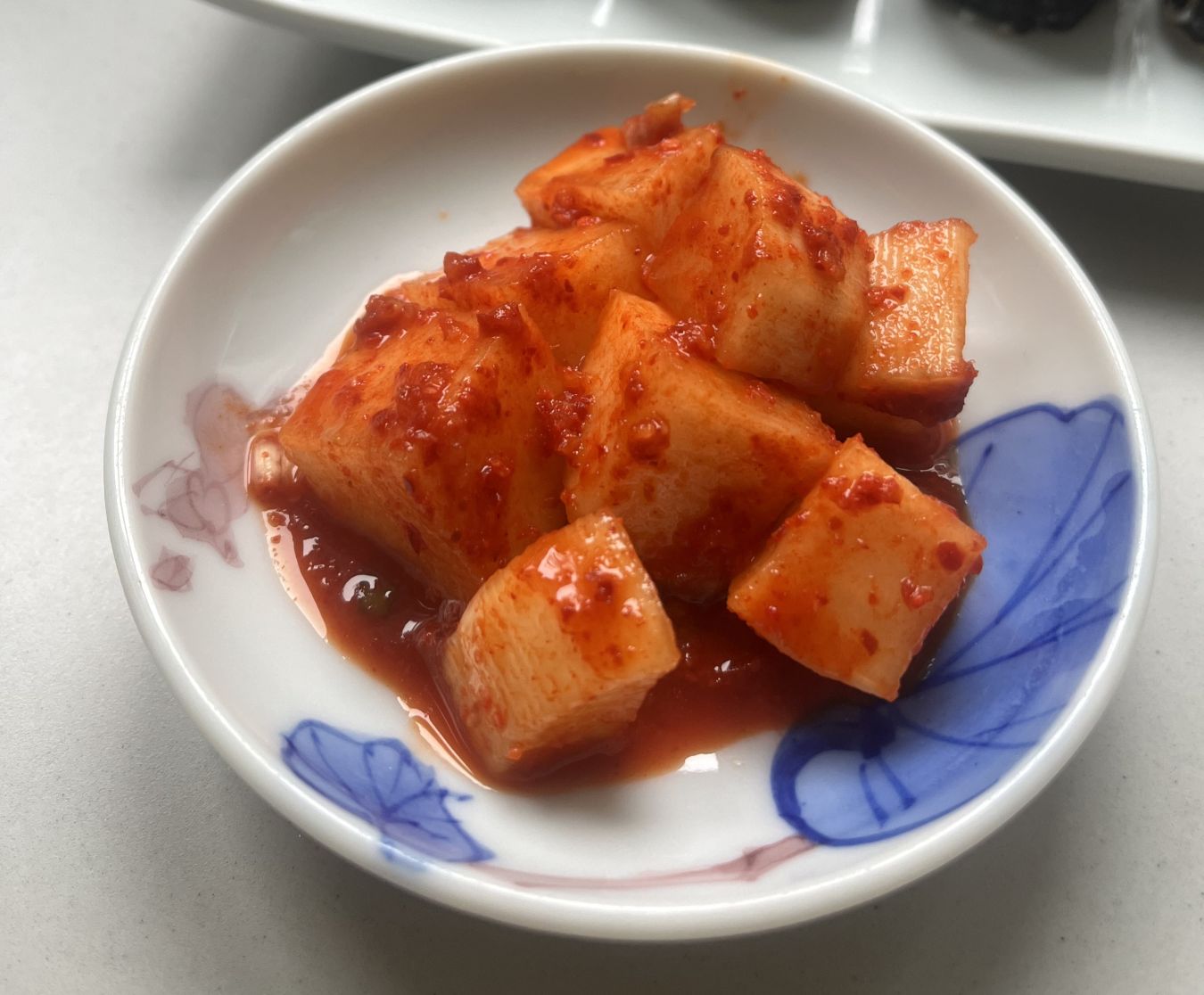
Traditional Korean kimchi is a fermented Korean food most commonly made from kimchi cabbage, like Chinese cabbage, though there are also many other variations made from kimchi vegetables, such as radish, cucumber, or other leafy greens. If you're wondering what kimchi is made of, the answer lies in its classic ingredients, which can vary depending on the recipe. Known for its bold, tangy, and often spicy flavor, kimchi has been a central part of Korean cuisine for centuries and is typically served with nearly every meal. Originally developed to preserve vegetables through long winters, kimchi has, over time, become a cornerstone of Korean food culture, with countless regional and seasonal variations.
Where Does Kimchi Come From?
Kimchi's origin traces back to Korea, where it has a history spanning more than a thousand years. Different regions developed their own versions, shaped by climate, locally available ingredients, and season. Beyond just food, kimchi is an iconic Korean dish and a symbol of national identity. What does kimchi mean literally? Fermented vegetables. It's often seen as a symbol of resilience, adaptability, and cultural identity. The tradition of making kimchi, known as kimjang, reflects these values and is deeply rooted in the Korean way of life.
What Does Kimchi Taste Like?
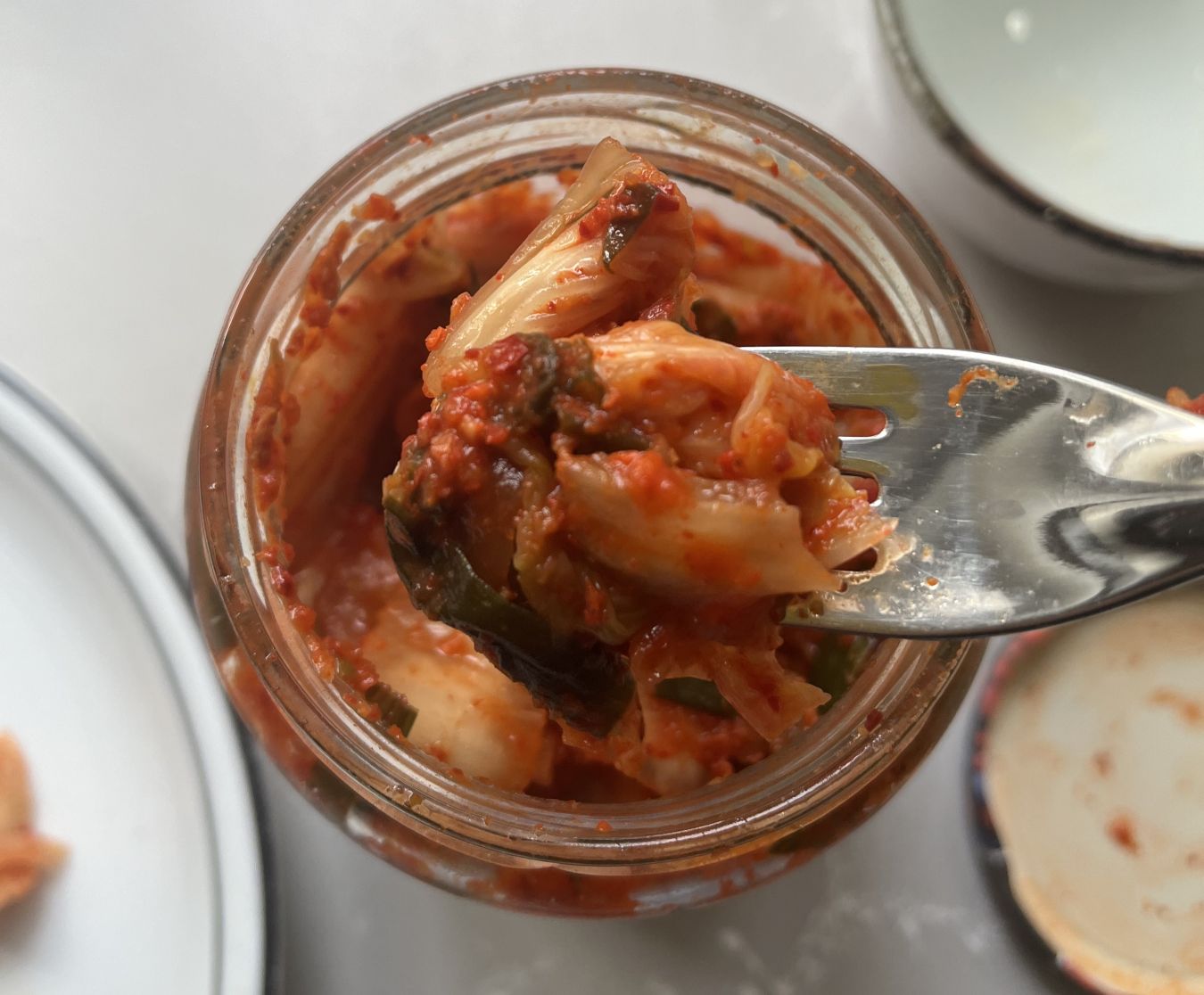
Many people wonder what kimchi actually tastes like. Kimchi has a bold, layered flavor and is typically spicy, sour, and savory, with distinct notes of garlic and ginger. Some varieties also carry a subtle sweetness. The flavor changes over the course of fermentation: fresh kimchi is crisp and vibrant, while well-aged kimchi becomes more intense, tangier, and more pungent.
Why Is Kimchi So Healthy?
Kimchi is considered very healthy since it's rich in probiotics that develop during fermentation, which support gut health and digestion. It's also low in calories and contains plenty of vitamins like A, B, and C. On top of that, kimchi provides antioxidants and anti-inflammatory compounds that support the immune system and overall health.
Kimchi Ingredients – What Is Kimchi Made From?
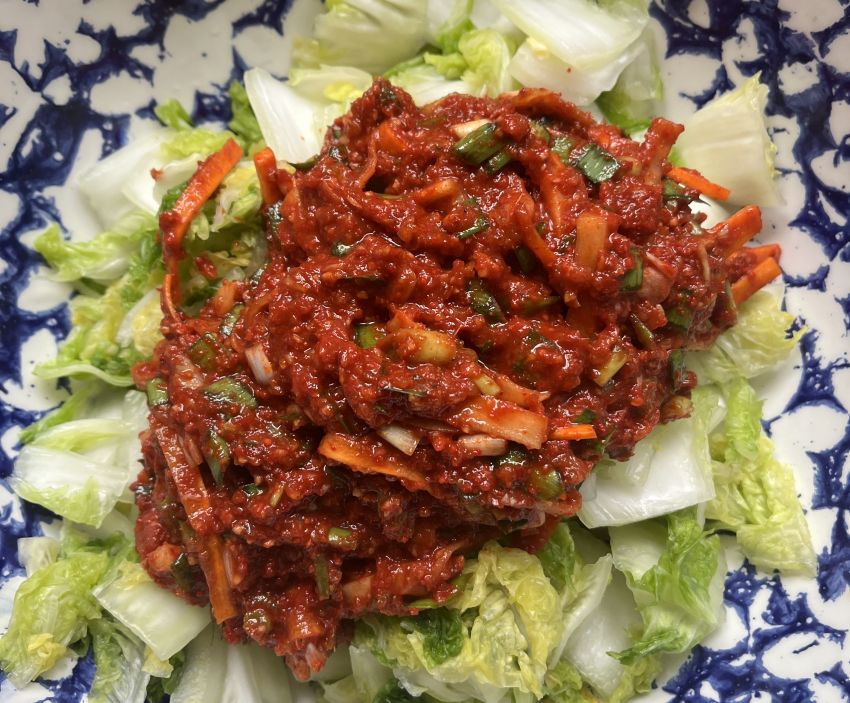
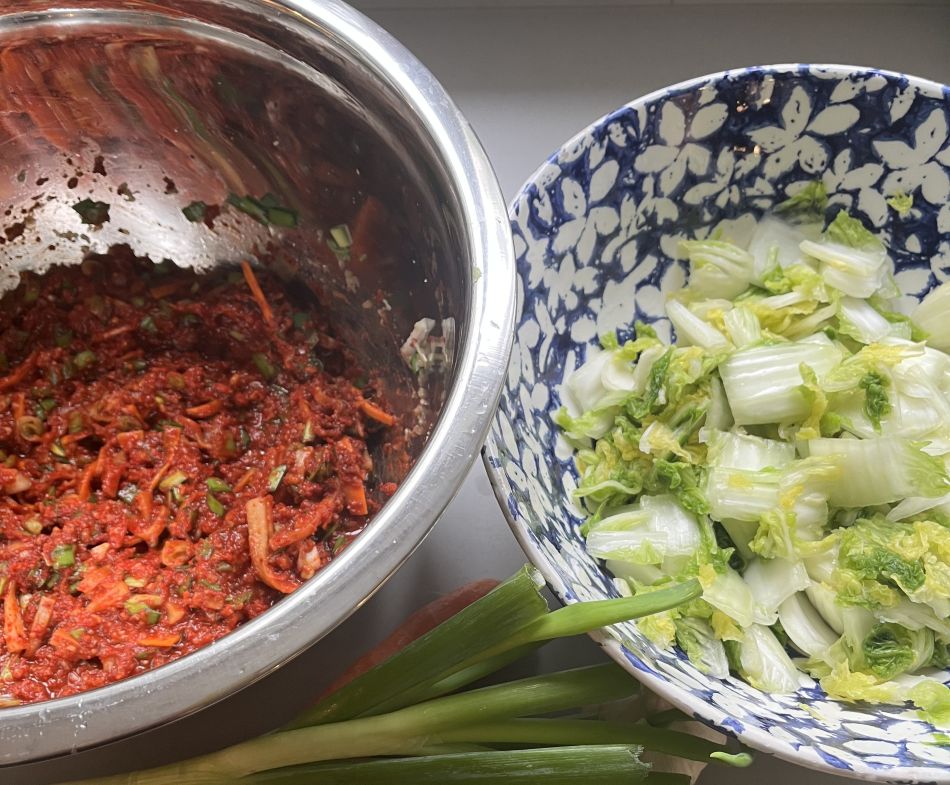
The ingredients in kimchi make it clear what kimchi is made of. Traditional kimchi is made from kimchi cabbage, like Chinese cabbage, which is salted to soften it and draw out water. It's then mixed with a seasoning paste typically made from Korean chili flakes, garlic, ginger, scallions, and other kimchi vegetables. Many recipes include fish sauce or salted shrimp for umami, and sometimes a bit of sugar or rice flour paste to help kick-start fermentation.

Kimchi Recipe
To make kimchi at home, the cabbage is first cut and soaked in salt water until it becomes soft and pliable, then rinsed thoroughly and drained. The spicy seasoning paste is prepared separately and mixed with the cabbage and other vegetables. Everything is combined thoroughly so each piece is evenly coated, then packed tightly into a clean jar to avoid air pockets. The kimchi is fermented at room temperature for one to three days before being stored in the refrigerator, where the flavor continues to develop more slowly. This version is known as mak-kimchi, or easy kimchi.
Do You Eat Kimchi Warm or Cold?
Whether kimchi is eaten warm or cold depends on the dish. Kimchi can be served both cold and warm. Most often, it's eaten cold as a side dish, but it also appears in many warm dishes. When heated, kimchi develops a richer, more savory flavor and works perfectly in stews, stir-fries, pancakes, or fried rice.
Is Kimchi the Same as Sauerkraut?
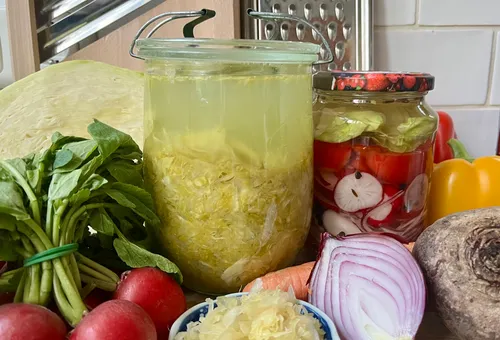
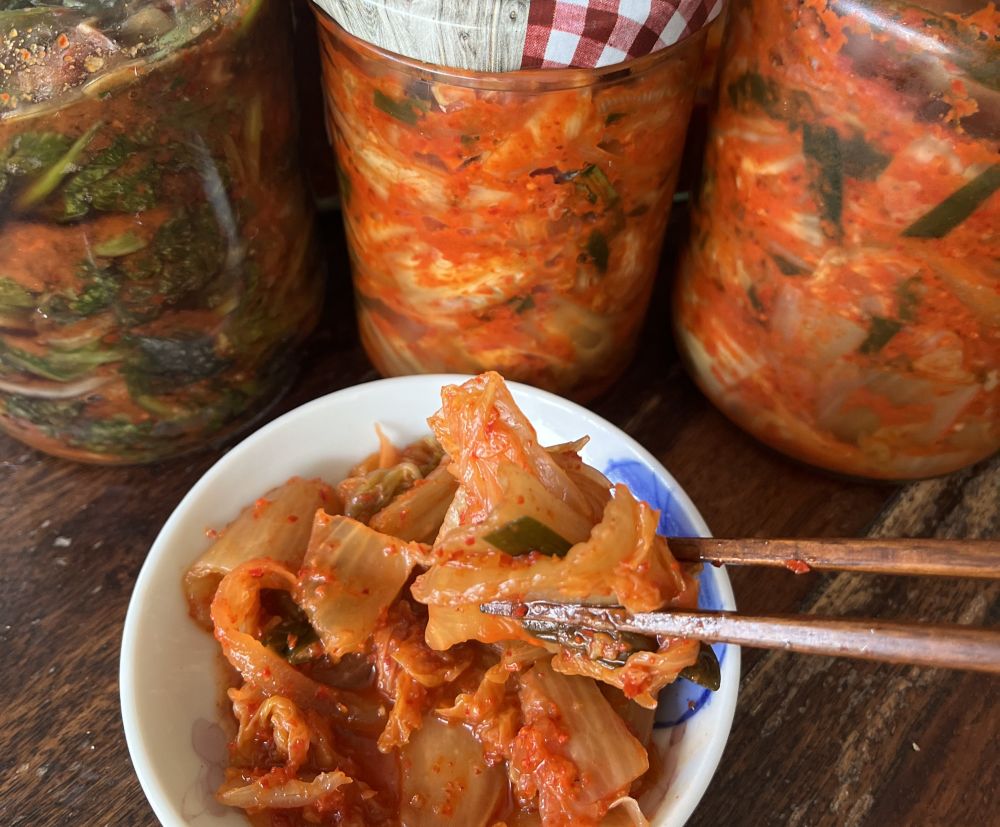
Kimchi isn't the same as sauerkraut, even though both are fermented cabbage dishes. While sauerkraut is usually made from just cabbage and salt, Korean kimchi contains many more ingredients, like chili, garlic, and ginger. This creates a more complex flavor profile and a greater variety of beneficial bacteria during fermentation.