- Syrian cuisine is part of Levantine cuisine and is known for its variety, freshness, and aromatic spices.
- Typical Syrian dishes include falafel, mujaddara, yalanji, kibbeh, and mansaf—often vegetarian or made with lamb, seasoned with mint, cinnamon, cumin, or sumac.
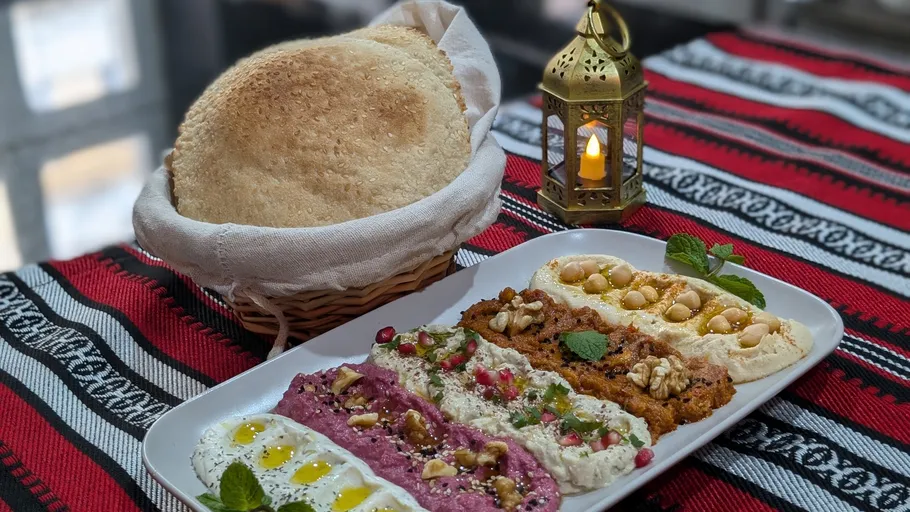
- For breakfast: Dips like hummus, labneh, mutabbal, and za’atar are served alongside flatbread, olives, and tea.
- Syrian sweets: Baklava, maamoul, and knafeh are deeply rooted in the culture.
- In the Middle Eastern cooking class in Berlin with Elyas Hanoun, you’ll learn how to prepare authentic Syrian food—including many family recipes from Damascus.
Syrian food is known for its fresh ingredients, aromatic spices, and traditional recipes passed down through generations. Syrian cuisine blends influences from across the Middle East, featuring classic dishes like hummus, mujaddara, yalanji, and mansaf. Whether vegetarian, vegan, or meat-based, Syrian dishes are diverse, perfect for everyday meals, and often healthier than you might think.
What is typical Syrian food?
When you think of Syrian food, hummus, falafel, or shawarma probably come to mind right away—and rightly so!

Falafel: Small fried balls made from pureed chickpeas, seasoned with herbs, onions, and garlic (vegan).
But Syrian cuisine has much more to offer. Typical Syrian dishes include kibbeh—bulgur and meat balls, mujaddara—lentils with bulgur, yalanji—vegan stuffed grape leaves, and harak osbao—lentil noodles in pomegranate sauce.

Mujaddara: A hearty mix of lentils, rice, and caramelized onions—vegan.

Yalanji: Grape leaves stuffed with rice, tomatoes, parsley, and spices – vegan.
Dishes featuring lamb or chicken, combined with rice, vegetables, and nuts – such as Mansaf – are also part of everyday cuisine. Many dishes are seasoned with fresh herbs, lemon, garlic, and olive oil.

Mansaf: A festive dish made with tender lamb, served over rice and drenched in a creamy yogurt sauce.
Another highlight is the wide variety of home-style dishes that are rarely found outside the home, such as green wheat, stuffed vegetables, or dishes with cooked yogurt.

What all these dishes have in common: they are prepared with love and care—and are best enjoyed when shared with a large group.
What do people eat for breakfast in Syria?
A Syrian breakfast is a true invitation to enjoy a meal together.
Typical—and almost unthinkable without chai—are many small Syrian dishes served together on the table—similar to an Oriental brunch. There is fresh flatbread, accompanied by various dips such as hummus, labneh—a yogurt dip with mint, mutabbal—eggplant dip—or za’atar—a thyme spice blend with olive oil.

Hummus: A creamy dip made from pureed chickpeas, tahini, lemon juice, and garlic.

Labneh: A spreadable yogurt cream—often served with olive oil or mint.

Mutabbal: A spicy dip made from eggplant, tahini, garlic, lemon, and yogurt.

Za’atar: An aromatic spice blend made from thyme, sesame, and sumac.
Olives, makdous—stuffed mini eggplants with bell peppers and walnuts in olive oil—tomatoes, cucumbers, string cheese, hard-boiled eggs, or scrambled eggs are also popular.
On holidays, breakfast is often served late and is more lavish—with dishes such as fateh—chickpea stew with sesame-yogurt sauce and toasted bread, foul—fava beans with vegetables, yogurt, or a lemon-olive oil dressing, hummus with meat, lamb sausages, or liver.

Foul: A hearty bean dish made from fava beans, seasoned with garlic, lemon juice, and olive oil.
In many families, something sweet is also a must—for example, dates, halawa—sesame paste, butter with jam, or compote.
Breakfast is less of a quick start to the day and more of a social ritual—accompanied by black tea with mint or cinnamon.
Cuisine in Damascus – What Makes Damascene Cuisine So Special?
Damascene cuisine is considered the heart of Syrian food culture—particularly diverse, delicately spiced, and steeped in tradition. Damascus is one of the oldest continuously inhabited cities in the world. This has led to the development of a rich culinary tradition over generations—with influences from all regions of Syria, neighboring countries, and Levantine cuisine.
Typical of Damascus are many vegetarian and vegan dishes, but also sophisticated meat dishes featuring lamb, beef, or chicken. These are often combined with vegetables such as green beans, peas, or spinach, as well as with rice or bulgur—which are both filling and nutritious.
Typical ingredients include fresh herbs, vegetables, pomegranate, lemon, yogurt, chickpeas, eggplant, and bulgur. Spices such as sumac, cumin, mint, cardamom, or cinnamon are used not to add heat, but rather for their aromatic qualities and in subtle doses.
Many Syrian dishes require time and dedication—such as Shish Barak—stuffed dumplings in yogurt sauce, Basmashkat—stuffed meat rolls with rice, or Yabrak—stuffed grape leaves with rice and meat.

What kinds of sweets are there in Syria?
Syrian cuisine is also known for a wide variety of sweets, which are enhanced with nuts, syrup, and Middle Eastern spices. Baklava is particularly popular in a wide variety of forms—with pistachios or walnuts, soaked in syrup, and flavored with rose water or orange blossom.

Baklava: A sweet layered pastry made of paper-thin phyllo dough, filled with chopped nuts—usually pistachios or walnuts—and soaked in sugar syrup or honey.
Other highlights include maamoul—tender semolina cookies filled with dates, pistachios, or walnuts—and halawet al-jibn—semolina rolls filled with cream.

Maamoul: Syrian cookies filled with dates, pistachios, or walnuts.
Other classics include halawa—sesame paste, knafe—shredded dough with cheese, and muhalabia—milk pudding with rose water. Desserts in Syria often have a social aspect: they are served on special occasions or brought as gifts for guests.

Knafe: A dessert served hot, made of fine strands of dough, filled with soft cheese or pudding, and drizzled with sugar syrup.
What do people like to drink in Syria?
Drinks play an important role in Syrian culture—both in everyday life and at celebrations. Popular choices include black tea with mint or cinnamon as well as ayran—a yogurt drink—which are enjoyed at any time of day.
Arabic coffee with cardamom and fresh juices such as pomegranate, carrot, or date juice are also very common.
During Ramadan, there are special drinks such as jallab—a grape-date drink, authentic licorice tea, or lemonade with peeled almonds—which are said to be particularly refreshing.
In cities like Damascus or Aleppo and in Christian or Armenian families, arak is also part of the tradition. This anise-flavored drink, distilled from grapes, is served diluted with water alongside mezze—a selection of small, mostly cold dishes. The combination of arak and maza is considered the epitome of Levantine hospitality. Interesting fact: Maza comes from the Arabic verb mazmaza – which means “to snack.” Just like arak: it’s enjoyed slowly, in good company.

Arak: Spicy anise-flavored spirit – when mixed with water, it becomes milky and cloudy.
Is Syrian food healthy?
Syrian food is generally considered healthy—mainly because it’s based on fresh, natural ingredients. Plenty of vegetables, legumes, herbs, olive oil, yogurt, and spices provide balanced nutrients, healthy fats, and lots of flavor.
Meat tends to be served in moderation, while plant-based proteins like lentils, chickpeas, and beans take center stage.
Sharing meals and eating mindfully also play an important role.