Table of contents
- 1. What is origami?
- 2. The History of origami: Where does origami come from?
- 3. How do you fold origami?
- 4. What other origami figures are there?
- 5. Why do people do origami?
- 6. What kind of origami paper do you need?
- 7. Origami – Why paper folding is worth it
- 8. Origami folding instructions for a box

What is origami? Everyone has probably heard of origami at some point, but few realise that it is actually the traditional japanese origami style, a distinct japanese folding art. There is a rich history and deep origami meaning behind this folding technique, which is what makes this paper folding art so special. If you are looking for an origami definition, find out what lies behind the art of origami, and you might soon be folding your own beautiful origami artworks.
Origami – Key facts at a glance:
- Origami is the japanese paper folding art
- Around 610 AD, the first paper was introduced to Japan from China by Buddhist monks
- There are many origami folds that can be conjured up from a square sheet of paper: animals, objects or geometric shapes
- Origami has other applications too, such as in art or science, and promotes concentration, creativity, precision, dexterity, discipline, perseverance and patience
- Proper origami materials are important, and models are usually folded from square sheets of paper available in various origami paper sizes.
- Japanese paper is of higher quality and thinner, and is best suited for origami folding due to its strength and stability
What is origami?
Origami is a combination of the Japanese terms oru meaning ‘to fold’ and kami meaning ‘paper’, and refers to the japanese paper folding. Folding origami is complex, as there are a large number of origami techniques that vary in difficulty. There is certainly no shortage of origami ideas, but projects often fail due to a lack of patience and finesse.
It is therefore often worth having a guiding hand to teach you what you need to pay particular attention to when you learn origami, so that your artwork turns out successfully in the end. With our Origami workshops, you’ll discover the beauty of origami figures for yourself in no time.
The History of origami: Where does origami come from?
The origins of this origami history and rich origami culture lie primarily in East Asia. In Japan, origami has a long history dating back to around 610 AD, when Buddhist monks first introduced paper from China. The ‘invention’ of paper itself, although there are finds from China that can be dated to around 140 BC, is officially attributed to Ts’ai Lun, who was an official at the Chinese imperial court around 105 AD and first described the method of paper-making known today.
There are also more recent traditions of paper folding in Europe, independent of this. In the mid-19th century, for example, the German educator Friedrich Fröbel introduced paper folding into his curriculum for kindergartens to promote the coordination of mental abilities and dexterity. Origami therefore holds great significance, which continues to this day.
How do you fold origami?
 Photo: ©Clarissa Nill
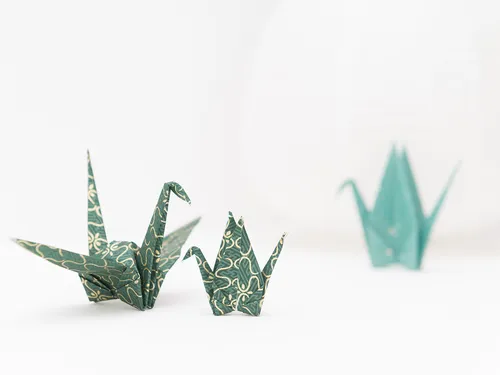
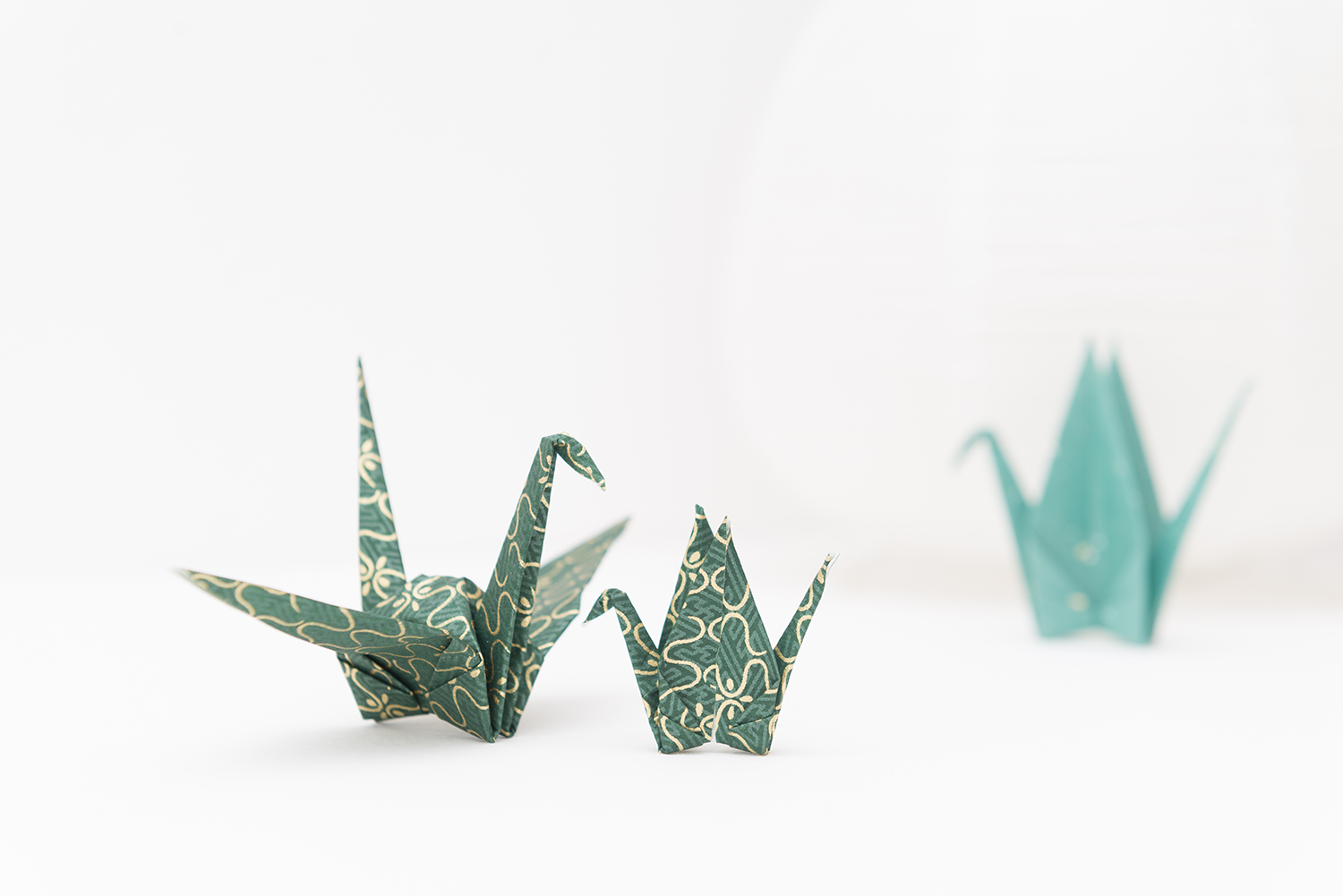
Starting with a sheet of paper, usually square, origami involves folding to create two- or three-dimensional objects, such as origami animals – the best known of which is probably the origami crane, a symbol of peace and happiness – as well as objects and geometric shapes. Origami offers a wide range of options, opening up many possibilities for creating simple origami figures.
What other origami figures are there?
As well as the well-known cranes, there are lots of other great origami models:
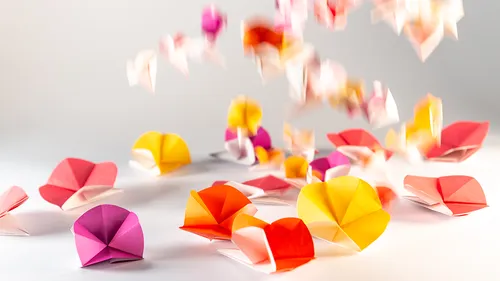
- Paper balloons
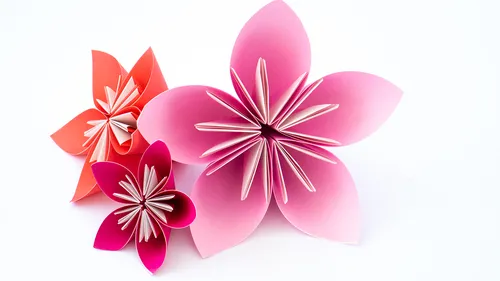
- Origami flowers
- Paper hearts
- Paper earrings
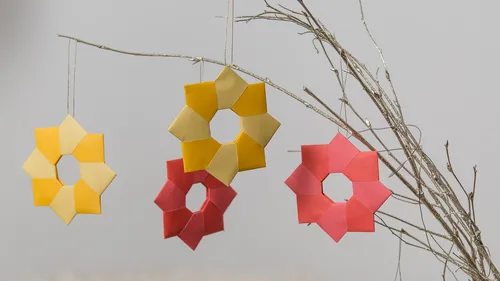
- Paper garlands
- Paper boats
- Paper elephants
- Paper fish
…and much more. You have a wide choice when it comes to folding your perfect origami figure.

Why do people do origami?
Today, origami is not just a pastime and an art form, but is also used in various fields of science. Furthermore, the benefits of origami are incredibly diverse; it is excellent mental exercise and helps to develop
- concentration
- creativity
- precision
- dexterity
- discipline
- perseverance
- and patience
At the same time, origami sparks enthusiasm, motivation and ambition. And that is not all the Japanese art of paper folding can do; whilst it may initially seem like a trivial activity, it is also good for the soul to engage with beautiful things and be surrounded by them.
What kind of origami paper do you need?
 Photo: ©Clarissa Nill
Origami paper is usually folded from square sheets. Japanese paper is available in various sizes, colours and formats, either as sheets or as origami paper already cut into squares. As origami paper is of higher quality and thinner than the printing and writing paper we are familiar with, it is preferable for folding. The choice of paper is crucial to the result, and it is certainly more enjoyable to fold origami using high-quality paper.
What makes origami paper special? | What should you look for in origami paper? |
Origami paper is extremely durable | The origami paper must be cut into an exact square |
Origami paper is thin yet very sturdy, allowing for many folds | The two sides of the paper should be different from each other – for better orientation |
Origami – Why paper folding is worth it
There is therefore much more to origami art than one might initially suspect. Not only is this wonderful art of paper folding a great creative activity, but it also helps you to relax and practise patience. So if you’d like to learn how to fold origami and find out more about this fantastic art form, you can easily do so here at konfetti.

Origami folding instructions for a box
There are a wide variety of origami models, ranging from simple to complex designs. If you are looking for an origami tutorial or origami instructions tailored perfectly as origami for beginners, here is a step-by-step guide to making an origami box:
Step 1: Choose a square sheet of origami paper in your chosen colour and size. Place it on a flat surface with the coloured side facing down.
Step 2: Fold the square sheet diagonally in the middle to create a diagonal crease. Smooth the crease carefully to ensure it is neat and straight.
Step 3: Fold the paper diagonally again, but in the opposite direction. Smooth out the crease once more.
Step 4: Fold the bottom corner of the paper upwards so that it rests on the top corner of the paper. Press the fold down carefully.
Step 5: Repeat step 4 on the other side of the paper. Fold the bottom corner of the paper upwards so that it lies on top of the top corner of the paper.
Step 6: Turn the paper over. Fold the right-hand corner of the paper towards the centre and press the fold firmly. Repeat this on the left-hand side.
Step 7: Fold the top corners of the paper downwards and press the fold firmly. You should now have a triangular shape.
Step 8: Take the left edge of the triangle and fold it towards the centre. Repeat this on the right-hand side.
Step 9: Fold the top edge of the paper downwards and press the fold carefully. This will be the top of your origami model.
Step 10: Carefully pull the two bottom corners of the paper apart to widen the base of the model. Smooth out your folds carefully to ensure they are straight and neat.