-
What ceramic items can be painted: plates, bowls, cups, mugs, cutting boards, soap dishes, and much more.
-
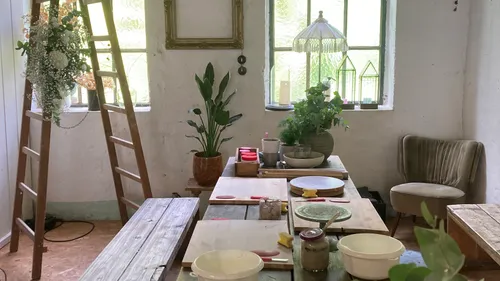
Materials for painting ceramics: Water, sponges, brushes, tape, rulers, pencils, templates, and ceramics.
-
Paint your own ceramics: Visit Kleines & Feines at their creative ceramic painting workshop in Cologne and design your own ceramics.
Painting on ceramics – creative ideas for your individual tableware
Painting on ceramics is a wonderful way to transform everyday objects into small works of art. Whether you are painting mugs, designing bowls, or creatively decorating plates – with a few simple ceramic painting ideas, you can create truly unique pieces that brighten up your daily life. At Kleines und Feines in Cologne, you can let your imagination run wild. Paint your favorite pieces, from playful mugs and decorative plates to handcrafted bowls and cups. Our hand-thrown ceramics are all one-of-a-kind items that you can design according to your wishes. You can find plenty of inspiration in our Ceramic Painting Workshop in Cologne.
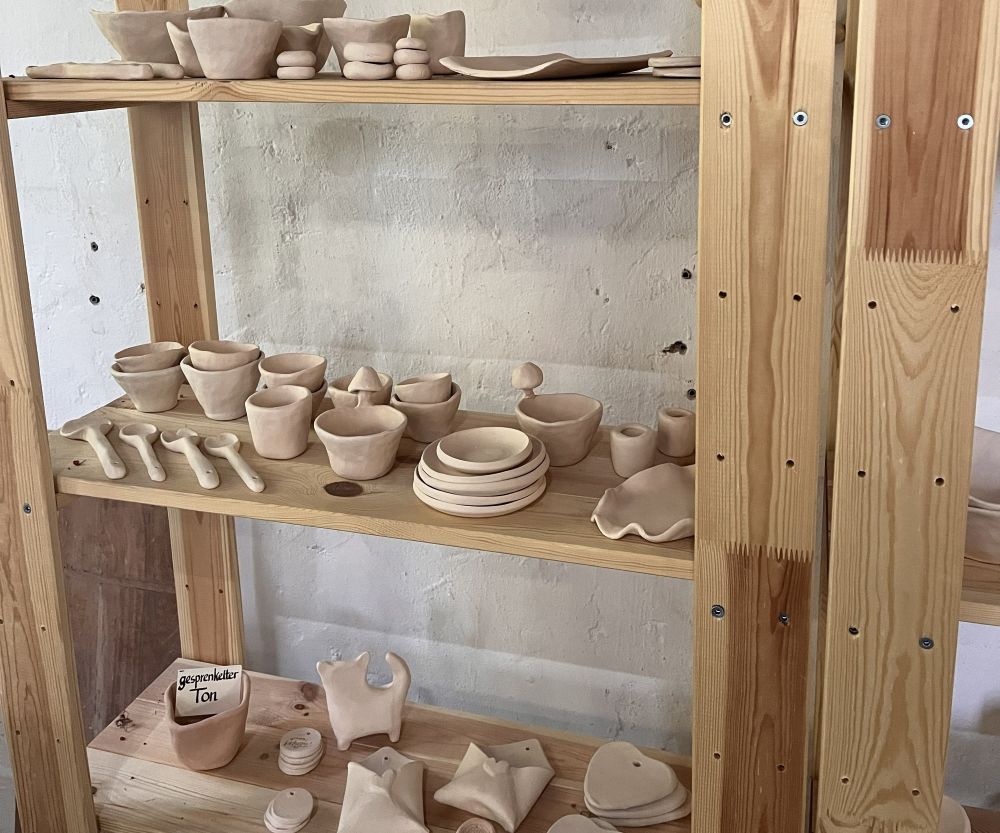
Ceramic painting at Kleines & Feines
As soon as you arrive, you can choose a seat and grab a refreshing drink. Then, you select your favorite pieces from our lovingly curated selection. Perhaps you already have specific pottery painting ideas or are looking for spontaneous inspiration. You can choose two ceramic items from our shelf—for example, a bowl, a plate, or a mug if you feel like painting on pottery mugs or designing plates. However, we recommend choosing only one object if you plan on a more elaborate pattern. This ensures you have enough time to paint your ceramic with attention to detail and implement your very own creative idea.
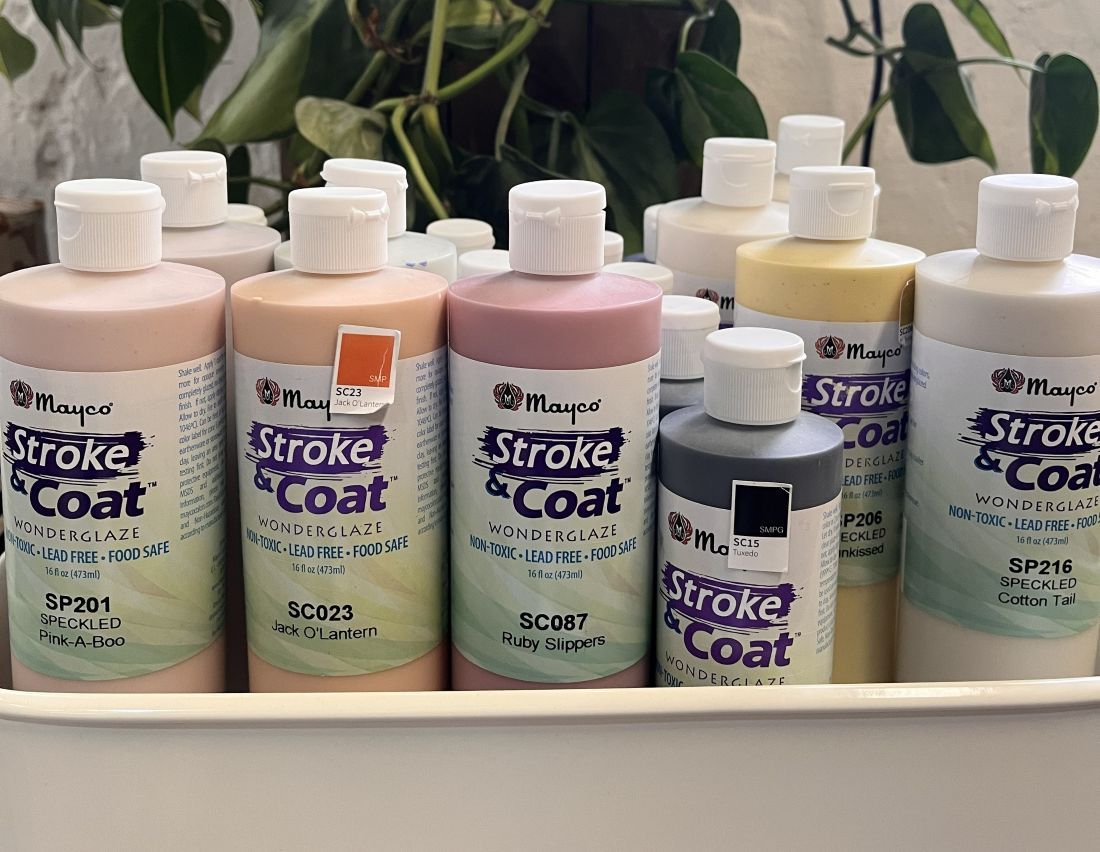
Materials for painting on ceramics
For our ceramic painting classes, we provide all the materials you need to bring your creative visions to life. This way, you can fully focus on the design and paint your mug, bowl, or plate with peace and joy. You will find your workspace lovingly prepared with everything you require:
- Wate – for cleaning brushes and moistening sponges
- Sponges – for soft transitions and clean work
- Pencil – for sketching your motifs or patterns
- Various brushes – in different thicknesses
- Adhesive tape – for straight lines and geometric shapes
- Rulers – for precise work on patterns and surfaces
- Templates and shapes – for inspiration for your personal design
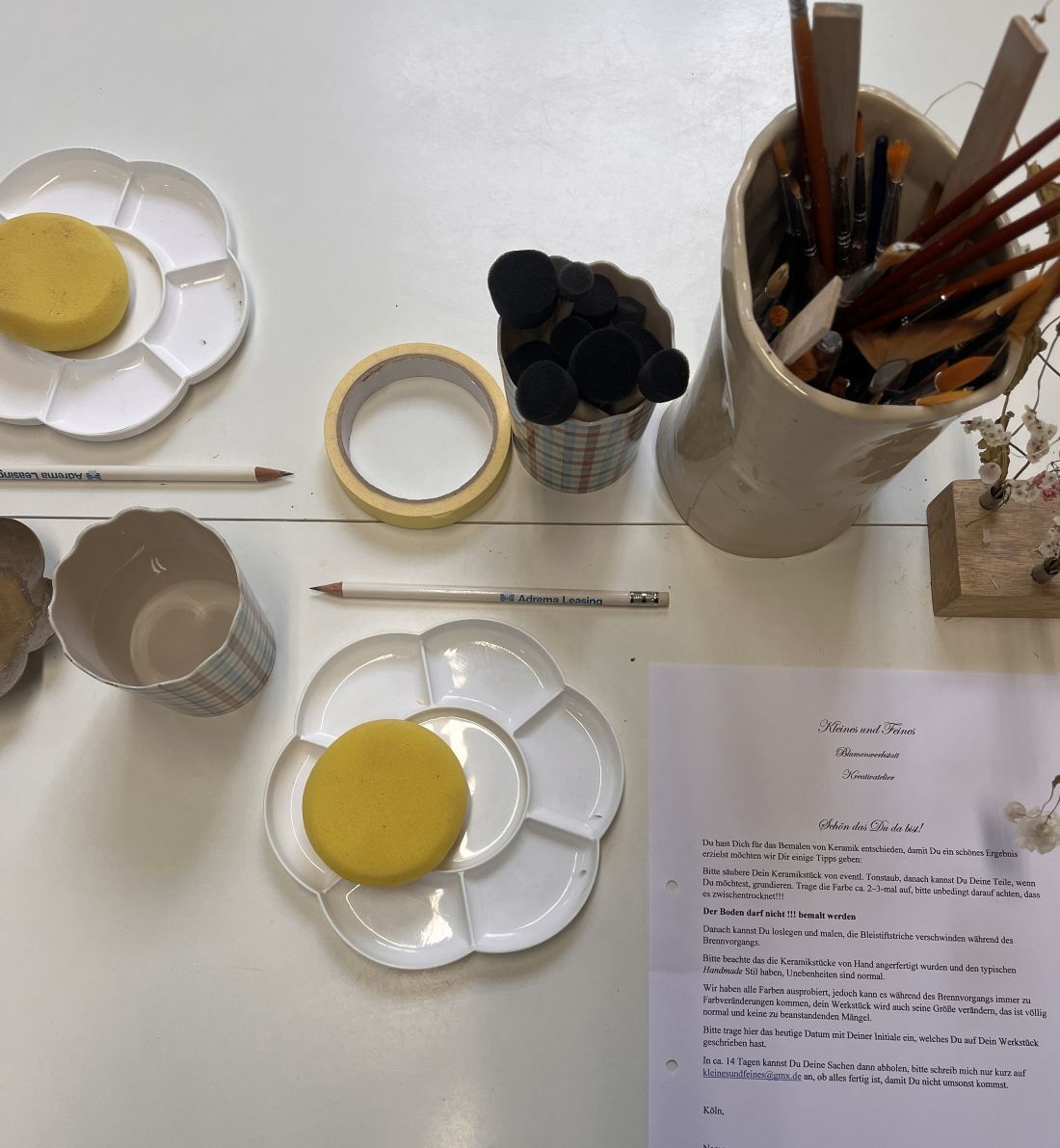
Guide to painting on ceramics
If you want to implement your own ceramic painting ideas, you primarily need some time, patience, and joy in creating. With this simple guide, painting your ceramics becomes easy, whether you are decorating mugs, designing bowls, or embellishing plates.
1. Preparation of your ceramic:
Before you start painting, lightly moisten your sponge with water. Gently wipe your ceramic to remove fine clay dust. Be careful not to make the ceramic too wet; it should only be slightly damp. Then, let it dry briefly and calmly consider which pottery painting ideas you want to realize. You can find inspiration online or in our ceramic templates, but don’t put yourself under pressure. Perfection is not the goal here.
2. Applying a base coat: (optional)
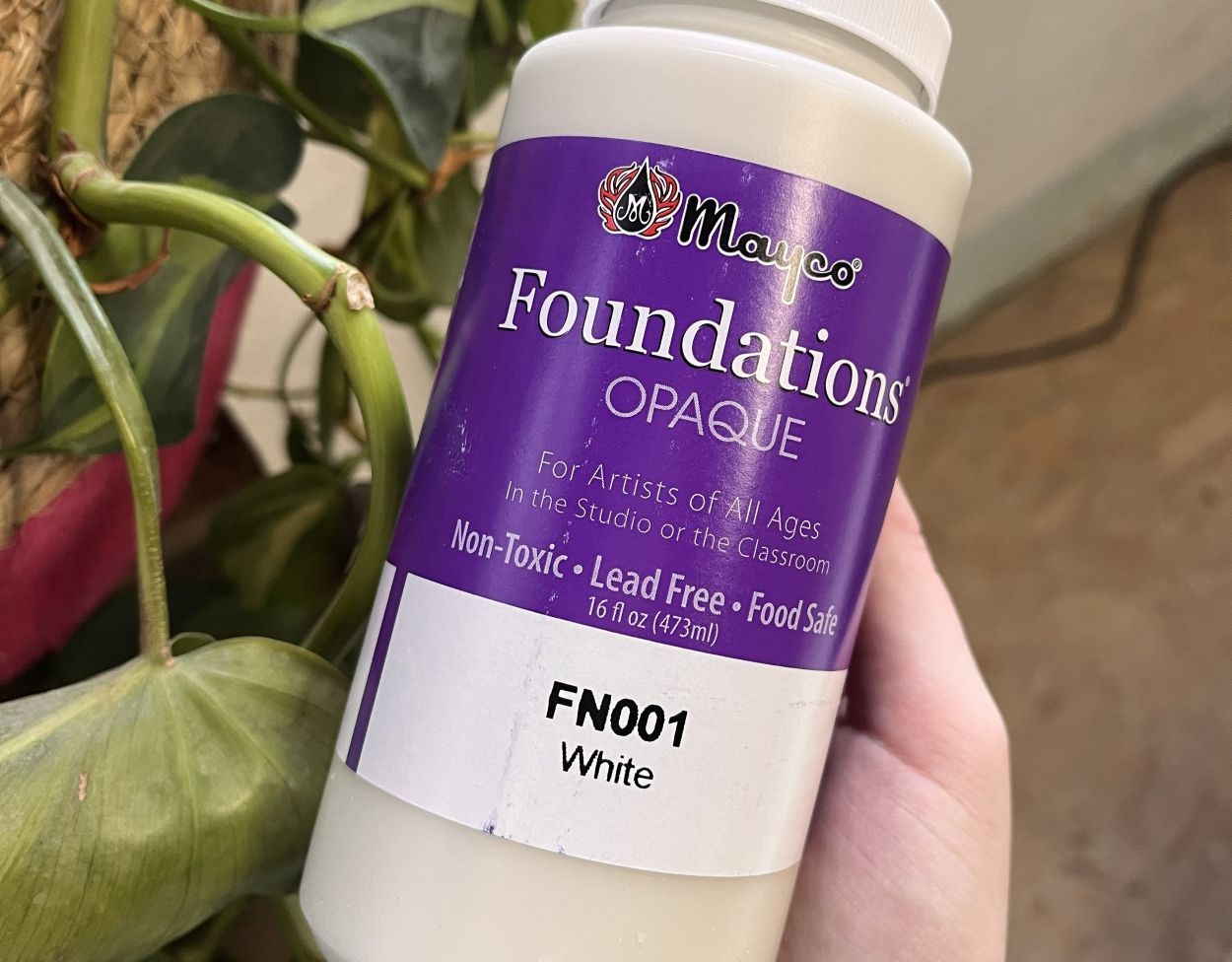
Our ceramics take on a soft gray-beige tone after the glaze firing. If you prefer working with white surfaces, apply a base coat. Use a white glaze and apply it evenly two to three times. The ceramic should dry completely after each layer. This prevents stains and ensures a beautiful, even surface.
3. Prepare and sketch the motif:
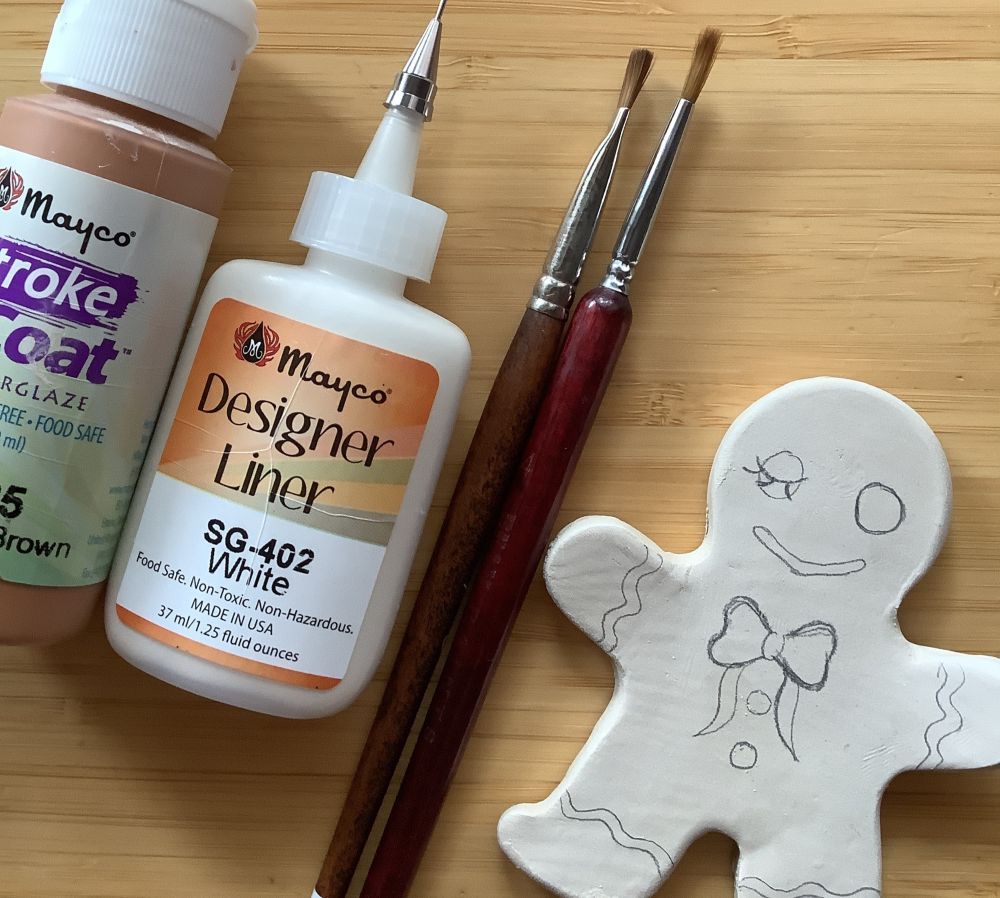
Whether with or without a base coat, the creative part begins now. Lightly sketch your pattern or motif with a pencil. Small mistakes are no problem, as the pencil marks will disappear during the firing process. Alternatively, you can paint freehand and let your intuition guide you.
If you prefer working geometrically, you can use adhesive tape to create stripes, lines, or triangles. This results in modern, clean designs.
Important: Never paint the bottom of your ceramic. It is best to tape it off beforehand so that no paint accidentally lands there.
4. Applying colors correctly:
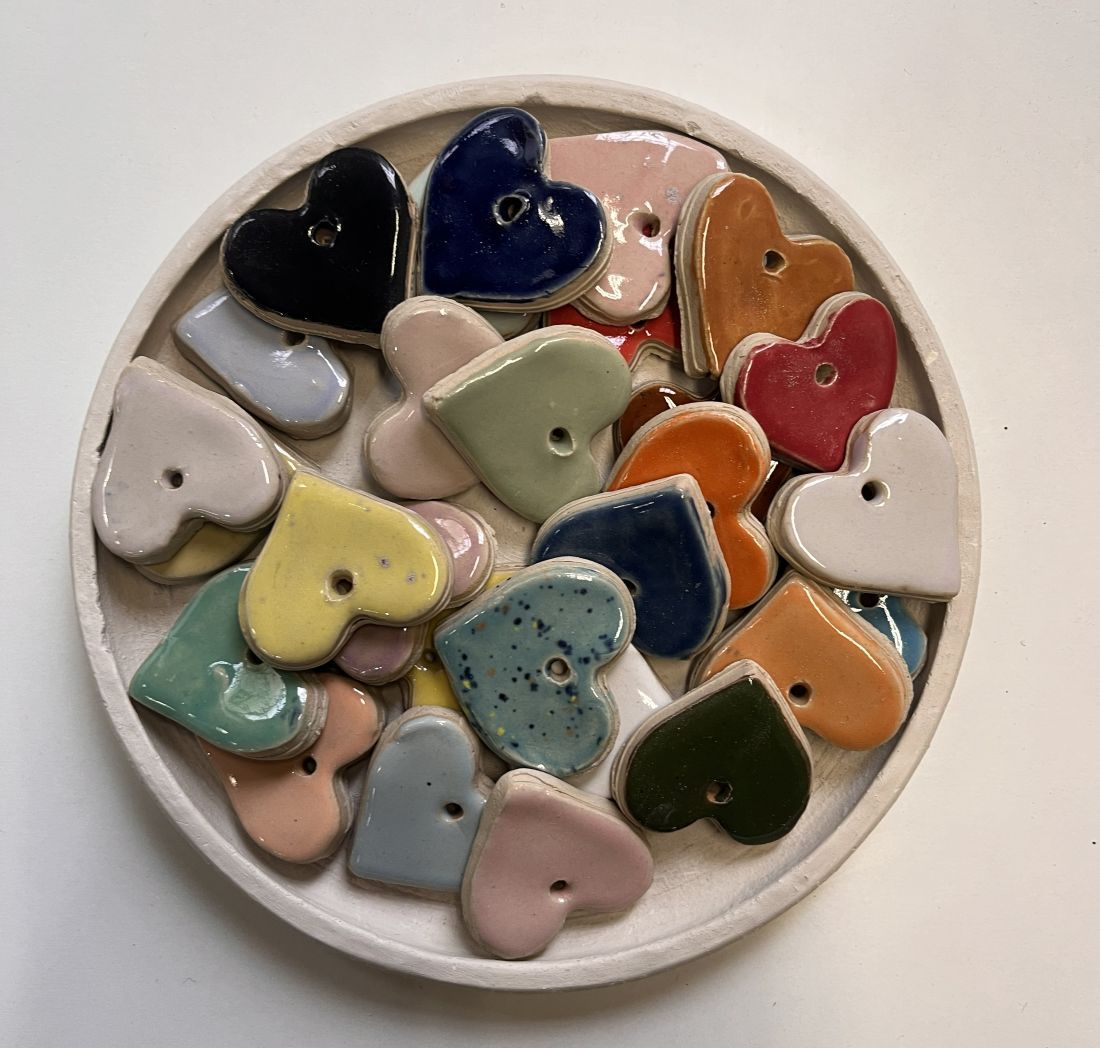
When applying the colors, they will initially appear very pastel; this is completely normal. After firing, they will shine brightly and intensely. Use color tiles as a guide to see how the tones will look after the burning process. We work with high-quality Stroke & Coat paints, which are excellent for painting on ceramics intended for tableware and provide particularly even coverage.
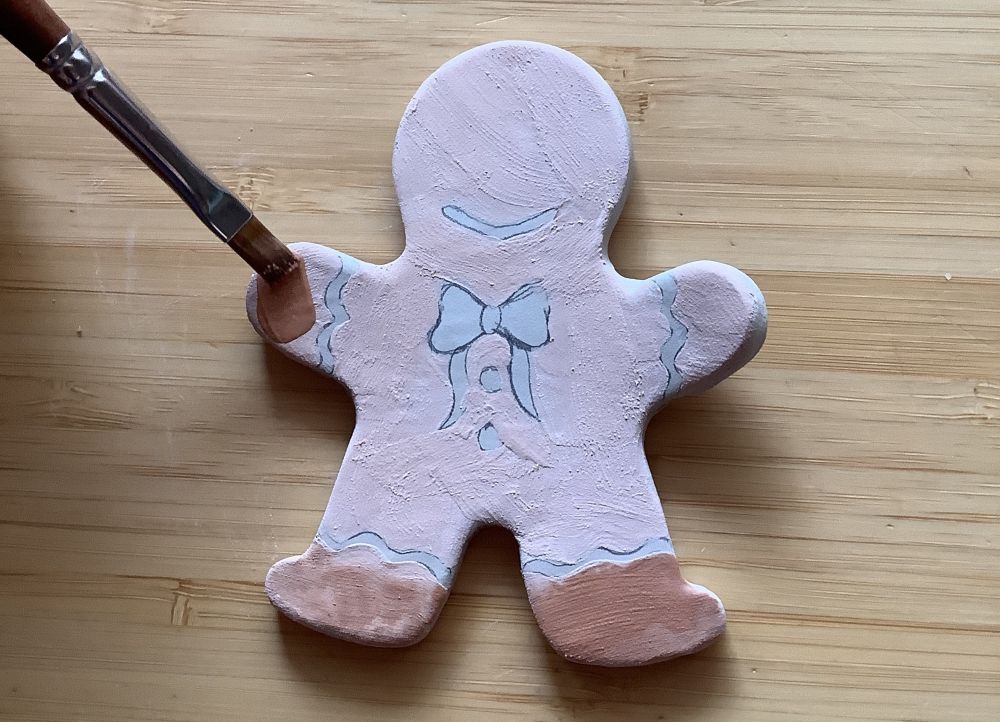
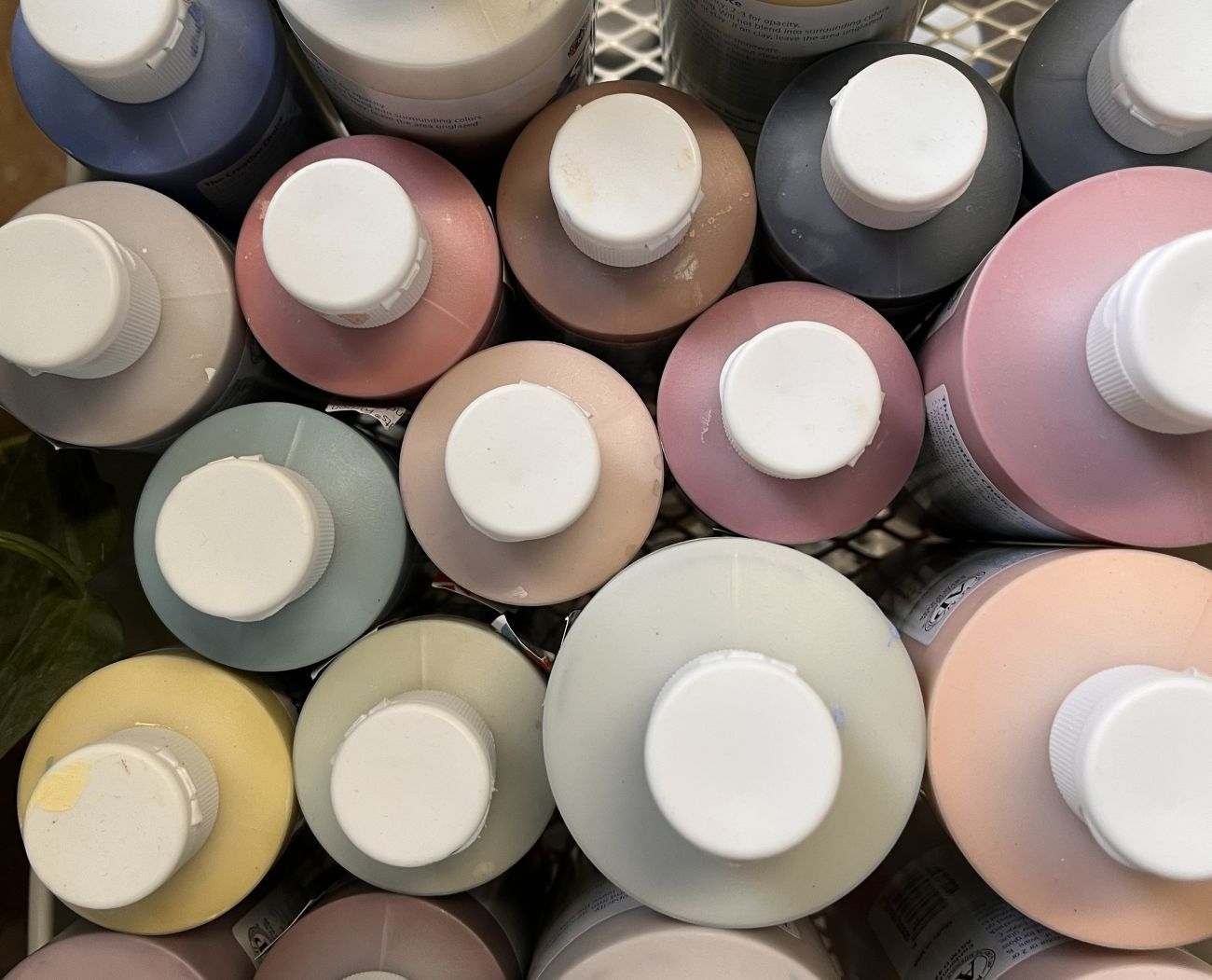
Shake the paints well before use and put some on your palette. Just like the base coat, apply each color two to three times in thin, even layers. A single thick layer does not replace a second or third coat. Pay special attention to three layers when using pink tones. Let each layer dry well before applying the next one.
5. Painting and correcting in parallel:
If you are painting two ceramic pieces, you can work alternately. While the paint on the first piece dries, paint the second one. This saves time and allows you to work efficiently. If you don't like a color or make a mistake, you can simply wipe the area with a damp sponge. Let it dry well and then paint over it again.
6. Get creative and implement your design:
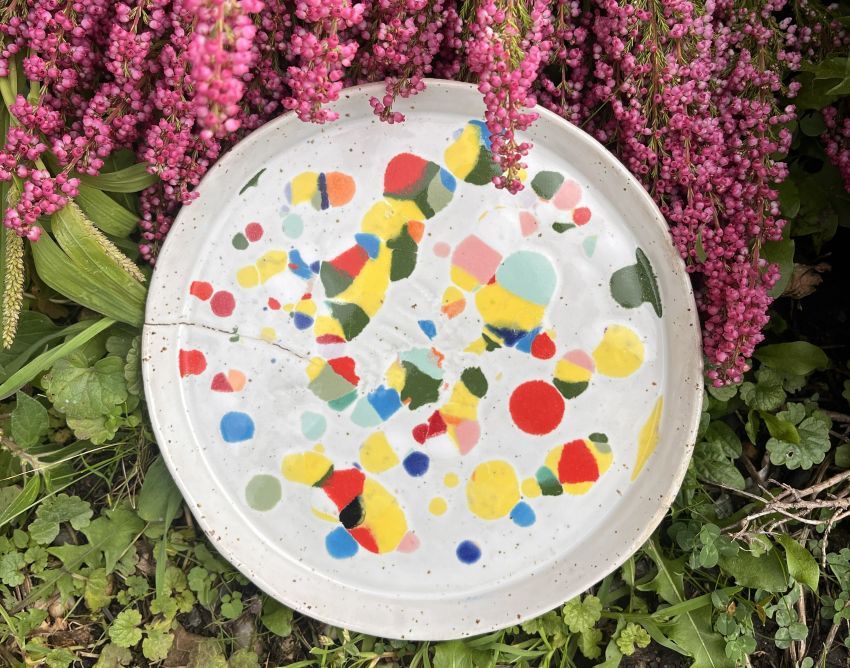
Now it's time for creativity. You can paint, dab, dot, or even try out confetti effects. Perhaps you want to paint fruit, flowers, or lettering? Anything is possible.
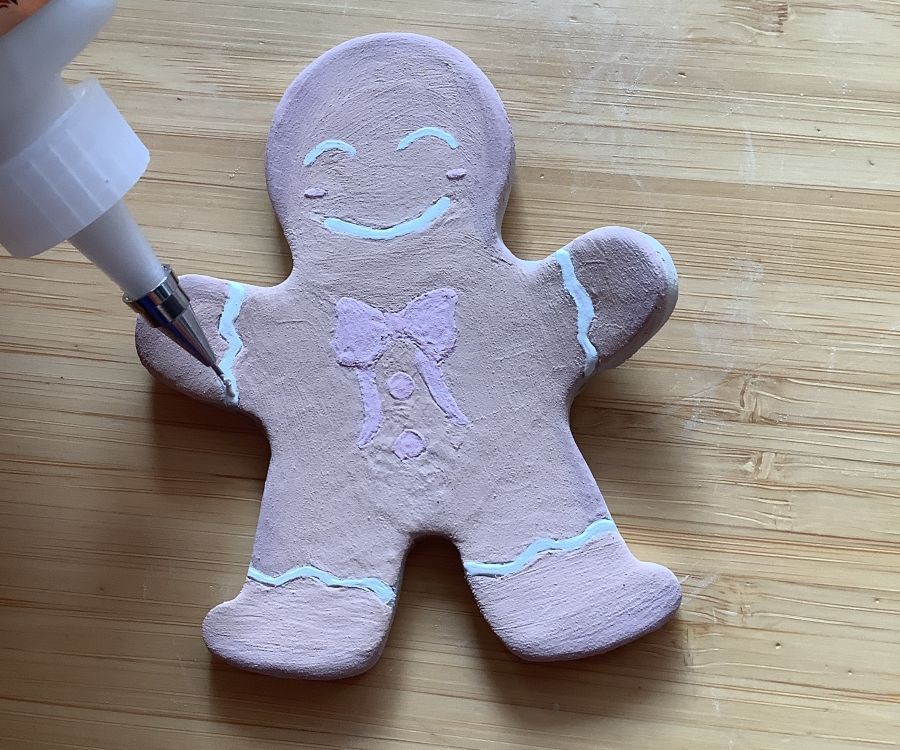
7. Final check after painting:
Before you hand in your masterpiece, check if you really haven't painted the bottom of your ceramic. If you have, carefully wipe the paint off with a damp sponge. Now your work is ready for the glaze firing – and you can look forward to your shiny, colorful result.
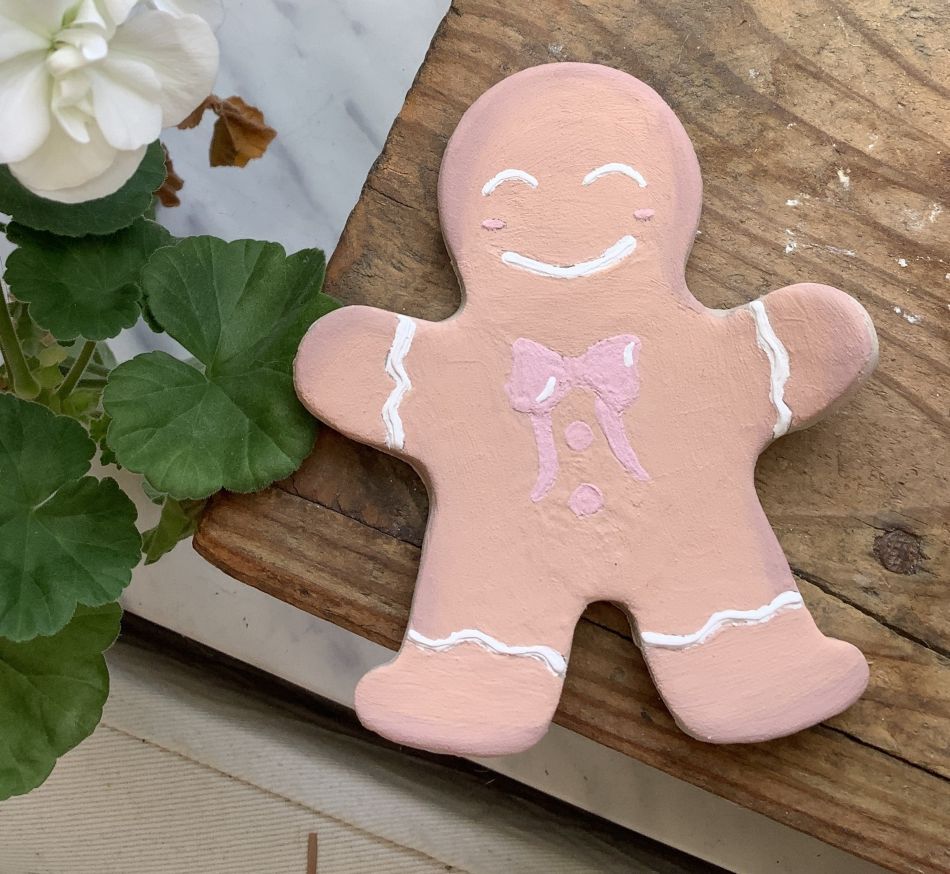
Pottery painting ideas:
When it comes to painting on ceramics, there are no limits to your creativity. Whether you want to paint mugs, design plates, or decorate bowls, with the right ceramic painting ideas, beautiful unique pieces are created. Get inspired by modern patterns, delicate floral motifs, or colorful tableware. If you are looking for pottery painting near me in the Cologne area, our studio is the perfect place to start.
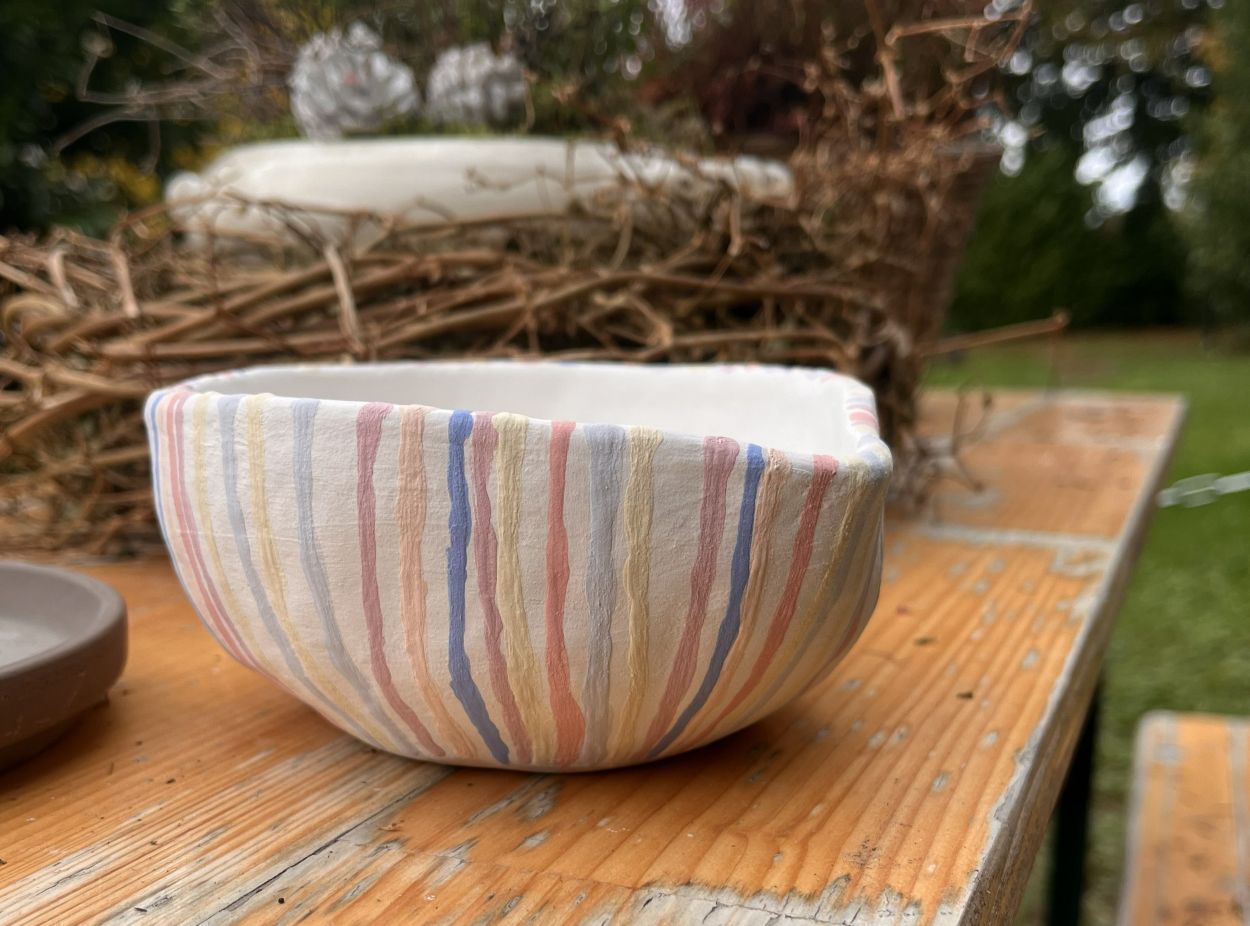
1. Brightly striped ceramic bowl:
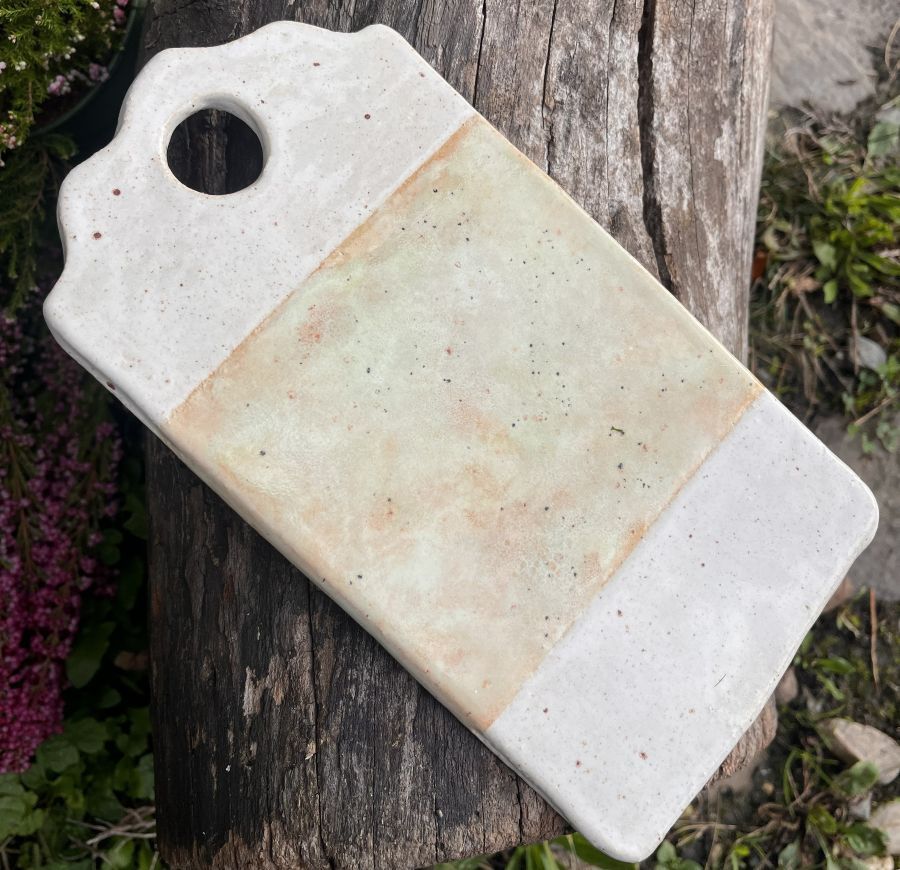
2. Painted ceramic board:
3. Green painted ceramic mug:
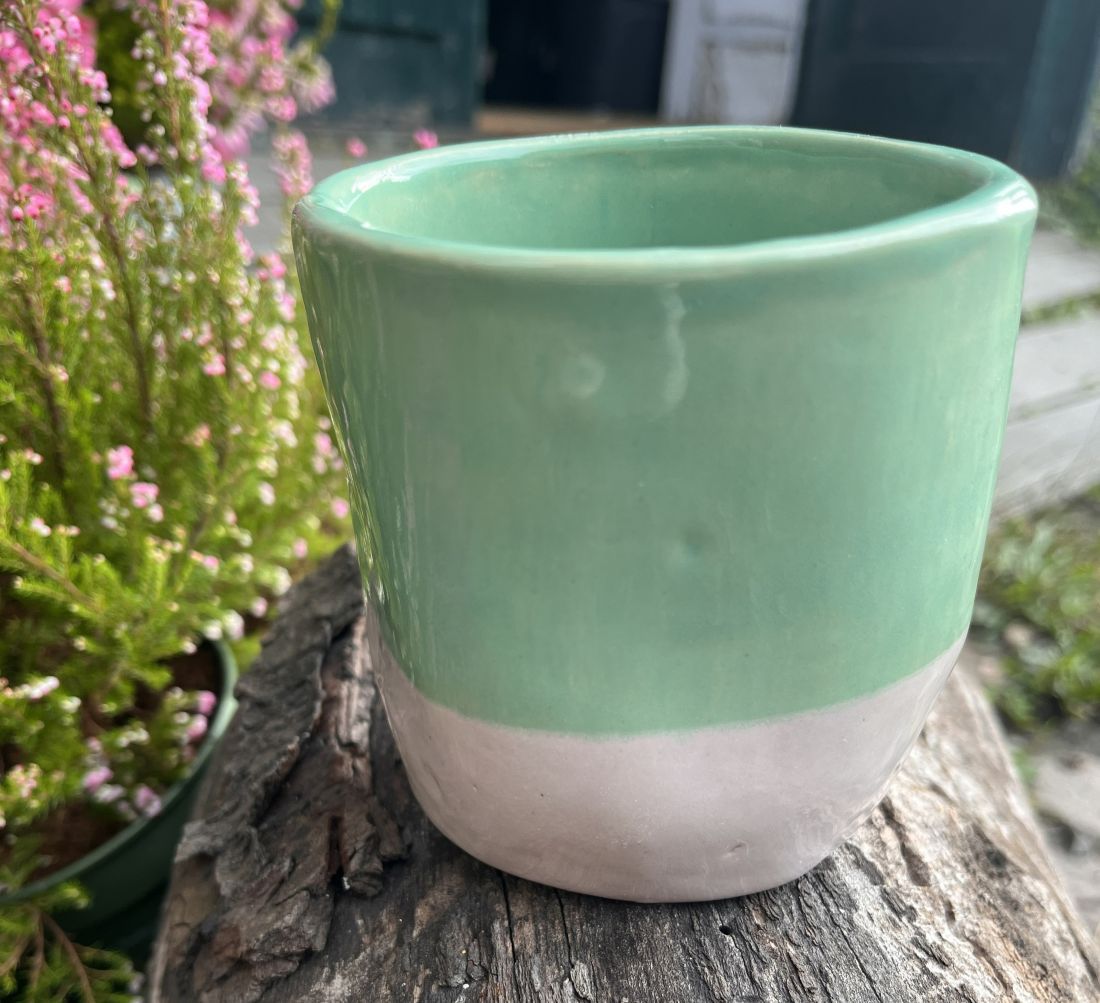
4. Ceramic plate with floral pattern:
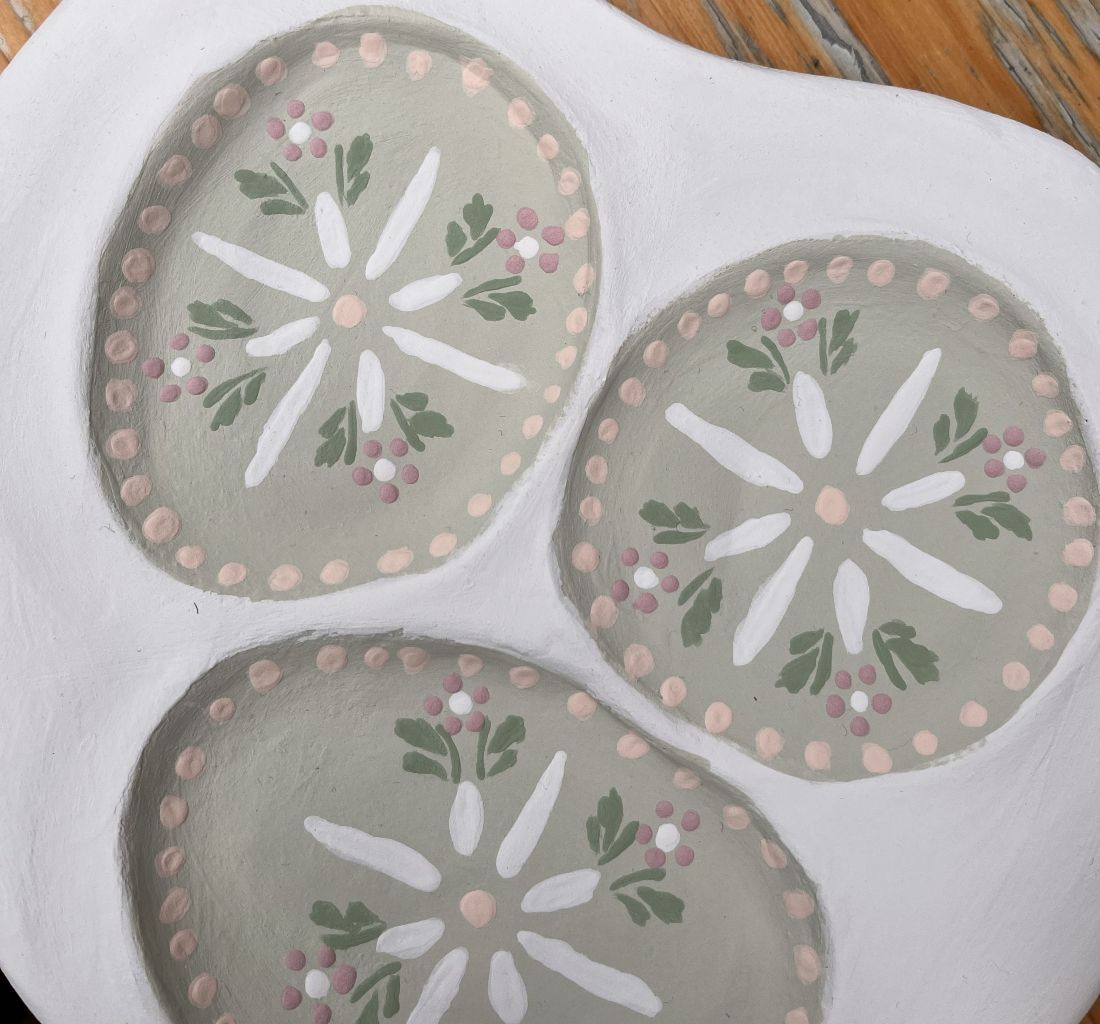
5. Painted ceramic soap dish:
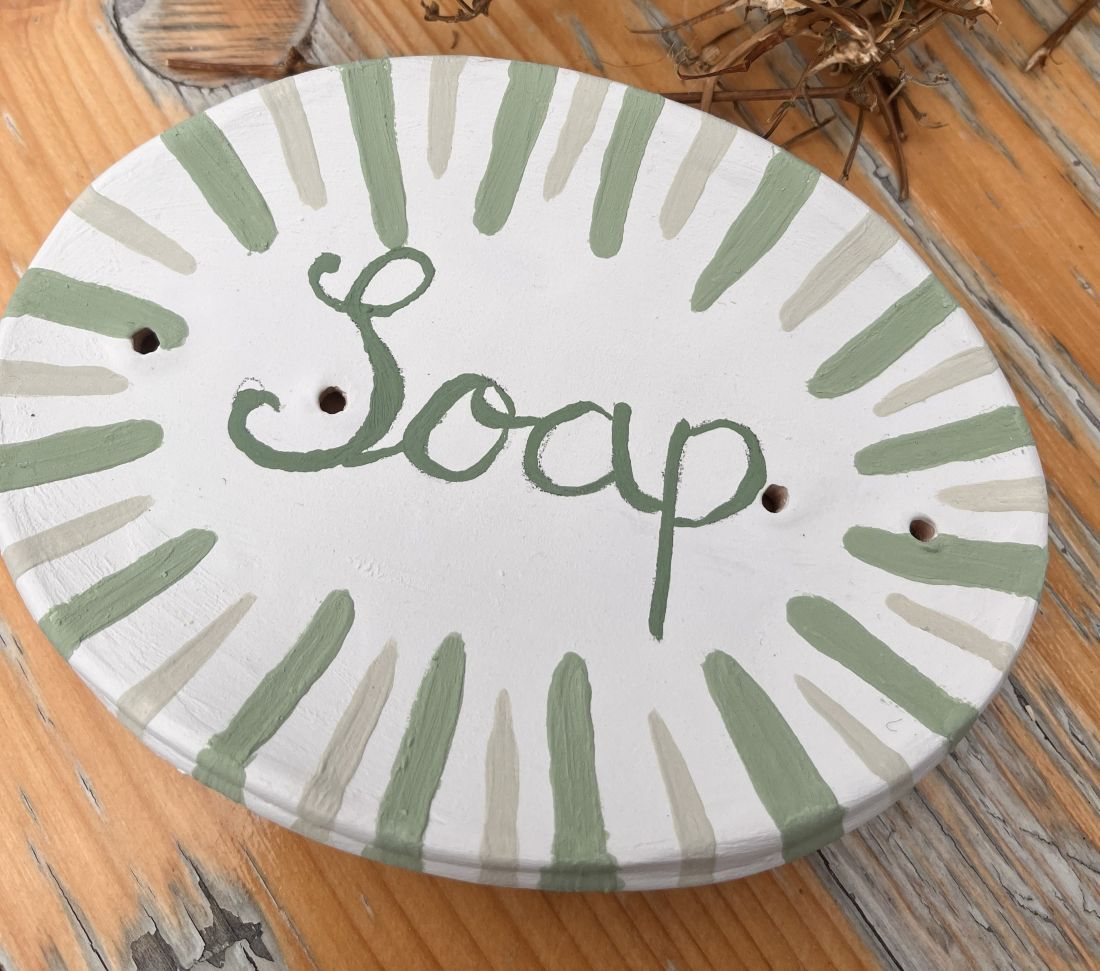
6. Ceramic breakfast board with tomatoes:
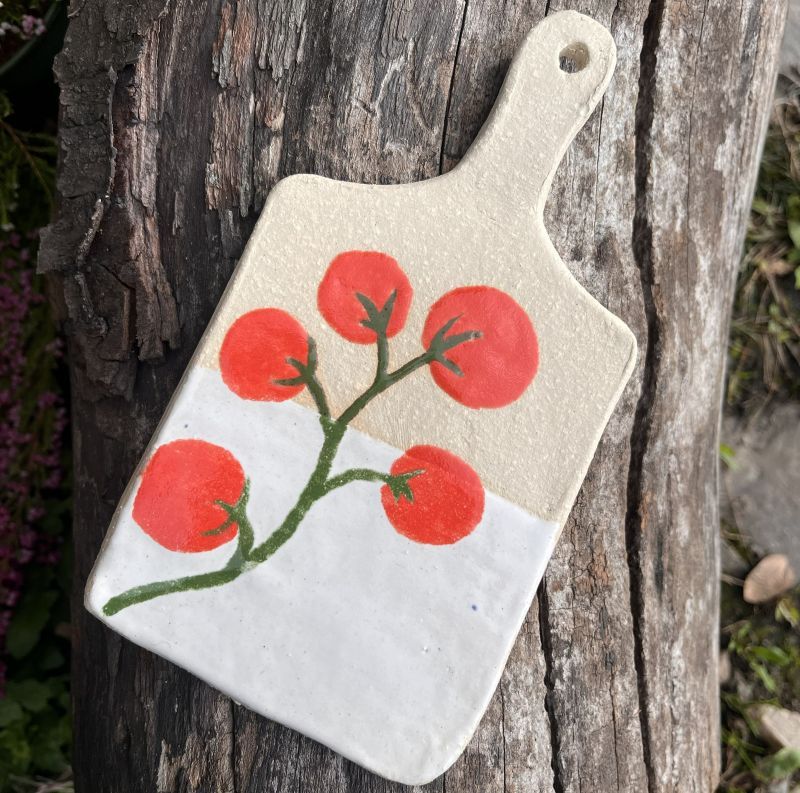
7. Ceramic plate with lettering and decoration:
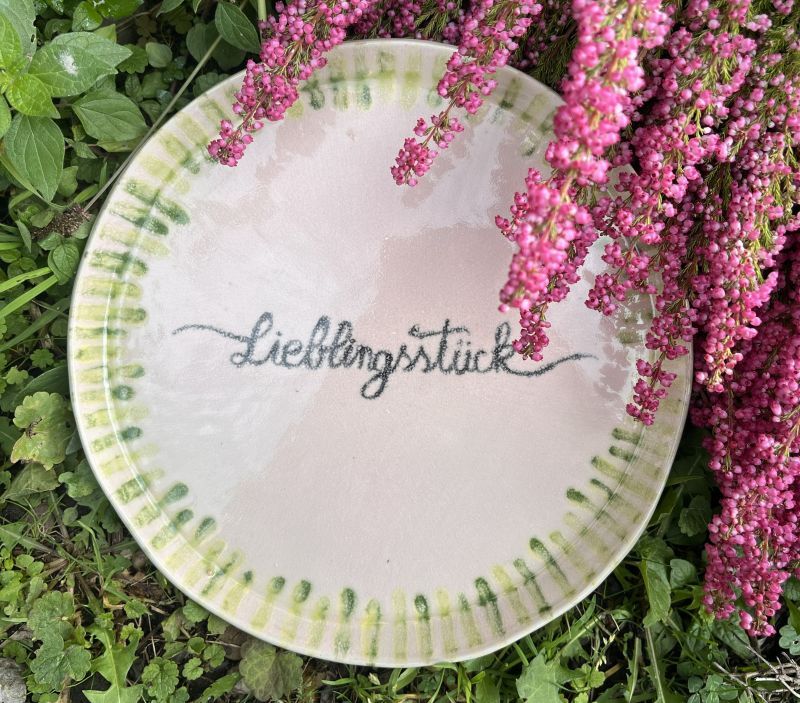
8. Ceramic plate with confetti effect: