Table of contents
- 1. How to Create Beautiful Concrete-Look Décor
- 2. How Do I Mix Concrete for Casting?
- 3. Which Molds Work Best for Casting Concrete?
- 4. What Should I Watch Out For When Casting Concrete?
- 5. Step-by-Step Guide to Casting Concrete
- 6. How Long Does Concrete Take to Dry?
- 7. What's the Best Way to Remove Concrete From the Mold?

Bildhauerei Köln - Katrin Kleinau
Partner and writer
Casting Concrete – Key Takeaways
- Ideas for creative concrete décor: vases, plant pots, or tealight holders.
- Everything you need to cast concrete: container, mold, casting concrete, whisk, oil, brush, rubber mallet, and cutter knife.
- Protect yourself when casting concrete: wear gloves, safety goggles, and a smock.
- Cast concrete in a workshop: create your own concrete décor in a workshop with Bildhauerei Köln and Katrin Kleinau.
How to Create Beautiful Concrete-Look Décor
Casting concrete might sound like a construction site job, but it's long since found its place in the DIY world. With a bit of practice, you can create beautiful concrete décor at home. From bowls and planters to personalized name signs, there's no limit to your creativity. DIY concrete casting is especially fun because you don't need any real prior experience and can dive straight into your own project. In this article, you'll find everything you need to know to cast concrete yourself.
 Image source: Katrin Kleinau

How Do I Mix Concrete for Casting?
To pour concrete into a mold, you need the right mixture. As a rule of thumb, use one part water to two parts concrete powder. Pour the water into a flexible bucket first, then add the concrete powder. Stir with a whisk until you get a smooth, quark-like mixture without any lumps. Always wear gloves, safety goggles, and a mask, since DIY decorative concrete is mildly acidic.
 Image source: Katrin Kleinau
Which Molds Work Best for Casting Concrete?
To cast concrete at home, you can use the following molds:
- Silicone molds (e.g. muffin tins) – for small storage bowls
- Tetra Paks – for vases
- Plaster cups – for a flower vase
- Plastic buckets – for a plant pot
 Image source: Katrin Kleinau
What Should I Watch Out For When Casting Concrete?
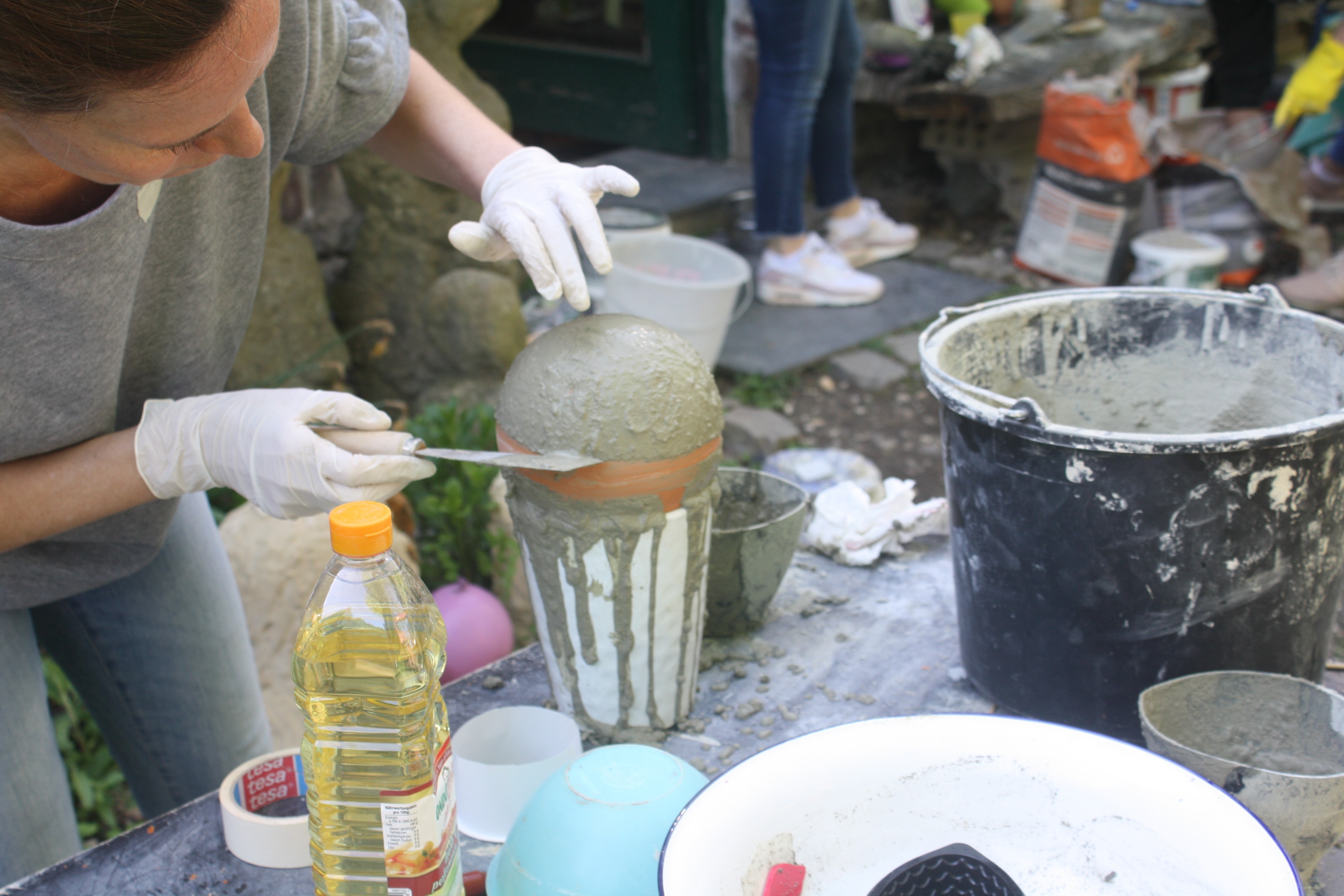
The most important part of casting concrete is preparation. Oil your chosen mold with a regular vegetable oil (such as sunflower oil) so the concrete releases more easily later. Always use a flexible mold, since metal and glass don't work well here. Because metal and glass can't flex the way an elastic plastic mold can, it becomes much harder to remove the dried concrete décor from the mold. Even oiled metal or glass molds make it difficult to get the concrete out.
 Image source: Katrin Kleinau
If you'd like to make a tealight holder, for example, you should work with two different molds: an outer one and an inner one. It's important to weigh down the inner mold once you've placed it into the filled outer mold. Otherwise, the inner mold will float on top of the wet concrete.
 Image source: Katrin Kleinau
Step-by-Step Guide to Casting Concrete
Got all your materials ready and already have an idea for your concrete décor? Here's a guide to help you make your own decorative concrete.
Materials – What Do You Need to Cast Concrete?
- Plaster bucket
- Mold for the casting concrete
- Casting concrete
- Whisk (or another stirring tool)
- Oil and brush
- Cutter knife, rubber mallet, and trowel
- Protective gear: mask, safety goggles, gloves, and a smock
- Cloths
- Skewers
DIY Guide to Casting Concrete – Here's How It Works:
1. Casting Concrete – Put on Protective Clothing
Before you start casting concrete, protect yourself properly. Put on gloves, safety goggles, and a mask. The fine dust from concrete powder can irritate skin and airways. An old smock or apron is also useful for protecting your clothing from splashes.
2. Casting Concrete – Water First, Then Add Concrete Powder to the Bucket
Pour a small amount of water into a flexible plaster or mixing bucket. Then slowly add the concrete powder. This prevents lumps from forming. The mixing ratio here is one part water to two parts concrete powder.
3. Casting Concrete – Stir Until a Quark-Like Mixture Forms
Stir the mixture thoroughly until you get a smooth, creamy texture with no lumps. The consistency should resemble quark or yogurt—neither too runny nor too stiff.
4. Casting Concrete – Oil the Mold Thoroughly
To make sure the concrete releases easily later, brush a thin layer of oil onto all surfaces that will come into contact with the concrete. The outside of the inner mold should also be oiled, which makes removal easier later. Oil every surface that will touch the concrete.
5. Casting Concrete – Slowly Pour the Concrete Into the Prepared Mold
Carefully pour the mixed concrete into the oiled mold. Make sure it's evenly distributed. The base should be at least 1.5 cm thick so the finished piece is sturdy. Gently tap the filled mold to release any trapped air bubbles and allow the concrete to dry evenly.
6. Casting Concrete – Weigh Down the Inner Mold if Needed
If you're using an inner mold (for example, for a tealight holder), weigh it down now—with sand or small stones, for instance. This keeps it in place and stops it from floating up.
7. Casting Concrete – Let the Concrete Cure
Place your mold somewhere quiet and let the concrete dry for at least 24 to 48 hours. Depending on room temperature and humidity, it may take a bit longer.
8. Casting Concrete – Carefully Remove the Concrete From the Mold
Once the concrete has fully cured, turn the mold upside down and gently tap it with a rubber mallet. For flexible molds, light pressure is usually enough. For firmer molds, you can carefully help it along with a cutter knife.
9. Casting Concrete – Optional: Decorate the Surface
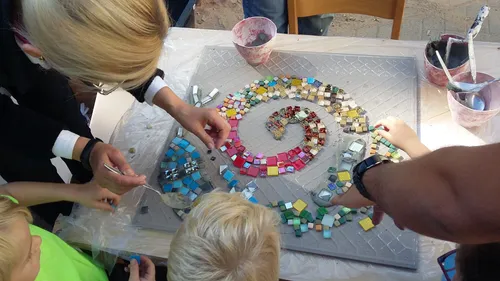
At first glance, concrete looks rough and plain—but that's exactly what makes it the perfect canvas for creative touches. If you like minimalism, you can leave it as is. For everyone else, mosaic work is a great way to dress up your decorative concrete. Let your creativity run wild here—colors and patterns are entirely up to you. You could go for solid, colorful patterns arranged in spirals or rainbow designs. Add the finishing touch with color-matched grout that either complements your design harmoniously or creates striking contrast.

How Long Does Concrete Take to Dry?
Casting concrete needs at least 24 to 48 hours to fully cure. Place the mold in a dry, quiet spot—ideally at room temperature—while it dries.
What's the Best Way to Remove Concrete From the Mold?
Once it's dry, turn the mold upside down. Gently tap it with a rubber mallet or cut it open with a cutter knife. This works especially easily with flexible molds like silicone or thin plastic. That way, your concrete-look décor stays beautiful and undamaged.
 Image source: Katrin Kleinau
Save €5 on a DIY classSubscribe to our newsletter and save €5 on your next DIY class near you.


Casting Concrete – FAQs
Discover classes of Bildhauerei Köln - Katrin Kleinau