Table of contents
- 1. What is brush lettering?
- 2. What are brush pens?
- 3. Learning brush lettering: which brush pens work best for beginners?
- 4. How do you hold a brush pen correctly?
- 5. Can you also paint with brush pens?
- 6. What's the best way to learn brush lettering?
- 7. Tips for brush lettering beginners
- 8. Brush lettering ideas - what you can create with brush pens

Frau Feierlich
Partner and writer
Brush Lettering for Beginners – The Basics:
- Brush lettering is a technique within hand lettering where flowing lettering is drawn using brush pens.
- Choosing the right brush pens matters, especially for beginners. Medium-sized brush pens from Edding and Stabilo are recommended.
- With brush lettering, you should hold the brush pen correctly and practice regularly to improve your technique.
- Brush pens aren't just for lettering - you can also paint with them and bring various creative projects to life.
With the technique of brush lettering, you can create stunning calligraphic effects and turn simple lettering into real eye-catchers. In brush lettering, everything comes down to drawing each letter of the alphabet with what's called a brush pen. Once you master the techniques of brush lettering, you can use it to design beautiful cards, gift tags, wall art, and much more. Here you'll learn everything you should know about brush lettering as a beginner, and how to create wonderful artwork with brush pens. I will share plenty of tips and tricks for brush lettering along the way.
What is brush lettering?
Brush lettering is a branch of hand lettering. Hand lettering refers to all lettering drawn by hand. What makes brush lettering special is drawing with a brush or what's called a brush pen. With these flexible brush tips, you can create sweeping, expressive brush lettering.
Creative ideas for youWith the konfetti newsletter, you will get creative DIY ideas and workshops delivered straight to your inbox.


What's the difference between brush lettering and hand lettering?
Brush lettering is essentially a subcategory of hand lettering. Strictly speaking, hand lettering describes everything that has to do with handwriting and the art of beautiful letters.


What are brush pens?
In hand lettering, people usually draw with a felt-tip pen or fineliner. These have a thin or moderately thick tip that always keeps the same shape. A brush pen is different. It has, by comparison, a flexible brush tip that lets you recreate the so-called calligraphy effect. As with classic letter drawing using a nib and ink, varying the pressure on the pen creates lines that swell and taper.
For brush pens, this rule of thumb always applies:
- All downstrokes, drawn from top to bottom, are drawn with a lot of pressure on the brush pen. This makes the downstrokes appear thicker.
- All upstrokes, drawn from bottom to top, are drawn with light pressure and therefore appear thinner in brush pen lettering.
Learning brush lettering: which brush pens work best for beginners?
In my brush lettering beginner classes, I recommend and practice with participants using medium-sized brush pens. Working with a tip that's neither too long nor too small makes getting started easier and lowers the risk of frustration. Personally, I find the best pens for brush lettering to be the brush pens from Edding and Stabilo. They glide beautifully on smooth paper, and their tip handling, ink flow, and tip size make them best suited for brush lettering beginners.
Tip: Learn the techniques of brush lettering in one of 111 hand lettering classes. Find the right workshop near you.
How do you hold a brush pen correctly?
It's best to hold the brush pen fairly far up the barrel, to keep a bit more control. It should rest loosely on your middle finger and be held (without tension) by your thumb and index finger. Before you start drawing letters with the brush pen, you can always do a quick test.
Use this test to check you're holding the brush pen correctly: Press the brush pen onto the paper at a 45-degree angle, and a teardrop shape should form. The teardrops you dab should point roughly toward 10-11 o'clock, if you picture a clock face around them.
When you apply pressure to the pen, that is, when drawing the downstrokes, the pen will usually make a slight scratching sound on the paper. That's a good sign. :) As you're learning brush lettering, the upstrokes especially will be a bit wobbly at first. That's completely fine. Your muscles and your brain both need time to adjust to working with changing pressure. As a tip, I always tell my workshop participants to mentally repeat the calligraphy rule to themselves.
A brush lettering tip for the more experienced: Work a little with your breathing: inhale on the upstroke, exhale on the downstroke - it's a bit like yoga. ;)

Can you also paint with brush pens?
Brush pens are incredibly versatile. During my fashion design studies, for example, I used them to color my designs and figure sketches. I especially loved them for creating soft shadows. But brush pens are also great for sketching. You can use them in various shades to quickly capture urban scenes or landscapes and give the whole thing a dynamic feel. So the answer is yes - you can absolutely paint and create beautiful pictures with brush pens.
What's the best way to learn brush lettering?
As with anything new you learn, practice is the most important thing in brush lettering too. Make sure to set aside regular time for it, and ideally, work brush lettering into your everyday life.
Practicing brush lettering - how you can work it into your everyday life, for example:
- While writing your shopping list
- In journal entries
- Writing notes
- etc.
This gives your hands, eyes, and mind the chance to get familiar with the new tool and the new way of writing. Bit by bit, you'll get the hang of the coordination, gain more confidence, and dare to try your first brush lettering pieces or even full compositions.

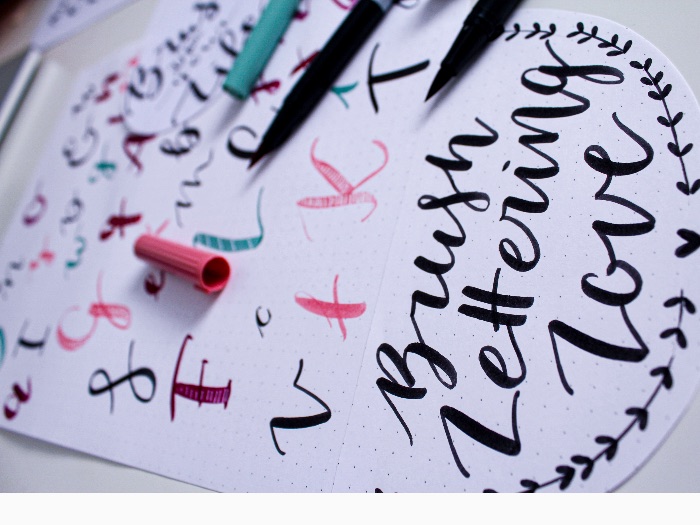
You can also use brush lettering templates to practice - like my brush lettering piece, for example:

Tips for brush lettering beginners
- The right brush lettering paper: Always use smooth (satin-finish) paper to protect the delicate brush tips of your pens
- Wrist warm-up exercises: Always do a few loose swing exercises at the start to warm up your wrist and hand muscles
- Practice brush lettering: Set fixed times to practice
- Set up a creative space: Arrange your workspace well, so you have enough room
- Take your time for brush lettering: Slow down and enjoy the calm
- Brush lettering as a way to unwind: See the whole thing as play, let yourself get into it, and practice letting go
- Practice makes perfect: Don't despair if it doesn't work right away. Let it rest and try again a few days later
- Collect brush lettering sketches: Keep a sketchbook or loose collection of pages, so you can see your progress
- Brush pen letters: Keep practicing the letters that don't come easily, again and again
- Brush lettering as a left-hander: As a left-hander, be especially careful to draw slowly so nothing smudges
- Adjust the paper: Move the paper instead of your body - this helps avoid tension
- Great brush lettering designs: Combining it with graphic fonts can make your brush lettering look even more modern
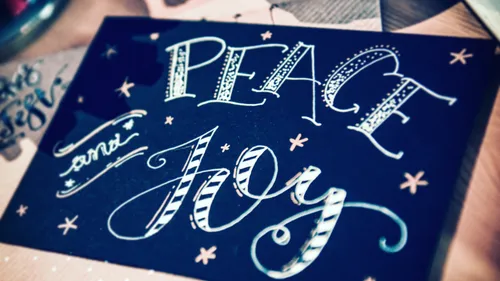
This is what your finished brush lettering piece could look like:

Brush lettering ideas - what you can create with brush pens
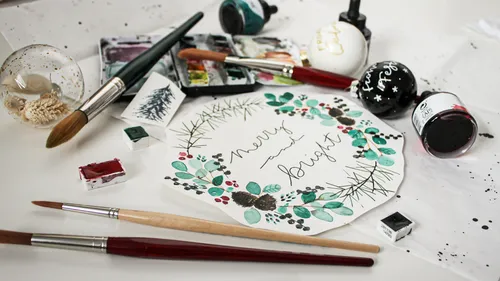
- Paint brush lettering with a watercolor flower wreath
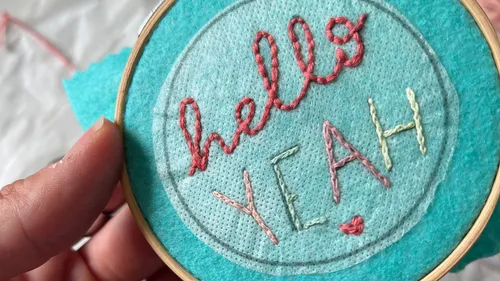
- Brush lettering in a flower hoop as a lovely decoration for your home
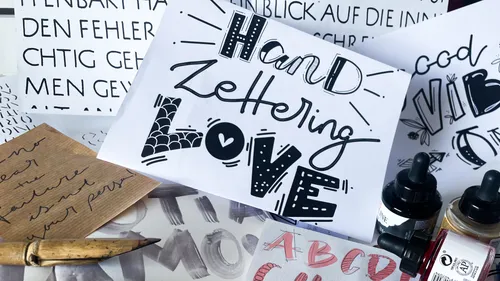
- Design beautiful postcards with lettering
- Decorate dishware like plates and cups with lettering
- Brush lettering wall art or posters
- Window art with brush lettering

Brush Lettering for Beginners – FAQ
Discover classes of Frau Feierlich