Watercolor Painting: How to Bring Your Ideas to Life Easily

Watercolor Painting: How to Bring Your Ideas to Life Easily

Susanne Riehl
Watercolor Painting – The Key Facts:
  • Watercolor painting is great for beginners thanks to the transparent, fluid qualities of the paint.
  • Starting with a color mood and dabbing clear water onto the paper here and there makes it easy to create watercolor pieces.
  • Watercolor pencils offer an intuitive way to draw lines and bring ideas to life easily.
  • Material quality matters, but it doesn't have to be expensive.
  • Watercolor paints need absorbent paper that isn't too thin (at least 220 g).

I can't paint. I'm not creative. Thoughts like these often hold us back from letting our creativity flow freely. But we believe: anyone can learn to paint. It just takes a little patience and the right guidance. Watercolor painting in particular is well suited to beginners, since its transparent, fluid qualities create beautiful color gradients almost on their own. In our painting classes, you can bring your ideas to life with ease. With our watercolor tips, we'll show you how to get started with watercolor painting and what to look for when it comes to watercolor pens and pencils, so your watercolor painting turns out even better.

How do I get started with watercolor painting?

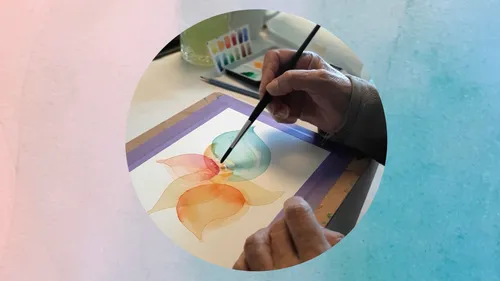
For every beginner, here's our advice for watercolor painting: start with a color mood that especially speaks to you. You can mix these watercolors and then dab clear water onto the paper in places. From there, you can follow this random pattern to create:

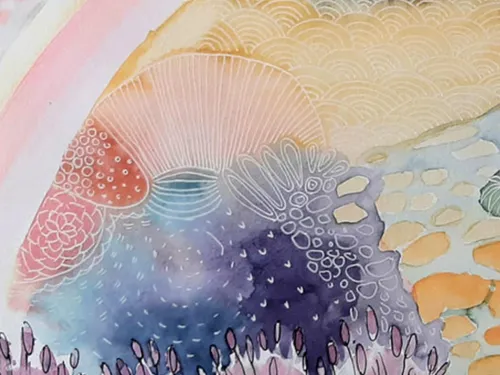
Once it's dry, you can work with watercolor pencils and draw your lines intuitively. This process is called doodling. With this technique, you can easily bring your watercolor ideas to life. The great advantage of this approach is that there's no pressure anywhere to get the shape or color exactly right. This lets you let go and simply create while still producing wonderful watercolor pieces.

You also don't need any drawing skills for watercolor painting, since watercolor painting is really simple. The important thing is not to skimp on material quality. But it also shouldn't be too expensive, or the fear of wasting it might hold you back from experimenting.

Visit a watercolor class
You can easily learn to work with watercolors in a watercolor class, too. There, I
— Susanne (you-craft-it)

What should you keep in mind when watercolor painting?

Watercolor paints Photo: © Susanne Riehl

There are a few things to keep in mind with the art of watercolor to help create great watercolor pieces. Because of its fluid texture, working with watercolors requires paper that is absorbent and not too thin (at least 220 g). Watercolor paper comes in various textures - for beginners, we recommend a fine-textured one.

What brushes do you need for watercolor?

Brushes should be able to hold plenty of water. They don't need to be made of natural hair, though - high-quality synthetic brushes are perfectly sufficient for bringing your watercolor ideas to life.

Many manufacturers also offer watercolor brush pens. These are especially suited to calligraphy. For the sake of the environment, we favor refillable pens. You also don't need a set of 120 pens, because even though the variety of colors is tempting, remember that watercolors blend beautifully, letting you achieve every in-between shade you need for your watercolor pieces.

What pencil do you need to bring watercolor ideas to life easily?

If you want to sketch beforehand for your watercolor pieces, you should use a B pencil. Pencils that are too hard can leave marks in the paper even after erasing, and ones that are too soft leave behind too much graphite. There are also watercolor colored pencils that can be blended with water.

This lets you blur the outline and get a shaded, colored area. Drawn into wet areas, they glow and the outline blooms. Our article on watercolor painting for beginners gives you more insight into the different watercolor techniques out there.

Overview of watercolor brushes and pencils

Watercolor brushes
Pencils for watercolor painting
Should hold plenty of water
Avoid pencils that are too soft or too hard
High-quality synthetic brushes are perfectly sufficient
Pencils with a B grade work best

What are the primary colors you should have?

The primary colors that let you mix the widest range of colors are magenta, cyan, and yellow. With these, the possibilities for watercolor painting are limitless. Black and white are also always worth having. To shade your colors, neutral tint and Chinese white are best for setting highlights on your watercolor pieces.

What can I paint with watercolors?

Watercolors offer a wide variety of ways to create creative and impressive artwork. Here are a few ideas for what you can paint with watercolors:

Watercolor idea 1: Painting clouds with watercolor

Watercolor of a landscape with a field and blue sky Photo: © Susanne Riehl

Clouds are a popular motif in watercolor painting, since the fluid qualities of the paint capture them especially well. You can use different shades of blue to shape the forms and shadows of the clouds. With gentle brushstrokes and the right amount of water, you can create beautiful, airy cloud paintings.

Watercolor idea 2: Painting plants with watercolor

Watercolor painting of three plants with flowers. Photo: © Susanne Riehl

Plants are another fascinating motif that works well with watercolors. You can use different shades of green to depict the leaves. With the watercolor technique of "negative painting", you can also define the shape of the plant through its surroundings, by applying color around it. Discover the techniques of watercolor painting and plenty of ideas to recreate in our Flowers & Planets watercolor class in Cologne.

Watercolor idea 3: Painting flowers with watercolor

Three flowers painted with watercolors. Photo: © Susanne Riehl

Flowers are perfect subjects for watercolor painting, since the transparent qualities of the paint depict them beautifully. You can use different colors to paint the various petals and leaf structures. With delicate brushstrokes and the right application of color, you can capture the beauty and delicacy of the flowers.

Watercolor idea 4: Painting a landscape with watercolor

Watercolor painting of a landscape with plants and birds Photo: © Susanne Riehl

Watercolor is excellent for depicting landscapes. You can use different colors to paint sky, mountains, trees, and water. With gradients and washes, you can bring depth and dimension to your landscape paintings. Experiment with different techniques to capture the atmosphere and mood of the landscape.

Watercolor idea 5: Painting birthday cards with watercolor

Watercolor painting for a birthday card featuring a birthday cake. Photo: © Susanne Riehl

Watercolor Card Workshop
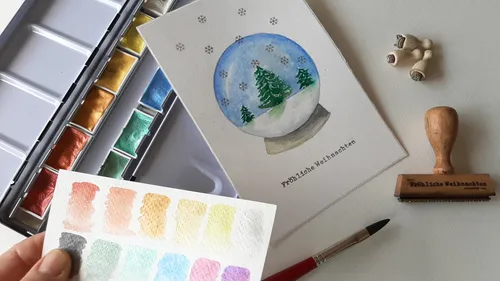
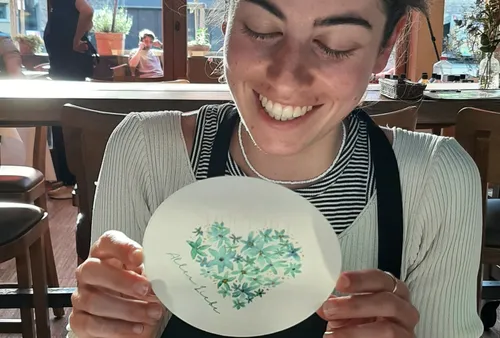
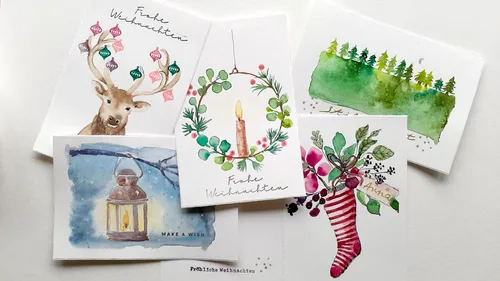
A handmade birthday card is always a joy - for the person giving it as much as for the person receiving it. Create your own birthday card with watercolors in our greeting card workshop in Cologne and simply gift it to someone you love.

Conclusion: You can bring your watercolor ideas to life easily

With these tips, you're ready to get started with watercolor painting. Watercolor ideas really are quite easy to bring to life once you've got the hang of it and you're using the right watercolor paper along with high-quality watercolor brushes and pens. As with any creative pursuit, watercolor painting comes down to: practice, practice, practice. The great thing is, though, you'll quickly notice the progress you're making. And in the end, you'll always have a lovely gift idea ready if you want to give someone special something personal - like watercolor cards, for example. If you're not yet familiar with watercolor painting, check out our article on watercolor painting for beginners to learn about the different techniques, which paper to paint watercolors on, and much more.

Watercolor Painting – FAQ

How do I get started with watercolor painting?

Start with a color mood you like, dab clear water onto the paper here and there, and follow the random pattern that forms. Once dry, you can use watercolor pencils to draw intuitive lines (doodling) - with no pressure to get the shape exactly right.

What brushes do you need for watercolor painting?

Brushes should be able to hold plenty of water. High-quality synthetic brushes are completely sufficient - natural hair isn't necessary.

Which pencil should you use for sketching?

A B-grade pencil works best. Pencils that are too hard leave marks in the paper, while ones that are too soft leave behind too much graphite.

What primary colors do you need for watercolor painting?

The primary colors magenta, cyan, and yellow are enough to mix the widest range of colors. Black, white, neutral tint, and Chinese white are also worth having for shading and highlights.