Table of contents
- 1. How do I get started with oil painting?
- 2. What do you need to paint with oil paints?
- 3. Is oil painting suitable for beginners?
- 4. Oil painting ideas: What can I paint with oil paints?
- 5. Tips for beginners: What do you need to bear in mind when painting with oil paints?

Sonja Neumann
Partner and writer
Oil painting – The essentials at a glance:
- Thanks to the long drying times of the paints, oil painting offers beginners plenty of flexibility.
- With the right basic equipment, you can get started with oil painting straight away.
- Mixing oil paints and layering colours are important techniques.
- Still lifes are ideal subjects for learning the basics of oil painting.
- Join my oil painting art course, learn the basics and paint some great subjects.
When it comes to painting with oil paints for beginners, getting started can be an exciting yet challenging experience. But don’t worry – with the right tips and the basic equipment, you’ll be able to make your first brushstroke with ease.
How do I get started with oil painting?
First of all, to master oil painting step by step, you should familiarise yourself with the basics of oil painting to get a feel for the different oil painting techniques and materials.
When you paint with oil paints, you get a feel for the colours. Thanks to their long drying time, the paints are ideal for layering and making corrections.
Mixing colours is a key focus of my classes. This helps you get to know the colours, develop a feel for them and ultimately ‘understand’ them. I work with a very limited colour palette, which allows me to paint practically any picture using very harmonious colours.
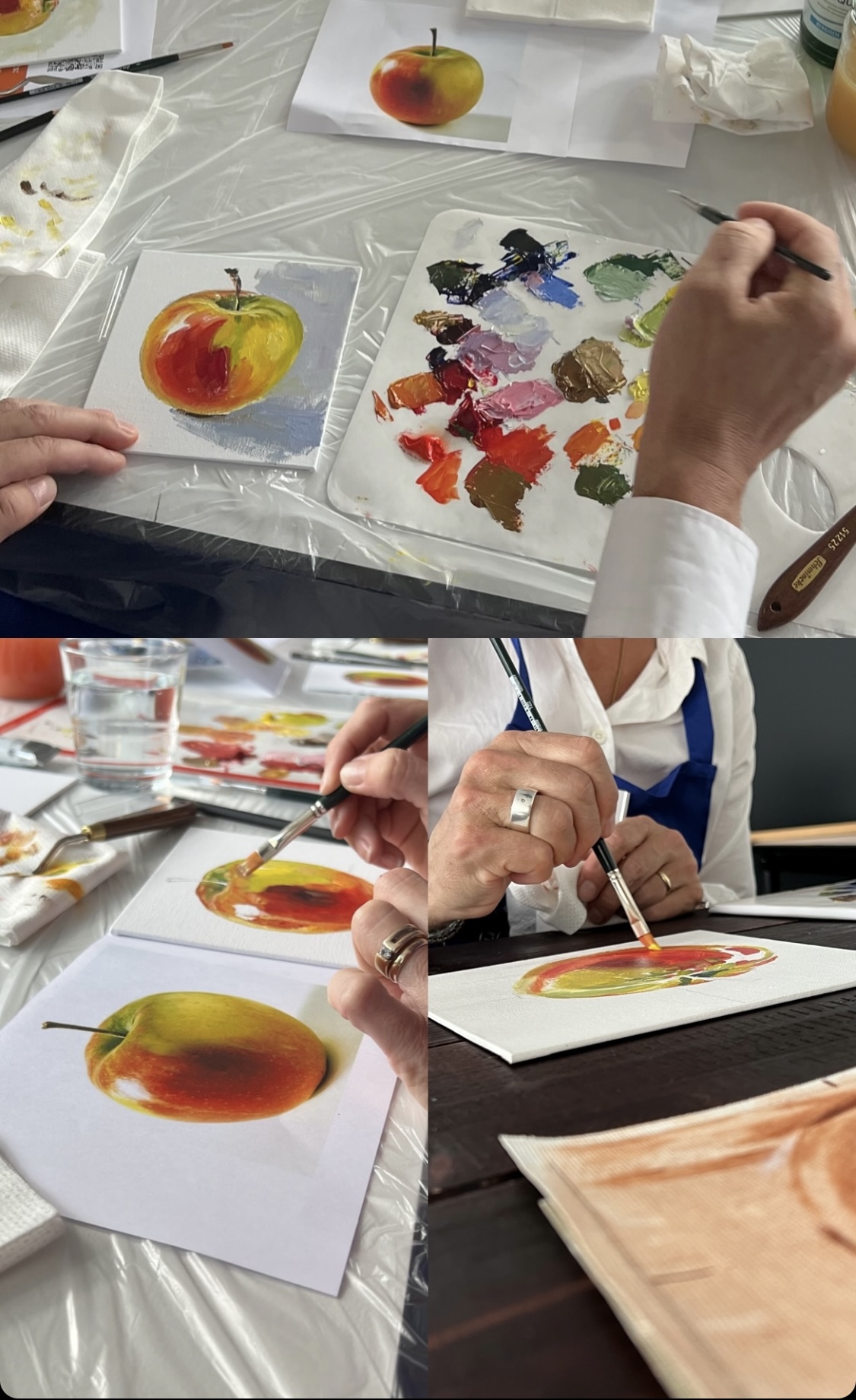
In my Daily Painting courses, I teach the ‘wet-on-wet’ technique. As oil paint dries slowly, you’ll be painting on a wet canvas the whole time. This makes it easier for beginners.

What do you need to paint with oil paints?
Here is a list of essential materials for oil painting:
- Brushes: For beginners, I recommend 3–4 brushes (e.g. flat brushes in sizes 4, 6 and 8) and a pointed round brush for details.
- Canvas or other painting surface: In my oil painting courses, we use small canvases measuring 15x15–25x25 cm. While priming canvas for oil painting is a useful skill to learn, using pre-primed canvases works perfectly for your first attempts.
- Oil paints: The paints are the heart of oil painting. It is best to use oil paints from reputable brands. Cheap paints prevent good results and a sense of achievement. To start with, the three primary colours (cadmium red, cadmium yellow, ultramarine blue) plus titanium white are sufficient, as you can mix all colours using these. I now recommend Schmincke’s water-mixable oil paints ‘Norma Blue’ (using the wet-on-wet technique with Medium 2 Blue as a painting medium).
- Palette: A palette for mixing without wells; this could also be a slightly larger plate or a glass plate. If you choose a paper plate, use a coated one.
- Palette knife: A palette knife for mixing the colours.
- Medium: Use bleached linseed oil as a medium. Pour the linseed oil into a small container.
- Crepe paper or cloth
- We do not need any solvents, such as turpentine.
Inspiration for youSign up for the newsletter and receive tips for great experiences near you. As a thank you, you’ll receive a €5 voucher.


Is oil painting suitable for beginners?
A resounding ‘yes’ – oil painting is definitely suitable for beginners too. Many art enthusiasts think that painting with oil paints is complicated and only feasible for experienced artists. But in reality, it’s easier than you might think.
A key advantage of oil painting is the long drying time of the paints. This allows you to make plenty of corrections and touch-ups during the painting process without the paint drying immediately. This slow drying property is also what makes advanced methods like glazing in oil painting possible later on. Unlike watercolours, where mistakes are difficult to rectify, or acrylic paints, which dry quickly, oil painting offers a great deal of flexibility.
Oil painting ideas: What can I paint with oil paints?
For beginners, I always recommend still lifes, as they allow you to learn a great deal about light and shadow and how to render them.
- Floral still lifes: Bouquets or individual flowers offer vibrant colours and interesting shapes, ideal for practising colour gradients and details.
- Fruit and vegetables: Apples, lemons, pears or pumpkins are perfect subjects for practising highlights and shadows.
- Kitchen scenes: Arrange utensils, crockery or ingredients – perfect for simple yet interesting compositions.
- Mountains and forests: Landscape subjects with clear structures, allowing you to work on both fine details and larger areas.
- Houses: These offer geometric shapes and help you practise perspective and proportions.
>Tip: When starting out, copying expressive photos is easier than ‘live sketching’ from objects.

Tips for beginners: What do you need to bear in mind when painting with oil paints?
If you’re just starting out with oil painting, there are a few basic tips to help you get started and avoid typical beginner’s mistakes
Always keep your brushes clean!
I always have a cloth to hand when I’m painting; otherwise, the brushes end up all brown and you can’t achieve vibrant colours anymore. Proper care and cleaning oil painting brushes thoroughly after each session will also ensure they last longer.
Be careful with white on your brush too:
Just a tiny bit left on your brush will make all the colours look chalky.

Painting with oil paints – FAQs:
Discover classes of Sonja Neumann