- Cocoa originally hails from the Amazon rainforest in South America.
- Etymology: The word comes from the Nahuatl language—"cacahuatl" means "bitter drink" and "xoco-atl" means "hot water."
- Today, the majority of the world's cocoa is grown in West Africa (65%).
- When buying chocolate, look for Fairtrade and Organic seals to ensure sustainability.
Chocolate is one of the most beloved treats on the planet, but where does cocoa come from? Beyond the wrapper of your favorite candy bar lies a thousands-year-old story of culture, ritual, and survival. To truly appreciate that square of dark chocolate, we have to follow the incredible journey of the beans—from their wild roots in the Amazon to the massive scale of modern global manufacturing.
Where does cocoa come from: The ancient roots
The cocoa origin is found deep within the Amazon rainforest of South America, where it has been growing for millennia. The Maya, Aztec, and Olmec civilizations were the first to domesticate the plant. These indigenous peoples were true pioneers, developing the very foundation of what we now call chocolate.
Traces of theobromine (the primary alkaloid in cocoa) have been found on pottery shards dating back over 4,000 years. For the Mayas, cocoa beans were so valuable they were used as currency. Later, they revered the resulting drink as the "nectar of the gods." Among the Aztecs, cocoa consumption was often reserved for the nobility. The Olmecs, meanwhile, prepared a frothy chocolate drink used in sacred rituals and as traditional medicine.
Cocoa word origin: Where does the word cocoa come from?
The word “cocoa” is derived from two words in the Nahuatl language used by indigenous peoples:
- cacahuatl: literally means “bitter drink”
- xoco-atl: literally means “hot water”
How was cocoa produced back then, and what ingredients were used?
More than 2,500 years ago, the first step in obtaining a good aroma in cocoa was to ferment the cocoa beans. This means that the Mayans and Aztecs were already familiar with this technique of fermenting and drying the beans for both consumption and trade. To prepare it, they roasted the cocoa beans over a fire, peeled them by hand, and ground the cocoa with mortars made of volcanic lava rock. This produced a cocoa mass, which they then mixed with hot water and various spices such as chili, cinnamon, and pepper.
Note: Want to make your own chocolate from real cocoa beans? In the cocoa and chocolate workshop, you'll learn how to do it step by step.

What was the original significance of cocoa?
The Mayans began cultivating the cacao plant more than 2,500 years ago. For them, cacao symbolized physical strength and longevity. They used cacao as medicine, as a stimulant, and as a tonic. Both the Maya and the Aztecs considered cocoa a sacred food, as it symbolized a gift from the gods. They used cocoa beans as currency and sacrificed cocoa in rituals to Quetzalcoatl, the Aztec god of fertility.
How did cocoa come to Europe?
Spanish colonists brought cocoa to Europe. At first, cocoa sweetened with sugar remained a status symbol in Spain. It was not until the 17th century that the cocoa fruit became widespread throughout Europe. Demand rose and became so great that plantations were established in South and Central America and East Asia for the cultivation of cocoa. In 1847, a British company called Fry & Sons mixed cocoa butter into cocoa for the first time instead of water and poured the liquid into a mold, creating the chocolate bar.

Where is cocoa grown today?
Today, over 65 percent of cocoa is grown in West Africa. The most important cocoa-producing countries in West Africa include Ivory Coast, Ghana, and Cameroon. Other important producing countries are Indonesia, Ecuador, Brazil, and the Dominican Republic.
Cocoa is mainly grown in tropical regions within the 10th parallel around the equator. The majority of global cocoa cultivation is carried out by small farmers.
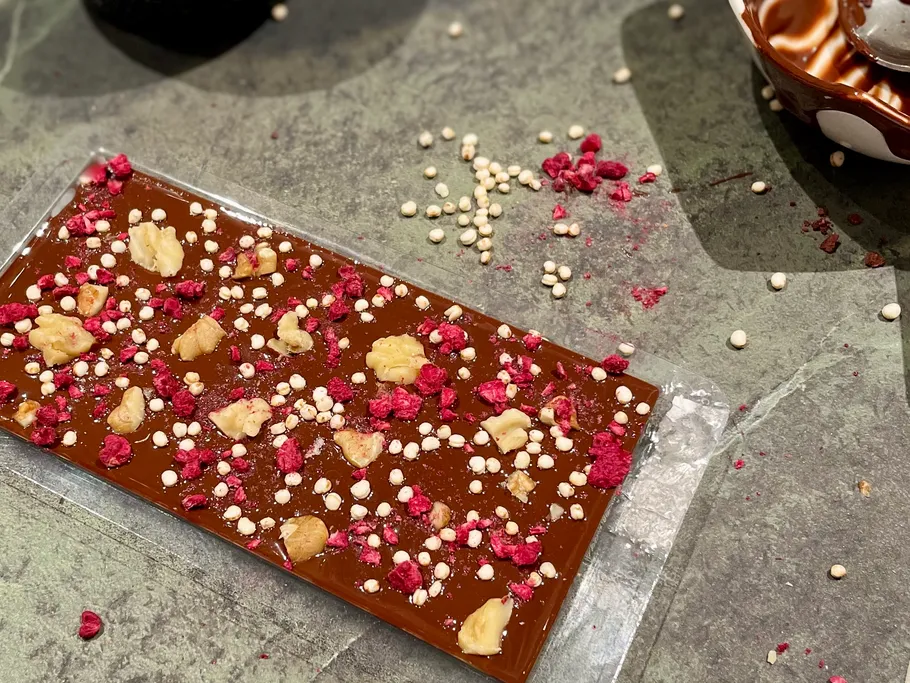
Tip: At the cocoa and chocolate workshop, you will embark on a journey back to Latin America, following in the footsteps of the cocoa fruit. You will learn more about the origins of cocoa and make your own chocolate bar and cocoa drink.
How is cocoa grown?
Cocoa cultivation is quite demanding. Cocoa is grown on small trees, mostly in shady areas of the tropics.
The best growing conditions for the cocoa tree include:
- A warm, humid climate
- Evenly distributed rainfall
- Well-drained soil with a slightly acidic pH value
The trees bear colorful pods that contain the cocoa beans from which chocolate is made. The pods are usually harvested by hand, using a machete or other tools. After harvesting, the pods are carefully opened, the beans removed, and laid out in the sun to ferment and dry. The dried cocoa beans are then roasted to develop their typical chocolate flavor. The cocoa beans are then crushed into small pieces called cocoa nibs. The nibs are ground into a paste, which is used to make various chocolate products. The entire cocoa production process, from planting the tree to the finished chocolate product, can take several years.
The dark side of cocoa farming
However, mass cocoa production also has a dark side, as cocoa cultivation has led to deforestation in many tropical areas. Most cocoa plantations are monocultures, which damages the soil and gradually causes the land to become barren. Cocoa plants require constant irrigation, which causes tropical hot regions to dry out. In addition, the farmers who grow the cocoa often receive only a tiny fraction of the price that is ultimately paid when the finished product is purchased. For a bar of chocolate, this amounts to only a few cents. For many cocoa farmers, the yield is not enough to make a living, and they are forced to have their children help out on the plantation.
What should I look for when buying chocolate?
When buying chocolate, you can make sure to purchase products with Fairtrade and eco-labels. This way, you support cocoa farmers and environmental protection in the growing region. There are also suppliers who use the proceeds from chocolate sales to plant new trees and design environmentally friendly packaging.
The Fairtrade chocolate seals
- Fairtrade: If the Fairtrade seal is printed on the packaging, almost all of the ingredients in the chocolate have been fairly traded.
- Fairtrade Cocoa: The Fairtrade Cocoa seal indicates that only the cocoa in the chocolate has been fairly traded.
- GEPA/GEPA fair+: GEPA stands for “Gesellschaft zur Föderung der Partnerschaft mit der Dritten Welt” (Society for the Promotion of Partnership with the Third World). GEPA is a company that trades exclusively fairly. All products with the GEPA logo have been fairly traded.

What makes the cocoa bean so special?
Cocoa beans are very special because they are used to make one of the world's most popular sweets: chocolate. The beans contain various chemical compounds, including theobromine and caffeine, which give chocolate its unique taste and aroma. Cocoa beans are also rich in antioxidants, which are associated with various health benefits, including improved heart health and a lower risk of chronic diseases. Cocoa also contains various minerals, including magnesium and iron. Finally, the cacao bean has played an important role in the cultural and economic development of many countries, particularly in West Africa and Latin America, where cacao is an important agricultural product.
What can you expect from a workshop with cocoa expert Ismael from Nicaragua?
In our authentic and interactive chocolate workshops, cocoa expert Ismael takes you on a journey into the world of the Aztecs and Mayans. You will have the opportunity to make your own original ancient cocoa drink and your own chocolate.
Discover 34 chocolate tastings in Germany and Austria.