Table of contents

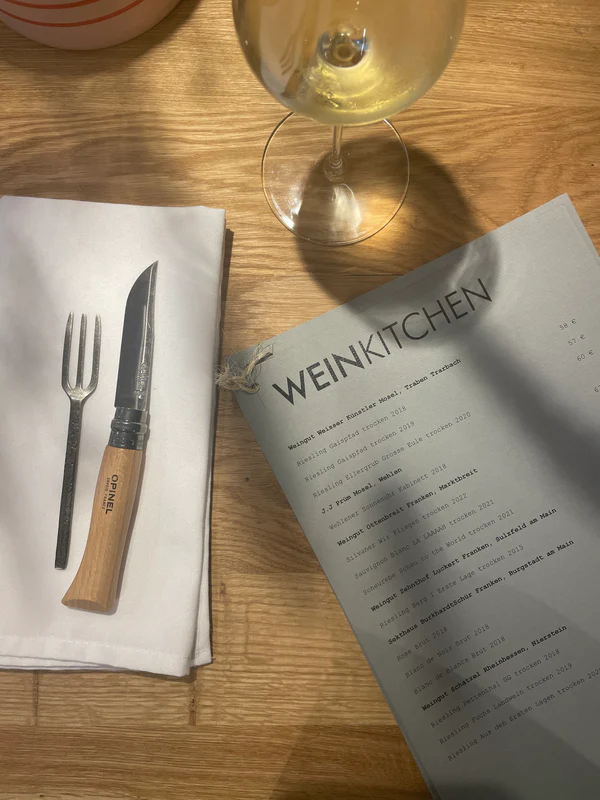
- What Riesling is: Riesling is a white wine that's widely grown in Germany.
- Where Riesling is grown: in Germany, Riesling is grown in the Pfalz, along the Mosel, and in Rheinhessen.
- Try Riesling yourself: visit WEINKITCHEN and join the Riesling wine tasting in Hamburg.
What Is Riesling?
With a glass of Riesling in hand, you're holding more than just a drink, you're holding a piece of German history and passion. Hardly any other grape variety is as closely tied to Germany as Riesling. Whether as a dry, off-dry, or sweet white wine, Riesling reflects the diversity of its homeland.

Where Is Riesling Grown?
Riesling's origins go back a long way. The earliest mentions of this fine grape appear as far back as the 15th century in old monastery records along the Rhine. From there, its journey began, spreading across the cool, steep slate slopes to the sun-soaked, top-tier vineyard sites that today rank among the best Riesling-growing regions in the world.
- In the Pfalz, about 13,490 acres are planted with Riesling, making it the largest single growing region for Riesling in Germany.
- The Mosel follows closely with nearly 13,320 acres of Riesling.
- In Rheinhessen, it's around 9,315 acres.
These numbers show: Germany is the home of Riesling, both historically and in sheer volume.
Riesling is truly a child of the north: it loves cool nights to preserve its freshness, and warm days to develop its fruity aromas. This natural tension between warmth and cold gives it its unmistakable flavor.
What Does Riesling Taste Like?
Once you take a moment to really smell a glass of Riesling, you will never forget it. Typical Riesling flavors include fresh citrus, green apple, peach, or apricot, paired with a subtle mineral coolness reminiscent of morning dew on slate. This balance of fruit, freshness, and finesse is Riesling's signature trait.
Is Riesling Made Dry, Off-Dry, or Sweet?
What makes Riesling so special is its incredible versatility. The cellar master determines the aging time and residual sugar content, which is how you get everything from dry Riesling to off-dry Riesling to sweet Riesling. German wine law defines exact residual sugar thresholds that determine these classification levels. Which style suits you best depends entirely on your taste and the occasion.

What Pairs Well with Riesling?
Dry Riesling impresses with its clear structure, crisp acidity, and mineral elegance, perfect with fish, seafood, or lighter dishes. Off-dry Rieslings feel more harmonious, with a subtle fruity sweetness that pairs beautifully with spicy foods or Asian cuisine. Sweet Rieslings are fruity, juicy, and aromatic, a delight with desserts or simply enjoyed on their own.