
Table of contents
- 1. Where is coffee grown?
- 2. What are the optimal conditions for coffee farming?
- 3. How is coffee grown and cultivated?
- 4. Which coffee varieties are most commonly grown?
- 5. How is coffee harvested?
- 6. What risks does coffee farming have?
- 7. Can I grow coffee in Germany?
- 8. What should I look for when selecting my coffee?

Ten Farmers and Bananas
Partner and writer
Growing coffee – Key facts at a glance:
- Where coffee is grown: Coffee farming takes place in Brazil, Mexico, Colombia, Malaysia, Vietnam, Kenya, Rwanda, and Ethiopia, with ideal conditions in high-altitude regions.
- Optimal growing conditions: Coffee thrives in loose soil with high humus content, intense sunlight, 15–30°C temperatures, and 1500–2000 mm/m² annual rainfall.
- How to grow coffee: Plant coffee seedlings 1.5–2 m apart, in nutrient-rich soil with proper spacing to avoid root competition and stunted growth.
- Coffee varieties: Arabica and Robusta are economically important; Kenyan varieties include SL 28, SL 34, Ruiru 11, and K7.
- Harvest & care: Coffee cherries ripen in 6–11 months depending on variety; hand-harvested in Kenya and processed to remove skin for uniform flavor.
Learn how to care for coffee plants and grow coffee at home or on a farm. Discover optimal growing conditions for coffee farming, coffee bean cultivation essentials, and whether you can grow coffee in Germany — all from Angelo Hey, who grows coffee in Kenya.
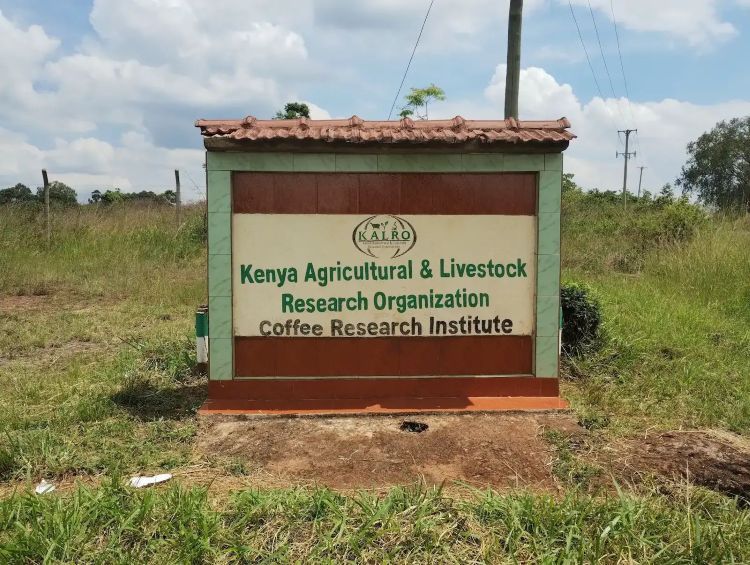
Two years ago, Angelo planted his first coffee trees on his plot of land in Kenya. Since then, he has been intensely interested in coffee farming and wants to understand how coffee grows and how coffee beans are formed. This year, he plans to plant all Kenyan coffee varieties. To get his coffee seedlings, he researches online, makes phone calls, and asks acquaintances whose parents grew coffee. Because to know where coffee beans grow and how coffee is grown, you need knowledge and experience. After some research, he received a tip to try the Coffee Research Institute, which is located just under 40 minutes outside Nairobi. The Coffee Research Institute is a branch of the Kenya Agricultural and Livestock Research Organization and researches and sells various coffee varieties that grow on coffee plantations in Kenya.
Here Angelo buys the varieties SL28, SL 34, K7, Ruiru 11, Ruiru Grafted and Batia for 30 cents each.
There he gets advice on planting the coffee plant and preparing the soil — essential knowledge for successful coffee farming and proper coffee plant care. Why is it important for Angelo to grow a variety of Kenyan coffee trees? Kenyan coffee is considered one of the most traded coffees in the world. The fine acidity, noble fruitiness, and juicy taste make Kenyan coffee beans so popular. Those who understand how coffee grows and where coffee is grown quickly recognize that each region produces its own unique aromas — especially in Kenya, where coffee plantations offer ideal growing conditions for coffee plant care and coffee cultivation.
Where is coffee grown?
Coffee bean cultivation extends around the globe. Coffee farming worldwide is particularly widespread in countries such as Brazil, Mexico, and Colombia in Latin America. Coffee is also grown in Malaysia and Vietnam in Asia as well as in Kenya, Rwanda, and Ethiopia in Africa. There are now also smaller coffee plantations in Australia. The coffee shrub, or coffee plant, originally comes from Ethiopia. Coffee farming likely began around 600 years ago in Yemen. Only in Ethiopia and northern Kenya is there still a wide range of original, genetically wild-growing coffee — a fascinating insight into where coffee beans grow and how coffee is grown and cultivated.

In Kenya, the equator runs horizontally through the middle of the country. In two geographic zones, mountain ranges extend and provide moisture and precipitation — ideal conditions for coffee farming and coffee plant care. Exactly here lies a key to how coffee grows and where coffee beans are grown and cultivated.
The East African nation has the second most important coffee exchange after New York. Nevertheless, coffee farming in Kenya is unfortunately on a downward trajectory, as land is increasingly used as a speculation object and in some regions is now worth more than coffee bean cultivation — especially in the area around Nairobi.
When you move off the main road, you quickly come across large coffee plantations. However, some of them are lying fallow as the city expands rapidly. This region in particular shows how coffee is grown and offers valuable insights into the practice of coffee farming and bean cultivation.
Angelo's land, which he inherited from his Kenyan grandfather, is about one acre (approximately 4,047 square meters) and is located 15 kilometers outside Nairobi — in an area where coffee farming is practiced and the coffee plant finds ideal growing conditions for proper coffee plant care.
What are the optimal conditions for coffee farming?
Coffee thrives best where there is loose, deep soil with high humus content. Kenya's volcanic soil, with its fine acidity, offers ideal conditions for coffee farming and successful coffee bean cultivation. Exactly such conditions show how coffee grows and how coffee plants thrive to produce high-quality coffee and perfect coffee plant care.
Optimal growing conditions for coffee farming
- Intense sunlight
- Between 15 and 30 degrees Celsius ambient temperature
- 1500-2000 millimeters/square meter precipitation per year
Each coffee variety has individual conditions to grow. For example, Arabica coffee varieties are highland plants that thrive best at elevations of about 900 meters. The higher the elevation, the slower the coffee cherry grows. This makes it harder. A special quality can be seen when the coffee cherry has a bluish shimmer.
Robusta coffee plants, on the other hand, are somewhat less sensitive and can sprout in lower-lying cultivation areas.
The coffee plant's flowering time depends on precipitation, not temperature. In Kenya, there are two harvest phases due to the short and long rainy seasons.
In Germany, unroasted and freed from shell and fruit beans of the genus Coffea are referred to as green coffee beans.
Coffee should not grow next to other plants, as coffee plant roots can be disturbed by other root systems. Coffee is best planted only next to other coffee plants. Coffee plant care includes ensuring proper spacing and soil preparation.
Shade plants, called mother plants, are also important for coffee farming, so that coffee bushes are not permanently exposed to sun rays. Equivalently, to achieve the same effect, coffee farming is also conducted on selected slopes.
A coffee tree can grow up to 12 meters tall if not pruned for commercial farming. On a coffee plantation, coffee trees are often pruned to only about two meters high for better coffee farming and coffee plant care.
How is coffee grown and cultivated?
Each coffee plant has its own root structure, which is why the spacing of seedlings for coffee farming varies worldwide.
Coffee plant | Spacing |
Batia, Ruiru 11 | 1.5 x 1.5 m |
SL 28, SL 34, K7 and Ruiru Grafted | 2 x 2 meters |
For young coffee plants, a hole of 60 centimeters depth is dug. The soil is then divided between the top soil, which is the soil layer on top, which has 20 centimeters depth, and the sub-soil, which is the soil layer below, which has 40 centimeters depth.

First, a deep hole is created, deeper than the coffee seedling will be planted, to sever the roots of other plants. Otherwise, these would interfere with the nutrient uptake of the young plant.

The top soil should be a mixture that is particularly nutrient-rich and gives the young coffee plant the strength to grow, so it is recommended to enhance it with a mixture of soil and fertilizer. It is important to provide the coffee plant with adequate phosphorus, potassium, calcium, and magnesium, as well as nitrogen in moderate amounts. Proper coffee plant care depends on careful nutrient management.
Nutrient supply should guarantee a healthy pH value of 4.5 to 5.5. Daily watering of coffee plants is a must for successful coffee farming. After planting, the soil must be conserved. This can be achieved with the appropriate cover crops. This includes, for example, bean cultivation for nitrogen fixation.
Which coffee varieties are most commonly grown?
Coffee is not just coffee. Coffee bushes have pronounced genetic diversity. Coffee belongs to the genus "Coffea", of which there are about 500 genera worldwide and more than 6,000 different coffee species. However, only two coffee varieties have economic importance: Arabica and Robusta. The Kenyan coffee varieties of the Arabica species are SL 28, SL 34, Ruiru11, Ruiru11 Grafted, K7, and Batia. Robusta varieties are not grown in Kenya.
The flowering time of a coffee tree lasts only a few days and the flowers are ready for pollination only for a short time of day. Coffea Arabica is the only species that is self-fertile. Other species, including Robusta, are typical cross-pollinators and depend on native insects.
A mature coffee plant can produce up to 40,000 flowers in one growing season. The growing season is the period of the year when climatic conditions allow coffee plants to grow. This typically includes the months when temperatures are appropriate for the particular coffee plant variety and there is sufficient precipitation to support plant growth.
Through clever crossbreeding, it has been possible to bring some coffee plant varieties to the point where they produce fruits ready for harvest just one and a half years after planting. In Kenya, these types include Batia, Ruiru 11, and Ruiru Grafted. The coffee varieties SL 28, SL 34, and K7 require two to three years before they bear fruit.
The first signs of fertility are white flowers that bloom at the tips of 8-15 centimeter long and 4-6 centimeter wide leaves.

Coffee fruits (drupes) are initially green and then turn yellow before turning a bright red and reaching harvest maturity. After six to twelve weeks, coffee cherries reach a size of 1.5 centimeters. For Arabica plants, the drupes ripen in six to eight months, while for Robusta plants, it takes nine to eleven months.

How is coffee harvested?
In Kenya, coffee is harvested by hand. The daily amount for an experienced coffee picker is 60 to 100 kilograms of coffee. This is the net weight of the cherry. The cherries are then pitted.

In this process, the coffee skin is removed and a slippery layer remains on the bean. This bean is then either dried in the sun, but preferably it is washed to remove the slippery layer. This prevents anything that unwanted flavors in the layer might flow into the coffee. Through washing, a consistent flavor note is maintained.
In our climate project in Kenya, we utilize the coffee cherry skin by pyrolyzing it and returning it to the soil as biochar, with the goal of soil improvement. "Pyrolyzed biochar" is also known as plant charcoal.
What risks does coffee farming have?
There are also certain risks in coffee farming. Both climate change, price fluctuations, and social risks. Extreme weather events such as droughts, storms, or floods can cause entire harvests to fail. This causes coffee prices to fluctuate worldwide, which the producers then suffer from. In addition, there are social risks in the coffee industry such as forced labor, poor working conditions, or exploitation of workers. For these reasons, it is advisable to pay close attention to where coffee is sourced.
Can I grow coffee in Germany?
Yes, it is possible to grow coffee in Germany, in a home greenhouse or in consistently warm rooms. The coffee plant will probably not bear fruit. However, coffee does not tolerate frost and must therefore be protected from temperatures below freezing. In particular, the Arabica plant is self-pollinating and the Robusta is more cold-sensitive than Arabica. Successful coffee plant care in cold climates requires special attention to temperature control.
Even if the coffee plant does bear fruit, it will only be once and so little that the harvest is at most a cup of coffee cherries. In Germany, the climatic conditions for a coffee plant are not given, so it is difficult to grow coffee in Germany with much yield. If you do not want to use the coffee plant only as a useful plant, but see the challenge in its care, you can give coffee cultivation in Germany a chance.
What should I look for when selecting my coffee?
You should make sure that your coffee has been gently roasted and source coffee beans from a small roastery. Which coffee is good for you, of course, also depends on your taste, but gently roasted coffees are easier on the stomach.
For me, the taste also depends on the time of day. You might prefer a stronger coffee flavor in the morning and waking up is the priority for you. Here, darker roasts set the tone. However, coffee beans should not be too oily and too ashy, as all flavors may already be lost.
If you prefer a fruity taste, or a cup of coffee that is more reminiscent of tea, light roasts are the better choice. The coffee beans should all have the same color and not be multicolored.
Always up to dateGet tips for culinary experiences in your area and save $5 on your next coffee class.



Growing Coffee – FAQ
Discover classes of Ten Farmers and Bananas

You may also be interested in: