Table of contents
- 1. Drawing for Beginners: How Can You Learn to Draw Easily?
- 2. Drawing Made Easy: What Can Beginners Draw?
- 3. Drawing Supplies: What Do You Need to Draw?
- 4. Pencil Drawing: Drawing Techniques
- 5. Learning to Draw Step by Step — Three Drawing Ideas for Beginners

- Drawing is an accessible and rewarding art form that's easy for beginners to learn.
- If you're just starting out, it's best to begin with simple subjects like round objects or items with few details.
- Choosing the right drawing supplies — paper, pencils, and other tools — is key.
- Pencil drawing requires learning fundamental drawing techniques.
- Discover 299 drawing classes in Germany and Austria.
In my evening drawing class in Munich, you can fully unleash your creativity. You'll learn to master drawing techniques with ease and create your own unique works of art.


Drawing for Beginners: How Can You Learn to Draw Easily?
Learning to draw can be an exciting journey, and there are several approaches that can help along the way. The first step is simply to start! Grab a pencil and paper and begin drawing. Practice regularly and experiment with different techniques to improve your skills. Of course, you can also benefit from a drawing class with professional guidance to learn techniques and pick up valuable tips.

Here's a simple exercise to get started with drawing and improve your shading technique:
- Divide a sheet of paper into four identical sections. The task is to draw a different hatching pattern in each section — vertical, horizontal, and diagonal lines.
- Try a tonal scale by drawing different shades from light to dark.
- Draw three long horizontal rectangles on the paper and fill them in by gradually varying the pressure. You can use a darker pencil, such as a 4B, to create different shades.
This exercise will help you perfect your shading technique and learn different tones. Have fun trying it out!
How about an evening drawing class in Munich? Here, you'll learn the fundamentals of drawing under professional guidance and develop your own creative skills. Whether you're a beginner or an advanced artist, our drawing classes give you the chance to improve your drawing skills and create impressive artwork you can proudly display at home.
Drawing Made Easy: What Can Beginners Draw?
As a beginner, it's important to start with simple subjects to build the foundation of drawing. Round objects like balls, apples, or melons are ideal for practicing basic shapes and shading. Objects with clear shapes and few details, such as bananas, TVs, or lamps, are also great to start with. By focusing on simple subjects, you can concentrate on the fundamental techniques and develop your understanding of proportion, line work, and shading.

Learning to Draw Step by Step — Exercise: Draw a sphere — steps:
- Determine the light source: Think about which side the light is coming from.
- Determine the focal point: Draw the brightest point where the light hits the sphere directly.
- Draw the shadow: Fill in the dark area on the side opposite the light.
- Draw the shadow: Draw the lines that form the transition between light and shadow.
- Shade the rest: Add the intermediate shadows.
- Highlight details: Draw light reflections and bright areas.
- Adjust the shading: Hatch the cast shadows for soft transitions.
- Add a background: Make the sphere stand out more clearly.
 Photo: © CoArt
Good to know: Want to learn more about drawing and keep improving your skills? In my evening drawing class in Munich, we'll show you everything you need to know. From various drawing techniques to applying shading and perspective, our classes offer a comprehensive introduction to the world of drawing.
Which Animals Are Easy to Draw?
Some animals are especially well suited for beginners because they have simple shapes and patterns — cats, dogs, butterflies, and birds, for example. Their forms are easy to capture and offer the chance to practice basic techniques like outline drawing and shading. Cats, for instance, are popular for their elegant outlines and graceful posture. With a bit of practice, you can then move on to animals with more complex shapes and details.

Drawing Supplies: What Do You Need to Draw?
Before you start drawing, you'll need a few basic drawing supplies. Here's a list of the essentials you should have on hand:
- Paper: Choose paper with a texture and weight suited to pencil drawing. It shouldn't be too rough, so it allows detailed lines, but it should still give the pencil enough grip.
- Pencils: A set of pencils with different hardness grades is recommended. Start with a medium grade like HB, then experiment with softer (B) and harder (H) pencils to achieve different tones and effects.
- Eraser: A good eraser is essential for correcting mistakes and adding highlights. Choose a soft eraser that won't leave marks on the paper.
- Sharpener: A pencil sharpener helps you keep your pencils in shape and draw fine details.
- Sketchpad or sketchbook: A pad or book made specifically for sketches lets you keep your drawings organized and makes them easy to present or share.
Pencil Drawing: Drawing Techniques
When drawing with pencil, there are several techniques you can learn to make your drawings look more realistic.
Here are some basic drawing techniques:
- Contour drawing: Start with simple outlines and use bold lines to capture the shapes of objects.
- Shading: Use different shading techniques like cross-hatching, circular hatching, or blending to add depth and dimension to your drawings.
- Highlighting: Add targeted highlights to emphasize certain areas and give them more volume.
- Texture: Experiment with different stroke styles to convey the surface quality of objects, whether smooth, rough, or textured.
Besides classic pencil drawing, the following materials can also be used for graphic drawing techniques:
Drawing Material | Description | |
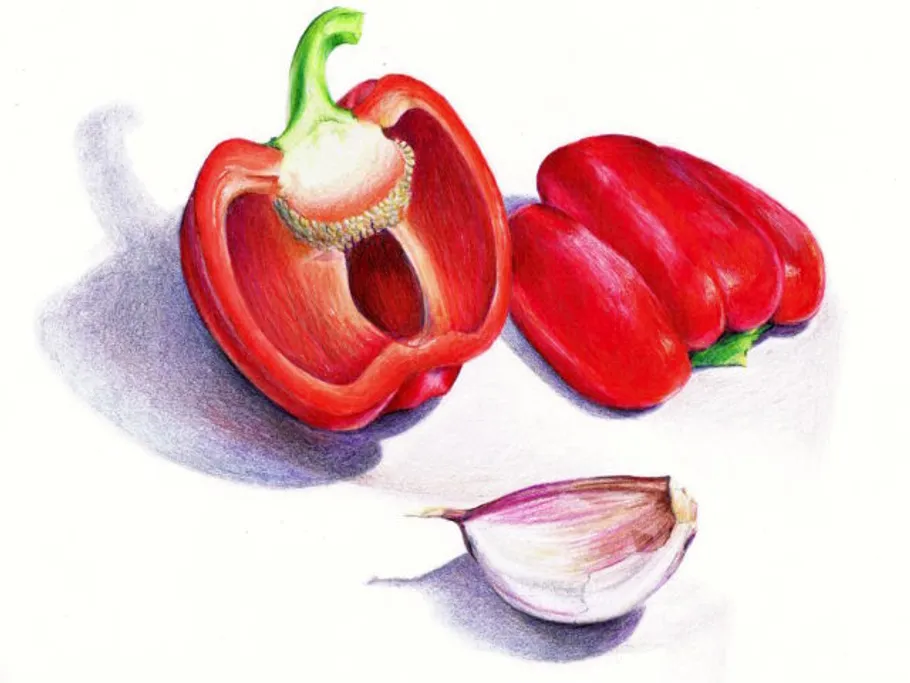
Drawing with colored pencils | Colored pencils create clear lines and are ideal for colorful drawings, but they're hard to erase. | |
Drawing with charcoal | Charcoal is especially well suited for drawing human figures and portraits. The lines blend easily, creating soft transitions. | |
Drawing with a 0.5 mm fineliner | Fineliners with a 0.5 mm tip are great for detailed drawings and offer a consistent line width. | |
Drawing with pastels | Pastels work wonderfully for landscapes and still lifes since they allow for softer transitions and edges. | |
Drawing with brush and ink | Brush and ink let you create soft edges and flowing effects, similar to watercolor painting. |

These different drawing materials offer a wide range of ways to achieve different effects and styles in your drawings. Each material has its own properties and suits different subjects and techniques. As a beginner, experiment with different materials to express yourself artistically and discover new techniques.
Learning to Draw Step by Step — Three Drawing Ideas for Beginners
Here are three simple drawing ideas for beginners with step-by-step instructions:
Drawing a Cat — Step by Step:
- Sketch the outline of the body and head.
- Add details like ears, eyes, nose, and mouth.
- Shade the areas to create volume and depth.
- Refine the lines and add more details.
Drawing Leaves — Step by Step:
- Draw the rough shape of a leaf.
- Add the main vein and side veins.
- Shade the areas to show the contrast between light and shadow.
- Refine the details and add texture.
Drawing a Bee — Step by Step:
- Sketch the bee's body using oval shapes.
- Add wings, eyes, and stripes.
- Shade the areas to create volume and depth.
- Refine the lines and add more details.
Now you're ready to start drawing! Use these tips and techniques to develop your skills further and create your own creative works.
Good to know: Want to dive deeper into drawing with some professional support? Join my evening drawing class in Munich! Our experienced artists are there to teach you the fundamentals of drawing and show you just how much joy and creativity this art form has to offer. We provide all the materials you need, so you can focus entirely on your artistic development.