Table of contents
- 1. What Is Decanting?
- 2. Why Do You Decant Wine?
- 3. Guide: How Do You Decant Wine Properly?
- 4. Can I Decant Wine Without a Decanter?
- 5. How Long Should You Decant Wine?
- 6. Which Wines Should You Decant?
- 7. Decanting vs. Aerating – What's the Difference?

Weinakademie Elisabeth
Partner and writer
Decanting Wine – Key Takeaways
- Decanting separates sediment from mature wines.
- Aerating, on the other hand, lets young wines breathe so aromas develop better.
- Decanting time: anywhere from 15 minutes to 2 hours, depending on the wine.
- More wine knowledge, live: discover wine tastings with Elisabeth Winter.
Decanting wine, that might sound like something only sommeliers do. But don't worry: with a few simple steps, you can decant wine stylishly and effectively at home too. But what exactly is decanting?
What Is Decanting?
Decanting wine means carefully pouring it into a carafe, leaving the sediment behind in the bottle. This sediment, also called "depot," consists of small particles and deposits that form in more mature wines. It tastes bitter and can cloud the drinking experience. So the rule is: get it out before the wine hits your glass.
Older red wines especially, or bold wines with a lot of tannins, benefit from decanting. Some white wines can be decanted too, if they need a bit of air.
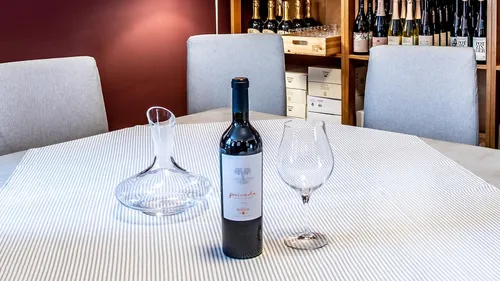
For best results, use a rounded carafe with a wide base. It offers plenty of surface area for the wine to breathe. A small light source, like a candle or flashlight, helps you spot the sediment. As you pour, watch the neck of the bottle closely and stop in time, before the sediment makes its way into the carafe.
If you don't have a classic decanter at home, that's fine too. A simple carafe works just as well, as long as it's clean and clear.

Why Do You Decant Wine?
Removing Unwanted Sediment
Decanting leaves tartrate crystals and other cloudy particles behind in the bottle. This creates a clearer, more pleasant drinking experience, without sediment in your glass.
More Air Means More Flavor
Contact with oxygen lets the wine breathe. This softens it, makes it more harmonious, and really brings out its aromas. Young or bold wines especially benefit from this.
Guide: How Do You Decant Wine Properly?
Decanting - Step 1: Keep the Bottle Still and Uncork It
Open the bottle carefully, without shaking it. This way, the sediment stays settled at the bottom and doesn't get stirred up.
Decanting - Step 2: Pour the Wine Slowly
Hold the bottle over a light source. A candle or flashlight works great. Pour the wine slowly into the decanter.
Decanting - Step 3: Watch for the Sediment
Watch the neck of the bottle closely. As soon as cloudy particles or sediment approach, stop pouring. The last sip, along with the sediment, stays in the bottle.
Can I Decant Wine Without a Decanter?
Yes, you don't necessarily need a decanter. A simple glass or ceramic pitcher does the job too, as long as it's clean and clear. What matters most is pouring the wine slowly and steadily so the sediment stays in the bottle.
A rounded shape is ideal for aeration, but if you don't have anything suitable on hand, a wine glass with a wide opening also works for decanting smaller amounts.
How Long Should You Decant Wine?
That depends on the wine. Some just need a bit of air, others need real time.
Rule of thumb: Let the wine breathe anywhere from 15 minutes to 2 hours, depending on the type. – Young, bold red wines: 1 to 2 hours – Older wines: 30 minutes is often enough – Full-bodied white wines: about 15 to 30 minutes If you're short on time, you can gently swirl the wine in the carafe. This lets in more air, and the aromas develop more quickly.
Which Wines Should You Decant?
1. Mature Red Wines with Sediment Older red wines develop sediment over time that settles at the bottom of the bottle. Decanting separates this sediment from the wine. Classics like an aged Bordeaux, Barolo, or Rioja especially benefit from this.
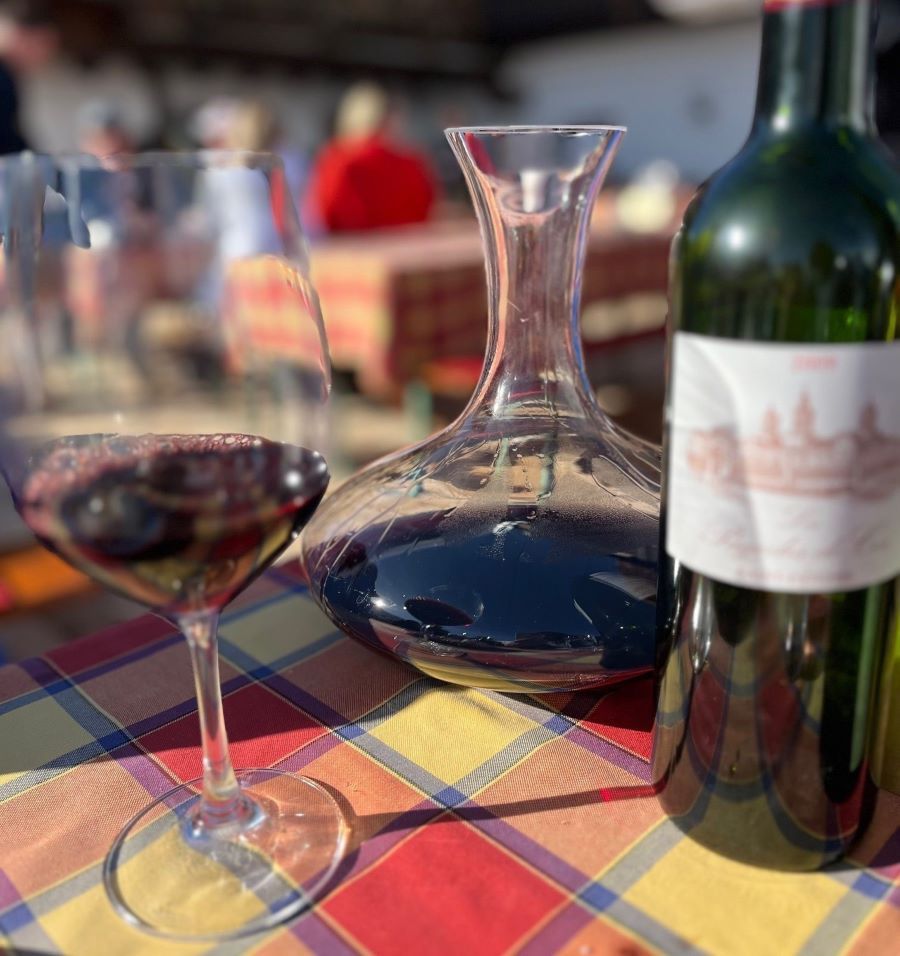
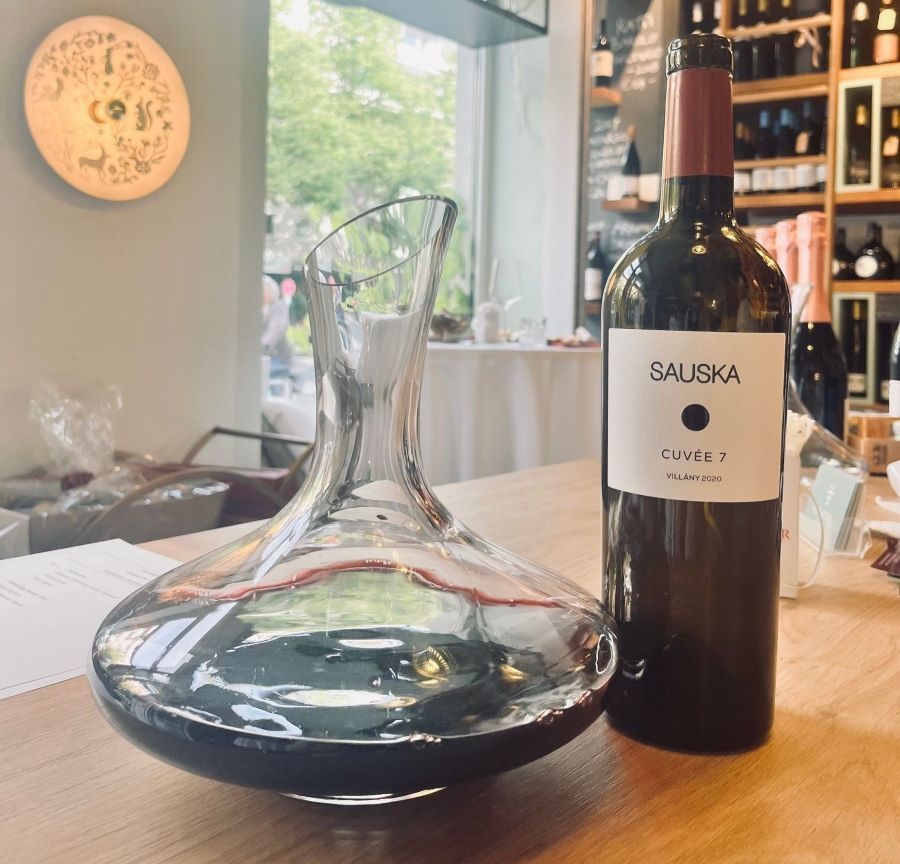
2. Young, Tannin-Rich Red Wines Many young red wines feel closed off and a bit rough at first. Oxygen helps round out the tannins and unlock the aromas. Good candidates include Cabernet Sauvignon, Syrah, or Nebbiolo.
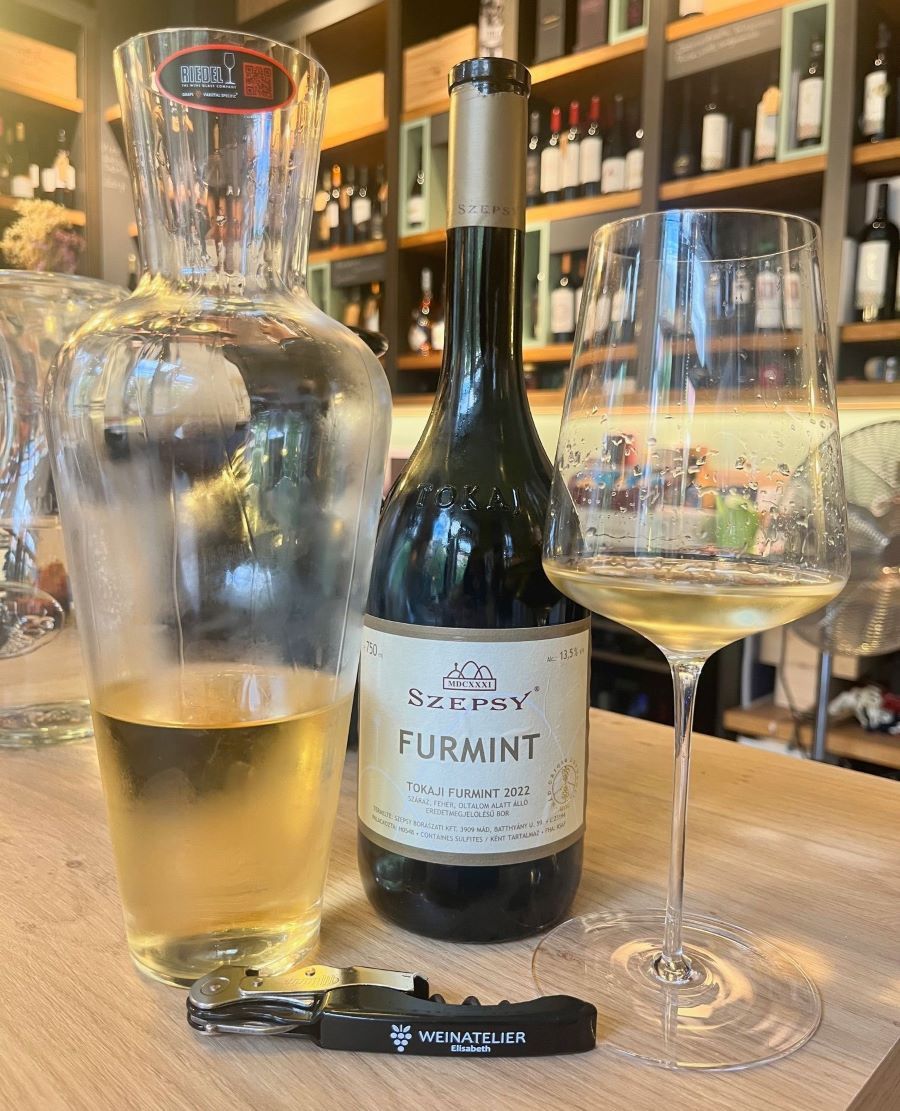
3. Full-Bodied White Wines Some white wines benefit from a bit of air too, especially those aged in oak barrels. A barrel-aged Chardonnay or a bold Pinot Blanc can gain depth and expression through decanting.
Decanting vs. Aerating – What's the Difference?
Both terms sound similar, but they serve different purposes.
Decanting means carefully pouring wine to leave the sediment (also called the "depot") behind in the bottle. This matters especially for older red wines, which develop sediment during aging. Here, it's less about aeration and more about clarity in the glass.
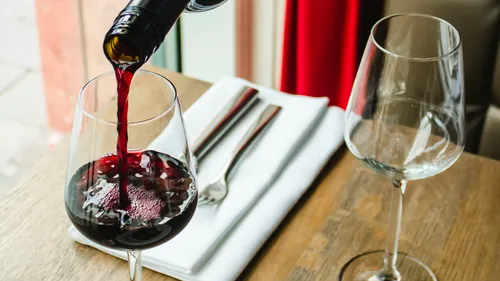
Aerating, on the other hand, is about letting air in. Young, bold wines often feel closed off or a bit rough. Contact with oxygen helps the aromas open up better, and softens the tannins. To do this, the wine is deliberately poured with a bit of energy into a rounded carafe, to maximize contact with air.
In short: decanting separates, aerating lets the wine breathe.
Culinary events near youSign up for the newsletter and discover culinary experiences near you. As a thank you, you will receive €5 off.



Decanting Wine – FAQ
Discover classes of Weinakademie Elisabeth