Table of contents
- 1. We're not sewing anymore - we're buttoning!
- 2. What is the Button Masala technique?
- 3. Where does the buttoning technique "Button Masala" come from?
- 4. What do I need for the Button Masala technique?
- 5. Buttoning - how the technique works
- 6. Can I wash my Button Masala designs?
- 7. "Button Masala is addictive!"

Albers Artwork
Partner and writer
Button Masala – The Basics:
- Sewing without needle and thread: With the Indian Button Masala technique, fabrics are joined using buttons and elastic bands, creating unique fashion or accessories - completely without sewing.
- Sustainable and creative: The technique enables upcycling and slow fashion. Pieces of fabric can always be rearranged, avoiding fabric waste and creating individual designs.
- Easy to learn: Whether beginner or expert - Button Masala is easy to pick up and suitable for anyone between 9 and 80.
- Button Masala Workshop: Learn the Button Masala technique in Anna's buttoning workshop and create your own hand-buttoned one-of-a-kind piece.
We're not sewing anymore - we're buttoning!
Be honest. Who hasn't stood in front of a sewing machine feeling completely lost, or struggled just to sew on a single button? Sewing and needlework aren't easy for everyone to pick up, and turning fabric scraps into a finished piece can cost creative minds a lot of time - and more than a few nerves. But if you'd love to make your own piece of clothing, you don't need any sewing skills or expensive machines at all. Textile design has never been this easy!
What is the Button Masala technique?
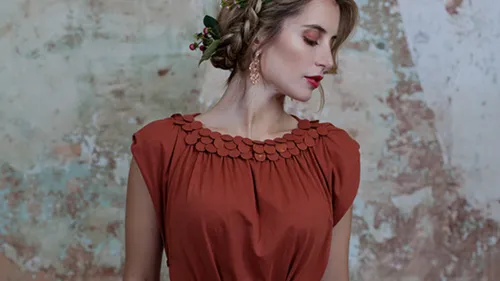
The Indian buttoning technique called Button Masala is the perfect alternative to classic sewing. You never have to worry about doing something wrong, because afterward you can always undo the buttons and elastic bands again without damaging the fabric. When buttoning, pieces of fabric are joined, gathered, and draped using buttons and elastic bands - completely without needle and thread. The result: dresses and accessories with no seams at all.
Buttoning isn't just a simple, sustainable technique, since the pieces of fabric can always be rearranged - it's practically meditative, too. Once you find your flow and understand how the technique works, you can even get creative from your couch or on the train.

But buttons and elastic bands are also handy little helpers in everyday life that are often underestimated. For example, if you want to close a cardigan that has no buttons, or want to upcycle an old jacket. The buttons can serve not just as a connector, but also as a brooch or accessory. Quickly button on a scarf as sun protection, or wrap a gift in fabric. Anna from Albers Artwork once even buttoned herself a pair of rain pants out of a trash bag when she had to bike home in pouring rain. With this innovative, seam-free DIY technique, that's effortlessly easy.
Slow fashion is redefined with Button Masala. Instead of shopping and throwing away, simply re- and upcycle! You can button several different styles and products out of a single piece of fabric, and adjust them in a flash depending on your taste and the occasion.

Where does the buttoning technique "Button Masala" come from?
The Button Masala technique comes from designer Anuj Sharma from India. Back in April 2017, he flew to Munich to hold the first workshops in Germany together with Anna. He gave her the chance to establish the technique in Germany, and from the very beginning she put a lot of heart into spreading the word about this innovative technique!
Since 2017, Anna has brought this clever way of joining fabrics to Germany and gained a great deal of experience as a workshop leader, both at her own buttoning workshops and at creative fairs and design schools.
Anuj studied at the National Institute of Design and has already established his brand Button Masala internationally. To date, he has taught the Button Masala technique to more than 15,000 people through workshops.

Anna is convinced that Anuj started a fashion revolution with Button Masala and is redefining fashion for everyone. The designer places great importance on working almost entirely without pattern-cutting. Did you know that on average, around 15% of materials are lost to offcuts and defective materials on the way to the finished product? Button Masala doesn't produce this kind of waste in the first place.
With Button Masala, time doesn't stand still, but the clock turns a little slower - in keeping with the concept of slow fashion and the Indian saying:
"Change your thoughts and you change the world."
There are very few designers who involve the end customer, and their ideas and wishes, in the creative process. Anuj Sharma changes this with his do-it-yourself technique: what matters most to him is that the wearer has their own influence on the design process and can design their personal favorite piece exactly as they envision it.
Anuj once said to Anna:
"Being simple is the most complex thing in the world."

This experience, Anna says, is something you can discover for yourself especially at Button Masala workshops. It's a new experience that broadens your horizon. Nowadays everything has to be faster and better, but Button Masala lets people wear different styles without having to buy much. Everyone is beautiful in their own way and can contribute to a more sustainable way of living. Perfectionism isn't a priority at Anna's workshops, because everyone has their own individual handwriting, and the loveliest things often come from creative chaos.
Creative ideas in your inboxSign up for our newsletter and get a €5 voucher for a creative class near you.


What do I need for the Button Masala technique?
For Button Masala, you only need these three materials:
- Fabric
- Buttons
- Elastic bands

At first glance, buttoning might seem like magic, but after the Button Masala Workshop, you'll see just how easily the Button Masala technique comes to hand.
High-quality organic stretch fabrics and all other materials (buttons and elastic bands) are provided by Anna in her workshops, so you can dive right in. Of course, you can also bring your own fabric - Anna will then advise you beforehand on the right fabric choice. A good entry into the technique works best with thin, lightweight jersey fabrics. And if you want to keep going at home, you can order your own design kit right away. Countless projects are waiting for you to bring your own fashion to life with buttoning - fashion that suits you and fits your body perfectly.
Anyone can really learn Button Masala. The age range spans from 9 to 80. It's perfect for creative beginners who want to make something out of fabric.
So with Anna's help, you can jump straight into the technique with no prior experience and button your own unique piece.
Buttoning - how the technique works
Buttoning - Step 1: What do you want to button?
First, think about what you'd like to button and how much fabric you'll need. Feel free and become a designer yourself. From tops, dresses, skirts, and headbands to pillowcases, you can button all kinds of different things.
In her buttoning workshop, Anna brings examples and ideas you can recreate.

Buttoning - Step 2: Button your own design
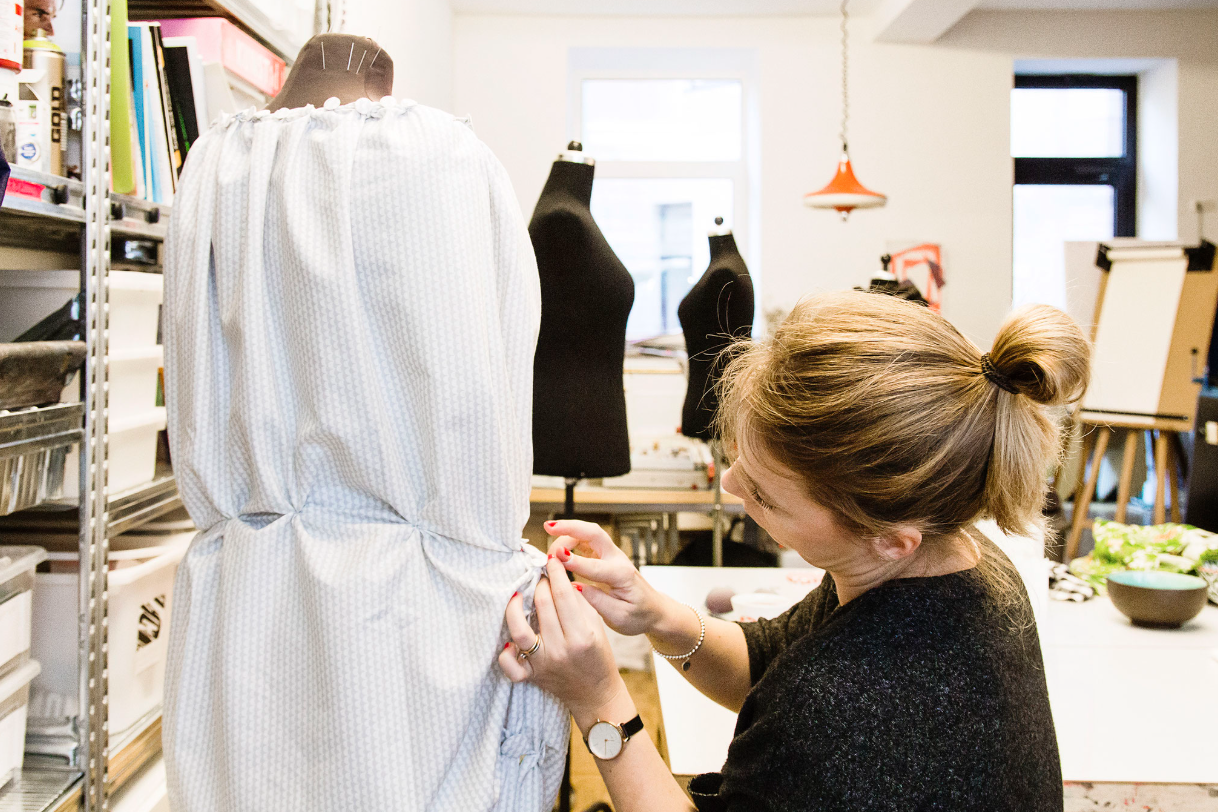
You place the button behind the fabric and wrap it two to three times from the other side of the fabric using the elastic band. Depending on the style you want to create, you can choose the diameter of the buttons. They come in silver and gold, each in three different sizes. The smaller buttons with a diameter of 1.5 cm are mainly used to join fabric, for example at a side seam. Of course, they can also be used purely for looks. The larger buttons with a diameter of 2.0 cm and 2.5 cm work beautifully for draping.

In the Button Masala course, Anna shows you the basics step by step. Groups are kept especially small so that Anna, as workshop leader, can support you closely throughout the creative process.
Can I wash my Button Masala designs?
Depending on the color of your fabric, you can choose a matching elastic band color - either tone-on-tone to keep the design understated, or as an accent in bold colors. Since the nylon bands don't become porous with water, you can also wash your hand-buttoned unique pieces. It's best to hand-wash them, or wash them at 30 degrees in a laundry bag in the washing machine. If an elastic band ever comes loose, no panic! You can simply replace it with a new nylon band. You don't need to worry about your garment suddenly coming undone out on the street. The elastic bands at the side seams are wrapped an extra 3-4 times, so they can withstand being pulled.
"Button Masala is addictive!"
The feedback from workshop participants has really been fantastic. I'm delighted about that statement, and it's true! Let yourself be surprised and come to the Button Masala Workshops. Once you start, the dresses and accessories seem to come together all on their own. Promise!


Button Masala – FAQ
Discover classes of Albers Artwork

Box