Linocut Printing – What Is a Linocut?
- What linocut printing is: linocut printing is a relief printing technique where you carve a design into a linoleum block and print the inked surfaces onto paper or fabric.
- What you need for linocut printing: to get started, you just need a linoleum block, a linocutting knife, linocut printing ink, a roller, and paper.
- Try linocut printing yourself: visit Luisa Scholz at her linocut printing workshop in Berlin.
What Is Linocut Printing?
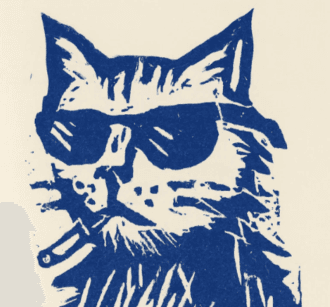
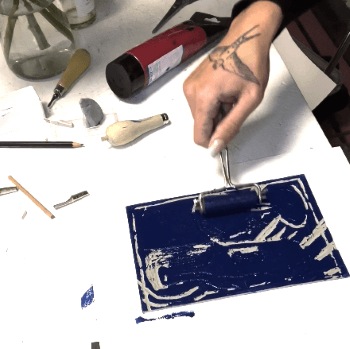
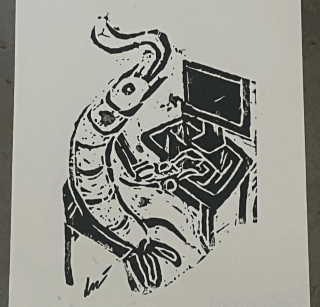
Linocut printing, often also called relief printing, is a classic relief printing technique. You carve a design into a linoleum block. Everything you cut away stays white in the final print. The remaining raised surfaces are inked and transferred onto paper or fabric using light pressure, for example with a wooden spoon or a small linocut printing press. So the image isn't created by what you draw, but by what you deliberately remove.
What Do You Need for Linocut Printing?
Getting started with linocut printing is straightforward and doesn't require expensive or specialized tools. Here's everything you'll need for linocut printing:
Linocut Printing Materials:
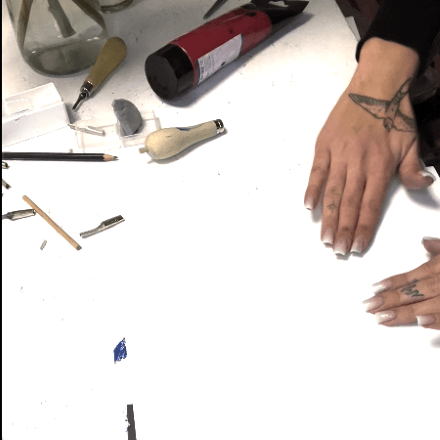
- Soft linoleum block
- Linocutting knife
- Small roller (brayer)
- Linocut printing ink
- Sturdy paper
- Wooden spoon (as a printing tool)
To me, calm focus, clean handling, and enjoying every step of the process matter more than having exactly the right gear.

What Kind of Material Is Linoleum?
Linoleum used for printing is made from natural components like linseed oil, cork flour, wood flour, and jute. The surface is smooth but slightly yielding, which allows for precise cuts without much effort. Working with linoleum is especially pleasant for beginners. There's no wood grain and no splintering to worry about. For beginners, I recommend softer linoleum blocks, since they're more forgiving of small mistakes and let you achieve good results quickly.
Can You Use Acrylic Paint on Linoleum Blocks?
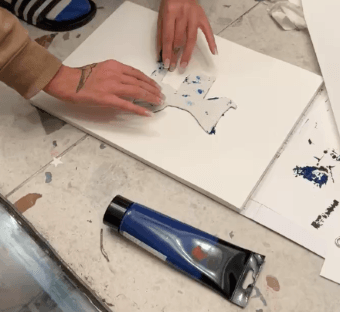
Technically, yes, but from experience, I wouldn't recommend it. Acrylic paint is designed for painting, it dries very quickly, and when rolled on for printing, it often goes on unevenly. The result usually ends up blotchy or pale. Special linocut printing ink, whether water- or oil-based, works much better. Linocut printing ink dries more slowly, spreads evenly, and produces rich, vibrant prints. That's especially important if you want to print a design multiple times.
How Long Does Linocut Printing Ink Take to Dry?
Drying time depends on the type of linocut printing ink you use. Water-based inks dry within a few hours, which is convenient for workshops or if you want to keep working quickly. With oil-based ink, you'll need more patience, it can take one to two days for the print to fully dry. It's important to store fresh prints flat and separately, so they don't smudge, stick together, or pick up moisture.
Pros and Cons of Linocut Printing at a Glance:
Pros of Linocut Printing: | Cons of Linocut Printing: |
|---|---|
Clear graphic expression with strong contrasts | Mistakes can't be undone |
Requires little material, possible without a printing press | Every print is one of a kind, even in a series |
Well suited for beginners and groups | Colors, paper, and technique need to be carefully matched |
Designs must be laid out in mirror image |