What Jesmonite Is and How to Create a Jewelry Dish with It
- What jesmonite is: jesmonite is a versatile, water-based acrylic resin casting material made from a combination of liquid resin and mineral powder.
- A jewelry dish from jesmonite: find a step-by-step guide here, mix jesmonite, pour it into a mold, and sand it down.
- Advantages of jesmonite: jesmonite cures quickly, is easy to work with, and has a high-quality feel.
- Should you seal jesmonite? Yes or no: sealing jesmonite protects your creations with regular use, especially useful for the bathroom.
- Jesmonite vs. Raysin: compared to chemical-based Raysin, jesmonite is safer, more sustainable, and ideal for DIY beginners thanks to its water base.
- Visit Stuttcraft in Stuttgart: try the jesmonite workshop at Stuttcraft in Stuttgart and create your own works of art.
Jesmonite
Feeling like getting really creative again while making a genuine designer piece yourself? Then jesmonite is exactly the material for you. We'll show you what makes jesmonite so special, how to work with it, and why this eco-friendly resin material is all the rage right now. With the right jesmonite starter kit, you can easily design your own jewelry dish at home. We'll also give you a step-by-step jesmonite guide, explain why sealing jesmonite matters, and settle once and for all how to pronounce jesmonite correctly.
How Do You Pronounce Jesmonite?
Simple: "JEZ-muh-nite." The "Jes" like in the word "jazz," and "monite" like in "dynamite." The name comes from "Jesmond" (a neighborhood in Newcastle, England, where it was first developed) combined with the typical suffix "-ite" (often used for rocks and minerals). That gives it a refined sound, fitting for the modern aesthetic of jesmonite pieces.

What Kind of Material Is Jesmonite?
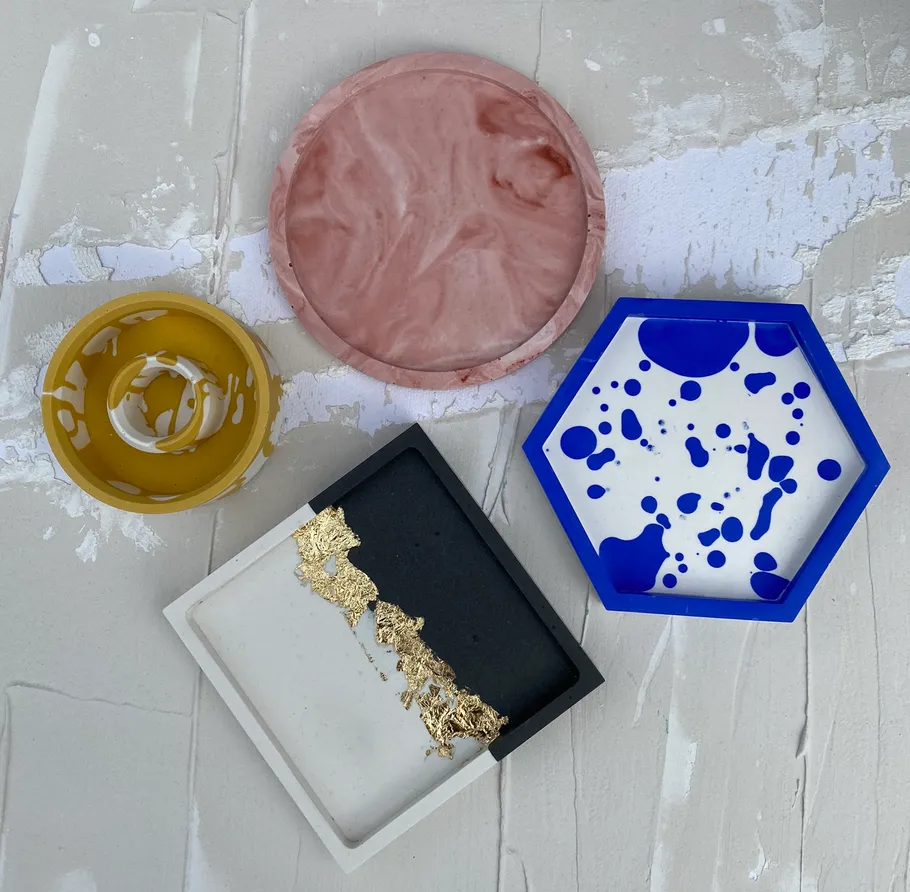
Jesmonite is a blend of water-based acrylic resin and a fine jesmonite powder. It falls into the category of casting materials and is often used under the product name Jesmonite AC100. It's also a very popular material for creative DIY projects. Unlike epoxy resin, it doesn't contain harsh chemicals, is nearly odorless, and is therefore perfect for a home workshop. Finished pieces feel high-quality, with a stone- or ceramic-like texture, and they're shatterproof. Popular projects using this resin material include creating bowls or candle holders.
Designing a Jesmonite Jewelry Dish: What You'll Need
Feeling inspired to try jesmonite? Here are all the materials you'll need:
- Jesmonite AC100 (base + liquid)
- Mixing cup & scale
- Spatula or stir stick
- Pigments (optional, for color effects)
- Silicone molds or other casting molds
- Sandpaper
- Jesmonite sealant (beeswax or lacquer)

Step-by-Step Guide for Your Jesmonite Jewelry Dish
With this jesmonite guide, you can easily design your own jesmonite jewelry dish right at home:
1) Prepare your jesmonite material:
Measure out the jesmonite base and jesmonite liquid exactly according to the manufacturer's instructions, and mix them together thoroughly. This is easiest with a sturdy stir stick.
Tip: work quickly, jesmonite hardens fast.

2) Enhance your jesmonite with pigments: Add pigments as desired. For a jesmonite terrazzo effect, you can scatter small color chips directly into the jesmonite mold beforehand.

3) Pour the jesmonite into the mold: Now pour your jesmonite mixture into the mold. Be sure to distribute it evenly and avoid creating air bubbles.

4) Let the jesmonite cure: After about 30-40 minutes, the hardened jesmonite piece can be released from the mold. Be careful during this step to avoid chipping any corners or edges.
5) Sand the jesmonite: Use fine sandpaper to smooth the edges and achieve a nice finish.

6) Seal the jesmonite: Finally, it's best to seal the jesmonite piece so it stays beautiful longer. Sealing jesmonite is especially important if you plan to use the piece in the bathroom.

Do You Have to Seal Jesmonite?
Sealing jesmonite isn't strictly necessary. As long as your jesmonite decor piece just sits on a shelf and doesn't come into contact with moisture, it'll stay beautiful for a long time even without sealing. But if the piece gets regular use, or needs to withstand moisture (like in a bathroom), sealing jesmonite with lacquer or beeswax is recommended. It protects the surface and gives it a lovely, satin-matte sheen.
What's the Difference Between Jesmonite and Raysin?
Both fall into the category of casting materials, but there are major differences:
Jesmonite | Raysin |
Water-based | Chemical-based |
Dries quickly | Takes longer to cure |
Almost odorless | Has a strong chemical smell |
More eco-friendly than Raysin | Requires more protective measures |
If you're looking for a modern, sustainable resin material that doesn't release toxic fumes, jesmonite is ideal for you.