Orange Wine: What Is It and How Is It Made?
- Orange wine definition: Orange wine is a skin-contact fermented white wine, made through extended contact between the grape juice and the skins of white grapes.
- Orange wine aging: The wine is usually aged oxidatively and often stored in clay vessels or wooden barrels, less often in stainless steel tanks.
- How much does orange wine cost? Prices for orange wine generally range between 12 and 25 euros.
- Difference from natural wine: While orange wine is a specific wine style, natural wine is a broader term for organic or biodynamic wines made with minimal intervention.
We all know red wine, white wine, and rosé. But there's at least one more color in the wine world: orange, home to so-called orange wines. It would be nice to say they're on everyone's lips, but really, they're more of a favorite among innovative winemakers and their circle of wine enthusiasts. Still, these cheerful orange-hued wines are gaining popularity with a broader audience year after year, as a pleasant alternative to conventional wine.

What Is Orange Wine?
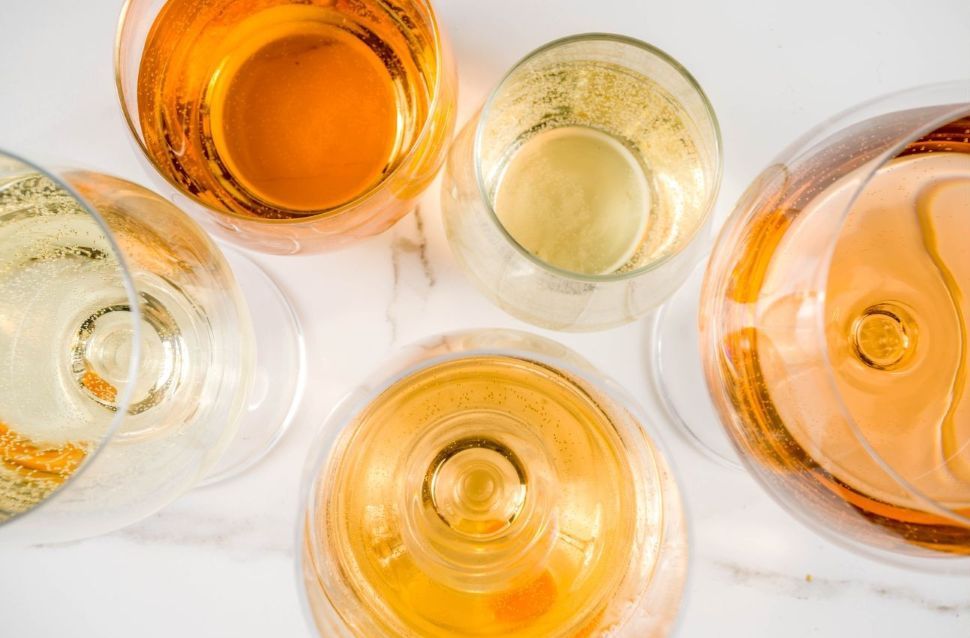
Orange wine, a fascinating creation in the world of wine, is fundamentally different from its traditional relatives. Despite its name, orange wine isn't made from oranges, but from white grapes that undergo a very special treatment during production. The key to its unique color and distinctive flavor lies in skin-contact fermentation, where the skins of the white grapes stay in contact with the juice for an extended period, similar to how red wine is made. This process gives the wine not only its striking orange color, but also an exceptional depth and complexity of flavor. Orange wine is therefore a perfect choice for wine lovers looking for something new and exciting, a synthesis of tradition and innovation that challenges and delights the palate.

Orange Wine in the Vineyard:
- Orange wine is made from white grape varieties.
- The grapes are often organically grown.
Orange Wine Production and Cellar Aging:
- Orange wine is aged oxidatively, meaning the wine is exposed to oxygen.
- It's typically produced in clay vessels or wooden barrels, only rarely in stainless steel tanks.
- Extended skin contact, meaning crushed grapes with skins and seeds, and for orange wine often even stems and stalks, creates the wine's characteristic amber color, its dry, tannic flavor, and various other traits typical of red wines. That's because skin-contact fermentation is normally reserved for red grapes.
- Minimal use of sulfur dioxide and other production aids.
 Cellar with qvevri vessels in a Swedish winery
Orange Wine Characteristics – On the Nose and in the Mouth:
- Orange wine typically has sherry-like aromas and notes of dried fruit, such as apricots, peaches, prunes, and raisins.
- In flavor, orange wine resembles light red wines or bold rosé wines (there's a real risk of mixing them up in a blind tasting!).
Orange Wine Pricing – At the Register:
Prices for a bottle of orange wine start around 12–15 euros, though they tend to trend closer to 20–25 euros.


Is Orange Wine Natural Wine? What Are the Differences?
Interestingly, the wine label on a bottle of orange wine doesn't necessarily say "orange wine." You might instead see terms like "amber-colored," "qvevri" (a specific type of clay vessel), "amphora wine," "unfiltered," or simply "natural wine."
However, natural wine is a broad and, as of yet, not clearly defined term for wines that are organically or biodynamically grown and fermented spontaneously, meaning using only the wild yeasts naturally present on the grapes and in the barrel. Production involves few conventional aids or cellar technologies. Natural wines don't necessarily have the color and aroma profile of orange wines, though orange wines themselves tend to be more or less naturally made.
Similarities and Differences Between Orange Wine and Natural Wine, Summarized:
Aspect | Orange Wine | Natural Wine |
|---|---|---|
Basic Definition | Wine made from white grapes where the skins stay in contact with the must longer. | Wine made from organically or biodynamically grown grapes with minimal intervention. |
Production Process | Oxidative aging; skin-contact fermentation similar to red wine. | Spontaneous fermentation with wild grape and barrel yeasts; minimal cellar technology. |
Color and Aroma | Amber color; aromas similar to sherry or dried fruit. | Can vary in color and aroma, not specifically orange. |
Use of Sulfur | Minimal use of sulfur dioxide. | Also minimal to no use of sulfur dioxide. |
Typical Flavor | Dry, tannic flavor, similar to light red wines or bold rosé wines. | Can vary, often unconventional and complex flavor profiles. |
Origin | Originated in Georgia, popular among innovative winemakers worldwide. | Widely found across the wine world, especially among organic and biodynamic wines. |
Price | Tends toward higher prices (approx. 20–25 euros per bottle). | Price range varies widely depending on winemaker and region. |
Popularity | Growing in popularity, but still more of a niche product. | Rising popularity, especially among fans of organic wine. |
Where Did Orange Wine Come From, and How Did the Modern Trend Start?
The skin-contact fermentation process described above was originally a Georgian winemaking method dating back to the Stone Age. Take that literally: in what is now Georgia, winemaking history dates back to at least 6000 BCE.
Georgians have always made their wine by letting the must ferment in large clay amphorae called qvevri, buried in the earth. Thousands of years of experience speak to the consistent quality of these wines.
Only recently has our modern society, having grown a bit saturated with the abundance of excellent classic wines, felt ready for new challenges and flavor profiles. And so, interest in this ancient method has been revived. Since true amphorae are extremely costly, they're often replaced with wooden barrels for orange wine production, but the principle, treating white grapes to skin-contact fermentation the way red wine grapes are treated, remains the same. So the original production method for orange wine has its roots in Georgia.
Dedicated winemakers from Germany, Slovenia, Italy, and now virtually every leading wine country have gained enough knowledge, skill, and experience to produce exceptional orange wines. The early years, when orange wines were still something of an acquired taste, are firmly behind us. Today, this indulgence is a wonderful addition to (almost) any wine lover's table, and it's especially well suited to cheese boards.

For less adventurous wine drinkers, there are fairly subtle versions of orange wine that sit very close to "conventional" white wines. When we feature an orange wine at DeliKater wine evenings, it usually wins over a few fans by the end, despite its slightly higher average price. That's no surprise, considering there are already orange wine exhibitions, orange wine festivals, and entire orange wine menus at renowned restaurants around the world.
How Do You Drink Orange Wine?
Get a bottle of orange wine, either from Georgia or your favorite variety, from a recommended winery, let it chill to cellar temperature (around 16°C / 61°F) (don't serve it too cold!), enjoy its intense color in a white wine glass, savor the fascinating aromas, close your eyes, and take a sip of something new.
And what about the other kind of "orange wine," white wines that have oxidized from being stored too long and taken on a coppery color?.. That's simply a wine fault, nothing more.