Table of contents
- 1. Learning Tarot: What Is Tarot and What Is It Used For?
- 2. Learning Tarot: The Structure of a Tarot Deck
- 3. Learning Tarot: What Makes Tarot Special?
- 4. Learning Tarot: How to Find the Right Tarot Deck
- 5. Learning Tarot: What Questions Can You Ask?
- 6. Learning Tarot: The Best Spread for Beginners
- 7. Learning Tarot: Can You Interpret Cards Correctly?
- 8. Learning Tarot: Do I Need to Be Spiritual to Use Tarot?
- 9. Learning Tarot: What Are Common Beginner Mistakes?
- 10. Learning Tarot: Bringing Tarot Into Everyday Life
- 11. Learning Tarot: Reading for Others?

Levanah's Kartenreading
Partner and writer
Learning Tarot – Key Takeaways
- Tarot is a wisdom system used for personal growth, self-reflection, and gaining insight into life's questions.
- A tarot deck has 78 cards: 22 Major Arcana, 40 number cards, and 16 court cards.
- The three-card spread (past, present, future) is ideal for beginners.
- You don't need to be spiritual to work with tarot, trust your intuition instead.
- Take an online tarot class for beginners with Levanah.
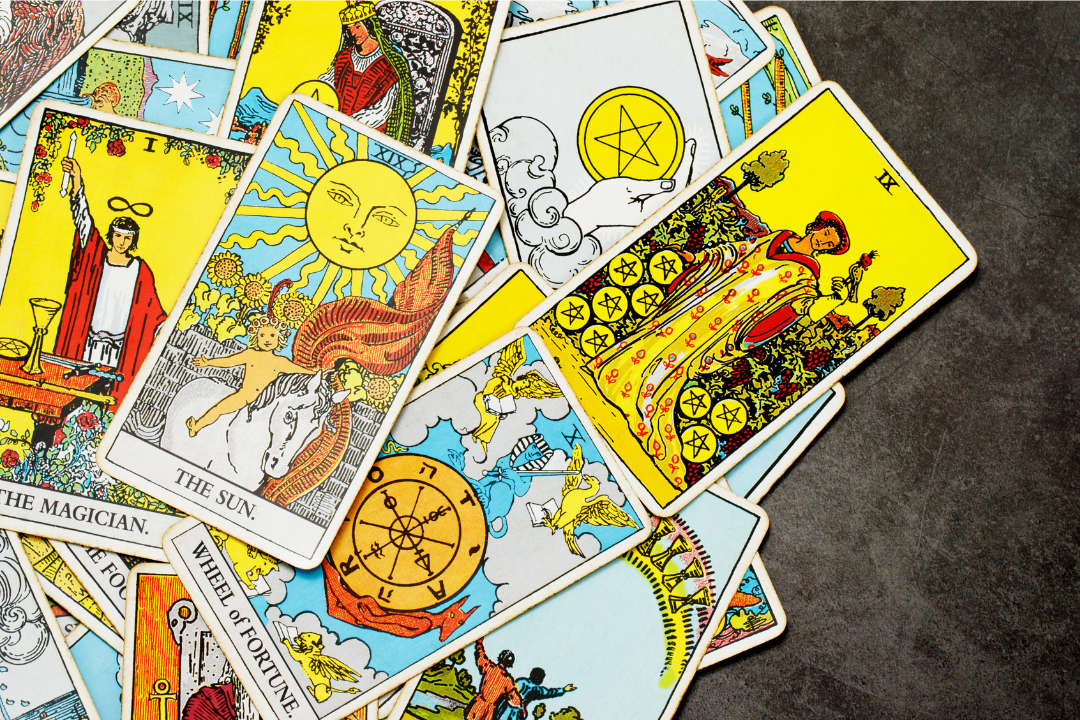
Want to discover the mysterious world of tarot cards? Then let's dive in together. The figures and characters on the cards can become your travel companions, and you'll be amazed by the insights you can receive from your inner guide.

Learning Tarot: What Is Tarot and What Is It Used For?
Tarot is a wisdom system thousands of years old. It's believed to have originated in ancient Egypt.
Today, it's mainly a valuable tool for personal growth.
With the cards, you can:
- Understand yourself better
- Gain clarity about what you truly want
- Ask questions about your future
- Support meditation
Learning Tarot: The Structure of a Tarot Deck
Almost all tarot decks are built on the same basic structure:
- 22 cards belong to the Major Arcana (arcana = mystery)
- 40 number cards belong to the Minor Arcana
- 16 court cards round out the deck

Learning Tarot: What Makes Tarot Special?
Compared to other card decks, tarot cards carry deeper symbolic and archetypal meaning.
The Major Arcana represent:
- Life stages
- Challenges
- Lessons to learn
- The journey of life as a whole
The archetypes on the cards reflect human qualities deeply rooted in the collective unconscious.
Learning Tarot: How to Find the Right Tarot Deck
A tarot deck is right for you when its imagery speaks to you intuitively.
Today, there's a huge variety of styles and spiritual approaches to choose from. Choose the deck that visually resonates with you, it should simply feel right.

Learning Tarot: What Questions Can You Ask?
Ask questions that truly matter to you.
Important: Surface-level questions lead to surface-level answers, and those won't get you anywhere.
Learning Tarot: The Best Spread for Beginners
For getting started, the three-card spread is ideal.
Draw three cards, one each for:
- Past
- Present
- Future
This helps you grow more comfortable working with the cards and develop a feel for interpretation.

Learning Tarot: Can You Interpret Cards Correctly?
Yes, but there's no right or wrong.
Trust your own perception. You don't need to memorize the meanings of the cards. Just tune into the card and let your intuition speak.

Learning Tarot: Do I Need to Be Spiritual to Use Tarot?
No.
You don't need to be spiritual to work with tarot. The cards always give you exactly the messages you need in the moment.
If you are spiritual, it can make things easier, but it's not required. Tarot isn't just a tool for understanding life in the here and now (for example, by examining specific situations), it can also offer insight into deeper, unseen layers, into what happens "between the lines," into energies, intuitions, or the spiritual dimension of life.
Learning Tarot: What Are Common Beginner Mistakes?
Avoid asking tarot the same question multiple times in quick succession. The first spread is always the most meaningful, after that, the answers become increasingly vague and unclear. Also avoid asking questions out of pure curiosity, just to test out tarot.

Learning Tarot: Bringing Tarot Into Everyday Life
Draw a daily card each day. Take a few minutes to tune into the card:
- What do you feel?
- What stands out to you?
- What mood does the image convey?
Keep a tarot journal where you note your impressions. Display your daily card somewhere visible, this keeps you connected to its energy.

Learning Tarot: Reading for Others?
Start with yourself first.
Once you feel more confident in your interpretations and trust your intuition, you can begin reading for others too, like for friends.
News by emailSign up for our newsletter and receive €5 off a mindfulness class as a thank you.


Tarot is a powerful tool for getting to know yourself better and strengthening your intuition. You don't need any prior experience, and you don't need to be spiritual to work with the cards. What matters is staying open, listening to your inner voice, and taking the time to truly feel the messages the cards offer.
Start with a deck that visually speaks to you, begin with simple spreads, and trust your first impression. With every card, your access grows, to the symbols, to the meaning, and above all, to yourself.
Learning Tarot – FAQ
Discover classes of Levanah's Kartenreading




You might also like: